© Antje Missbach
Theorising (im)mobilities at sea



Latest News
02.12.2025 - New book chapter on quantitative and mixed methods for participatory ethics research by Sebastian Sattler
02.12.2025 - Absolvent*innentag 2025
26.11.2025 - CIDAPE research stay and upcoming conference on ‘Political Emotions’ at Scuola Normale Superiore in Florence
25.11.2025 - InterSpaces ZiF Podcast "Von Koffein bis Ritalin: Leistungssteigerung via Neuroenhancement?" - mit Sebastian Sattler und Kolleg:innen
Overview
- Objectives
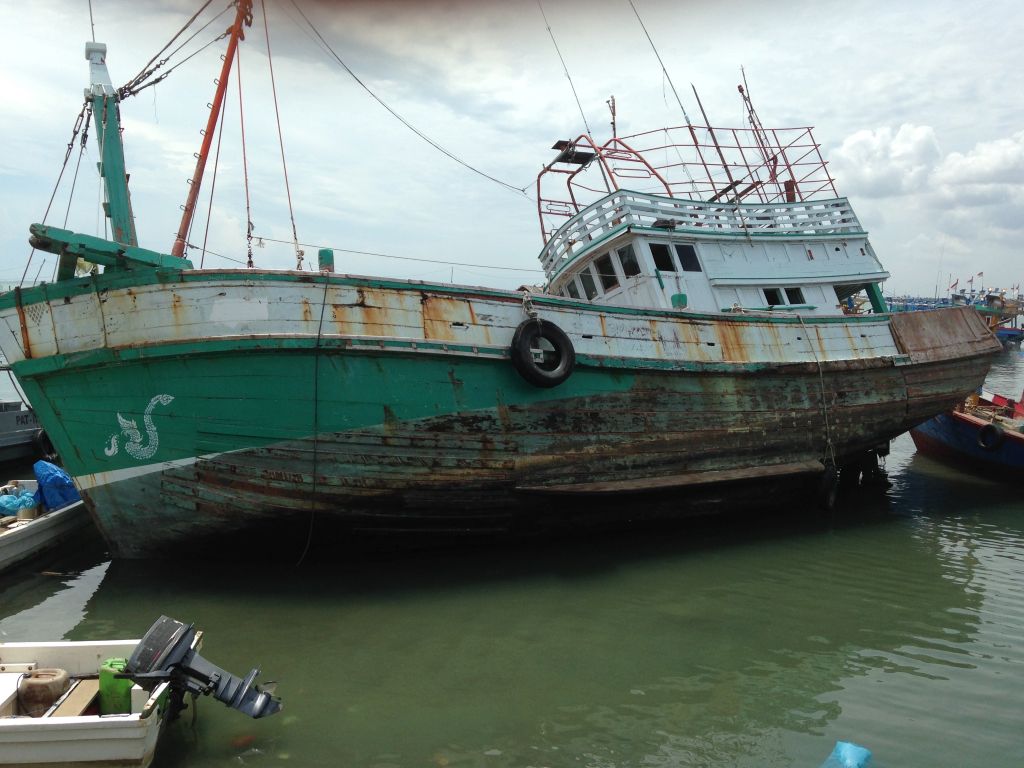
Refugees risking their lives at sea is a key challenge of our times. Nonetheless, Refugee Studies remain primarily concerned with land-based movements. Refugee boats – and what happens aboard and at sea – need more in-depth theorisation for several reasons:
1) Maritime refugees, unlike those moving by land or air, often remain outside any state jurisdiction.
2) Maritime movements put to the test maritime rescue traditions and the humanitarian commitments of the international community towards refugees.
3) Maritime refugees are affected even more by the deterrence politics ofpotential destination countries and their assertion of sovereignty through more restrictive border controls. The longer refugees remain at sea the less likely their survival.
Against the terrestrial and other geo-political biases in Refugee Studies (“Global North-centricism”) that keep producing imbalanced theory-making on migration, this project will initiate a Maritime Turn to prompt the conceptualisation of sea-bound refugee movements. Thus, by making routes and spaces at sea the basis of theorising about human (im)mobilities and by initiating an interdisciplinary and transnational Maritime (Im)mobilites Laboratory of researchers, this project will produce new knowledge about truly global migration trends and how structural determinants, such as deterrence, non-disembarkation or non-rescue policies exacerbate prolonged refugee journeys and engineer helplessness.
- Researching maritime refugees: How? Why? When?
More than 120 million people have been forcibly displaced worldwide because of war, persecution, violence or human rights violations. New and long-standing conflicts are responsible for the highest levels of displacement on record. Refugee journeys to potential places of safety are rarely straightforward; they are staggered and time-consuming, hazardous, have uncertain outcomes and often cause additional vulnerabilities. Multiple attempts, failures, detours, prolonged time in waiting, extortion and violence along the way seem to be the norm rather than the exception.
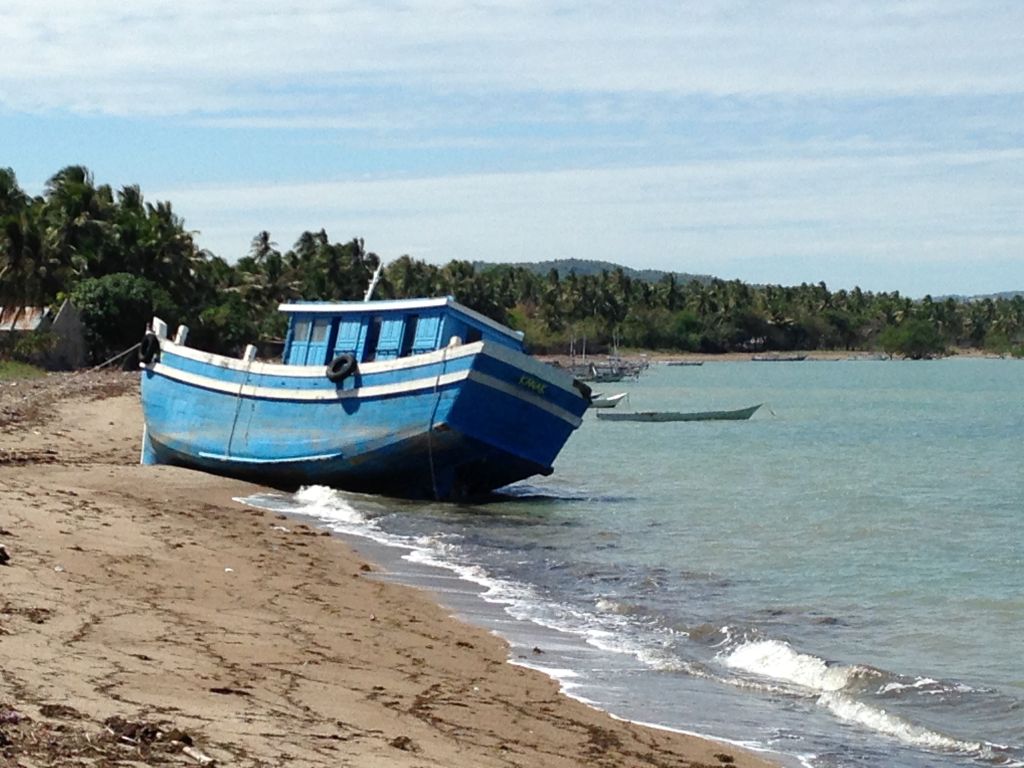
Whenever land routes are too dangerous or simply unavailable, refugees take to the sea. In the last decade, the numbers of maritime boat journeys have increased in most migration corridors around the globe. Whether on inflatable rafts, rubber dinghies, wooden fishing vessels or large freighters, refugees risk their lives in order to escape oppression and terror. The more governments engage in restrictive deterrent and immobilisations measures, including interceptions, turn/pushbacks and detention at sea, the more refugees opt for dangerous routes. We often know about the outcomes of maritime voyages are, even in the case of fatal accidents or disappearances, but little is known about what happens on board boats.
The discussions throughout this writeshop will offer a deeper understanding of refugees’ decision-making and coping strategies in times when the sea is increasingly weaponised against refugees. Making refugee boats the prime site of this writeshop, we seek to explore the social relations and interactions of the passengers aboard refugee boats. The interplay of internal and external factors throughout the journeys can cause cohesion and mutual help but can also cause tensions and breakdown of solidarities.
Based on existing case studies, we ask participants to illustrate how refugees experience maritime passages and how they react to unforeseen challenges, risks and obstacles (pushbacks, deterrence); showcase the evolving dynamics among passengers onboard and how they shape the socialites onboard, including pre-existing ties, gender, age, class, health and power; specific temporalities of the journey and materialities of the boats; and thereby also reflect on the methodological and ethical concerns encountered when studying maritime refugees and boat journeys.
Focusing on refugee boats allows us to trace their role for the passengers and this will also provide people with a voice who otherwise remain silenced and subdued by violence.
In this writeshop we want to challenge the conventional public ‘boat people’ narratives and the inherent norms they engender regarding the political dynamics between the so-called sending countries in the Global South and the destination countries in the Global North serves a new prism for a much wider, thought-provoking social criticism of the contemporary global border and asylum regimes.
We also want to draw attention to ethical questions and dilemmas of working on forced displacement and maritime migration. We want to complicate the relationship between prioritising the human dignity, rights, safety and well-being of research respondents and political agendas or politicised discourses within which our research is published, communicated and debated.
We are particularly looking for contemporary and historical empirical case studies of maritime refugees, boat journeys and what happens on refugee boats. We encourage junior scholars from the Asia-Pacific to apply.
Please send us your expression of interest by 1 July 2025, including a mini-bio and an abstract. We will invite selected submissions by 1 August 2025. Full drafts are due by 15 December 2025. The drafts will be circulated among the other participants and organisers.
Writeshop date: 26-29 January 2026
Venue: Asia School of Business in Kuala Lumpur, Malaysia
We will seek funding to cover the travel costs for invited presenters. The envisioned outcome for this workshop is an academic journal special issue.
Contact: Antje Missbach (antje.missbach@uni-bielefeld.de) and Gerhard Hoffstaedter (g.hoffstaedter@uq.edu.au)
- Thinking about refugees through the sea
Migrants risking their lives at sea is one of the key challenges of our times. Journeys across the sea are often deemed more dangerous due to the very unpredictable nature of the open waters. Current portrayals focus on boats as deathscapes, but we want to highlight and emphasise the conditions and experiences of life on board. Maritime migrants, unlike those moving by land or air, are often outside any state jurisdiction. Such irregular maritime migration puts to the test existing relations among neighbours, long-established maritime traditions, and the humanitarian commitments of the international community, particularly towards forced migrants and refugees.
All people on board of a refugee boat face the same dangers at sea: drowning, dying of hunger or dehydration, which can create a sense of transitory community. Yet, to ignore intersectional power dynamics (age, race, gender, health and class) and to assume equality amongst them would be naïve. Not everybody onboard has the same capacities to fend for themselves. In contrast, based on the physical and psychological constitution of the passengers thrown together, hierarchies of power evolve amongst the seemingly anarchic situations onboard. The outcomes for passengers are often unpredictable, as they meander between tension, solidarity, intimacy, competition and transgression.
The fears in the Global North of irregular(ised) or mass immigration have resulted in more restrictive border and migration controls that require new research on a crucial, yet under-researched site of those fleeing: The boat. As vital vehicle in the wider migration infrastructure, boats, and what happens aboard them, need more in-depth theorisation. Boats journeys are influenced both by external regulatory factors (national and regional migration regimes) as well as internal dynamics of the passengers themselves. Journeys of escape can become dramatic odysseys of despair; not least as maritime mobility cannot be equated with freedom and liberty. The politics of rejection at sea creates a new quality of strandedness, not least as they help transform boats from vehicles of escape into floating prisons.
By making boats, routes and the spaces they transgress the basis of theorising about maritime (im)mobilities and by initiating an interdisciplinary and transnational Maritime (Im)mobilites Laboratory of researchers, this workshop will accumulate new knowledge about global migration trends and how structural determinants, such as deterrence, non-disembarkation or non-rescue policies exacerbate prolonged refugee journeys and engineer helplessness. This workshop will investigate the interplay of external and internal factors that impede refugee boat journeys by studying the recent maritime mass movements in Southeast Asia, the Mediterranean, the Caribbean and the Red Sea.
To build a long-lasting network, we are particularly interested in transdisciplinary discussions and theorisations of the sea and boats therein from a wide range of disciplinary backgrounds. Throughout the workshop and beyond we hope to engage with some the following questions:
What are the current trends among aspiring migrants and refugees when attempting to cross the Andaman Sea, the Mediterranean, the Caribbean and the Red Sea?
What are the social and psychological impacts of maritime migration on refugees?
What technical, political and legal countermeasures are used by governments or transregional bodies to deter unwanted migrations and disembarkations?
What roles do nonstate actors (NGOs, humanitarians, social movements, media) play in making passages safer?
How do the facilitators of unsanctioned passaged react towards the needs of migrants and refugees as well as to the counter measures by governments?
What can be learnt from historical case studies and insights to inform current debates on maritime refugees?
What are key methodological and ethical concerns when studying maritime refugees?
If you are interested in participating in the workshop, please send us an abstract of 250-350 words until 20 September 2025 (antje.missbach@uni-bielefeld.de or roswitha.rohlfing@uni-bielefeld.de)
Should you have any questions, please do not hesitate to get in contact with us.Workshop date: 6 - 8 May 2026
Venue: Bielefeld University, Germany
Contact: Antje Missbach (antje.missbach@uni-bielefeld.de) and Gerhard Hoffstaedter (g.hoffstaedter@uq.edu.au)
Output
Maritime Refugee Lab
- Members

TBC
Contact
Roswitha Rohlfing


Secretary
Phone: +49 521 106 - 4639
E-Mail: sekretariat.missbach@uni-bielefeld.de
Homepage