MA Linguistics

Master Linguistics at Bielefeld University
Take the next step!


Study the things that truly interest you:
Our Master's program in Linguistics provides you with a broad foundation while allowing for a high degree of individualization. Bielefeld offers a campus university with many excellent resources to support you in organizing your studies and navigating student life.
Apply now!
Application Deadline Summer Semester 2026: January 15/March 31, 2026
You would like to apply for the MA Linguistics program? Find information here.
- Application deadline for the summer semester:
- Domestic students: March 31
- International students: January 15
- Application deadline for the winter semester:
- Domestic students: September 30
- International students: July 15
Information about the Master's program in Linguistics
- Study content and profiles
Solid foundations, individual specialization
The MA Linguistics at Bielefeld University offers a solid and broad foundation combined with the potential for specialization and individualization. Check out the 7 different profiles and put together your own program.
MoreGeneral Linguistics
More
We research the grammatical structure of languages, particularly their morphology, syntax, and information structure. You acquire knowledge in theoretical and comparative linguistics using empirical methods (corpus studies, experiments, fieldwork methods).
Computational Linguistics
We focus on the formal and data-driven modeling of natural language and interaction. Students learn the theoretical foundations and empirical methods of current techniques for language processing to address linguistic and application-oriented questions.
MoreCommunication
More
We investigate how people communicate with each other and with machines. Students learn to analyse authentic conversations - whether oral or written, analogue or digital - using methods from Conversation Analysis, Interactional and Media Linguistics.Laboratory phonology and experimental phonetics
In laboratory phonology and experimental phonetics we investigate the acoustic, perceptual and articulatory patterns underlying speech-based communication, with a focus on conversation, multimodal communication, prosody, human-machine interaction, and speech technology.
More
Neurolinguistics
More
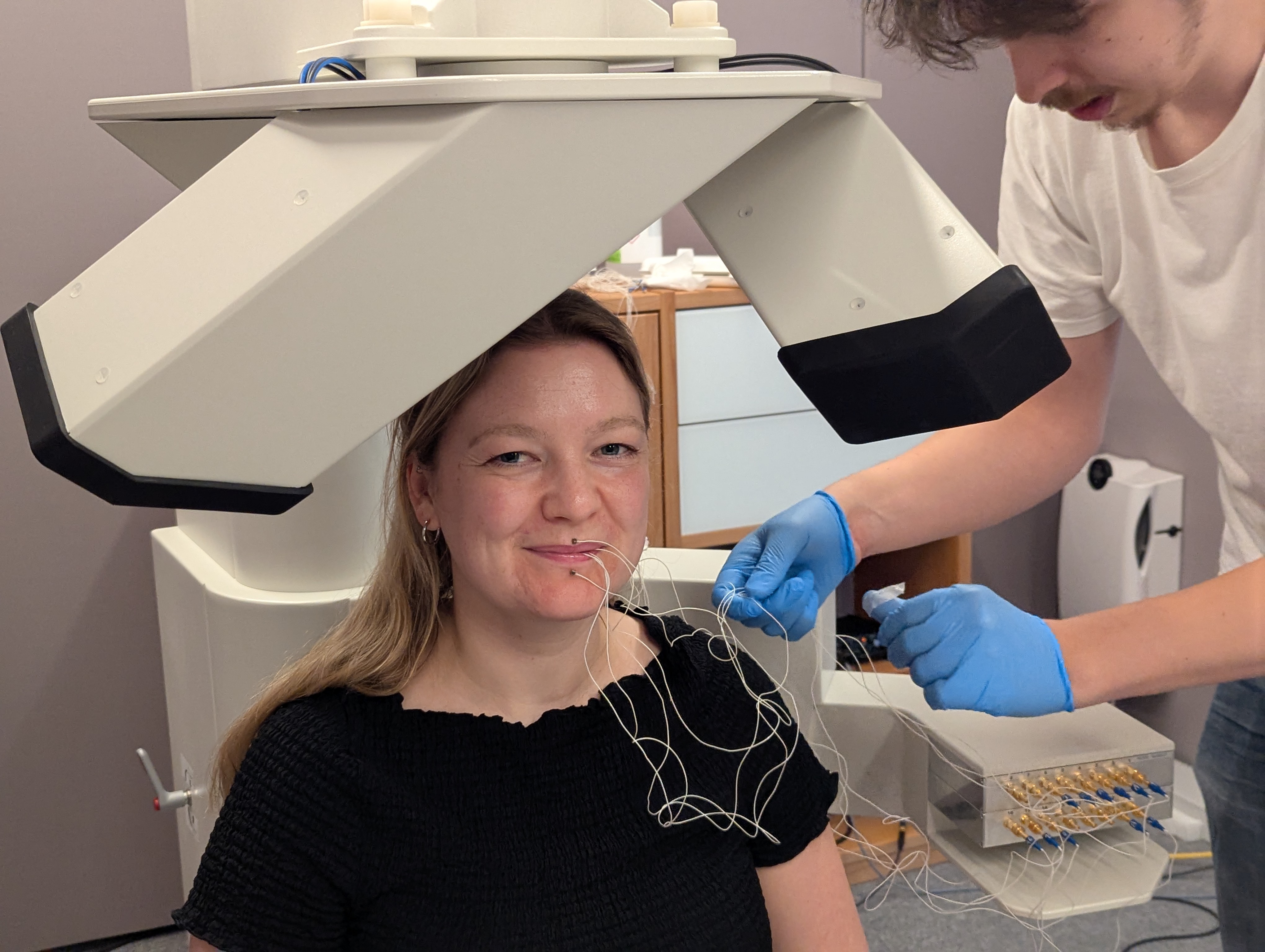
We deal with language processing in the brain and in functional explanatory models, tracing the individual steps in processing, production, and comprehension. Students study neurolinguistic methods for language processing in adults and children with and without brain injuries.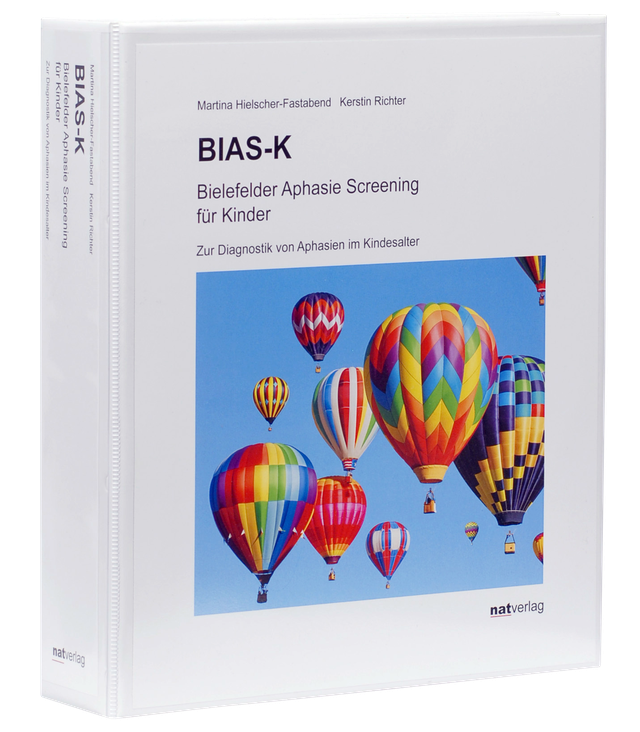
Theoretical Aspects of Clinical Linguistics
More
In this profile, we focus on speech- and language disorders in different populations. The profile includes lectures on acquired and developmental disorders and also covers theoretical and methodological aspects in the development of clinical applications.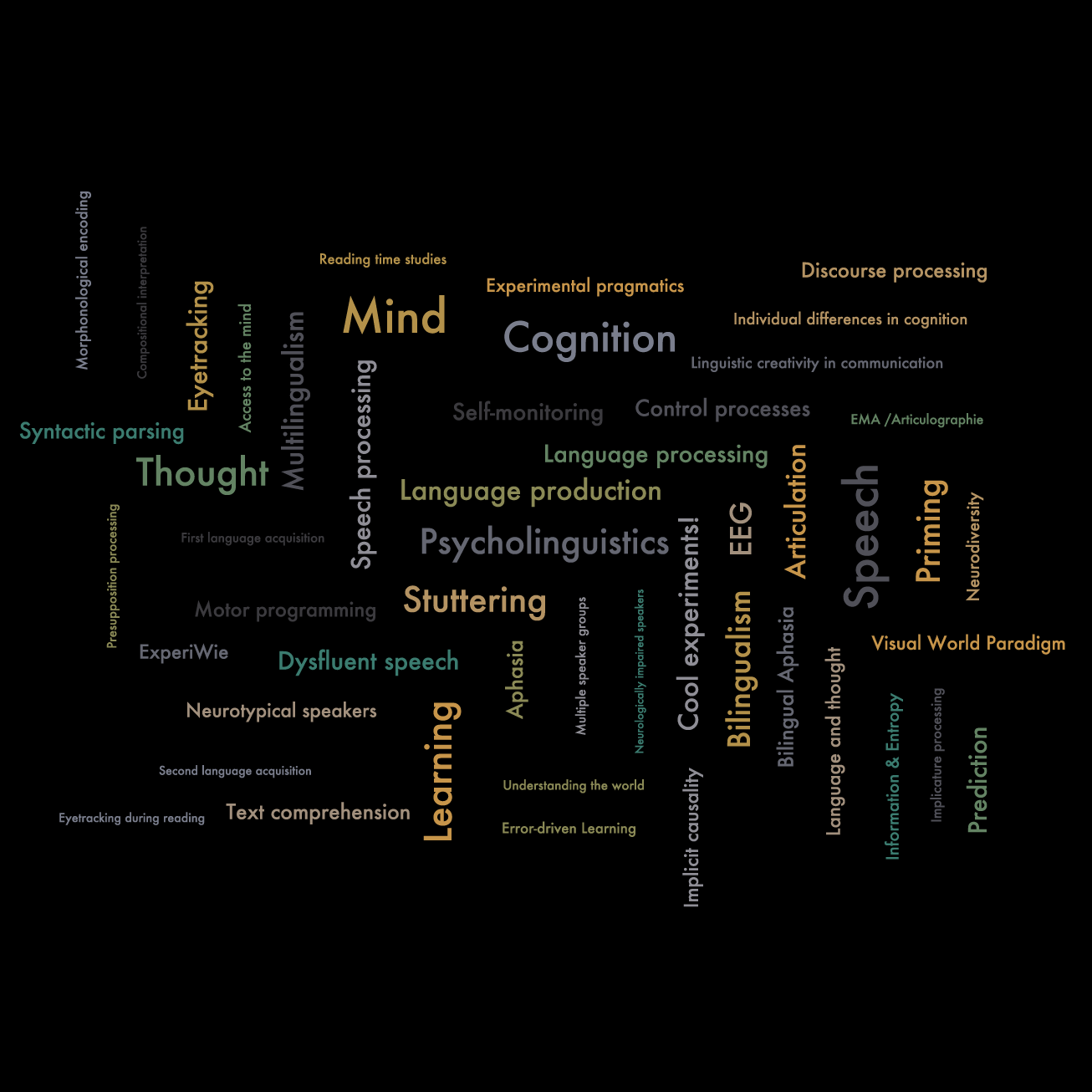
Psycholinguistics
More
Our research focuses on the experimental investigation and psycholinguistic modeling of language acquisition, production and perception in diverse speaker groups (multilingual speakers, speakers who stutter, speakers with speech and language impairment).
- Structure of the program
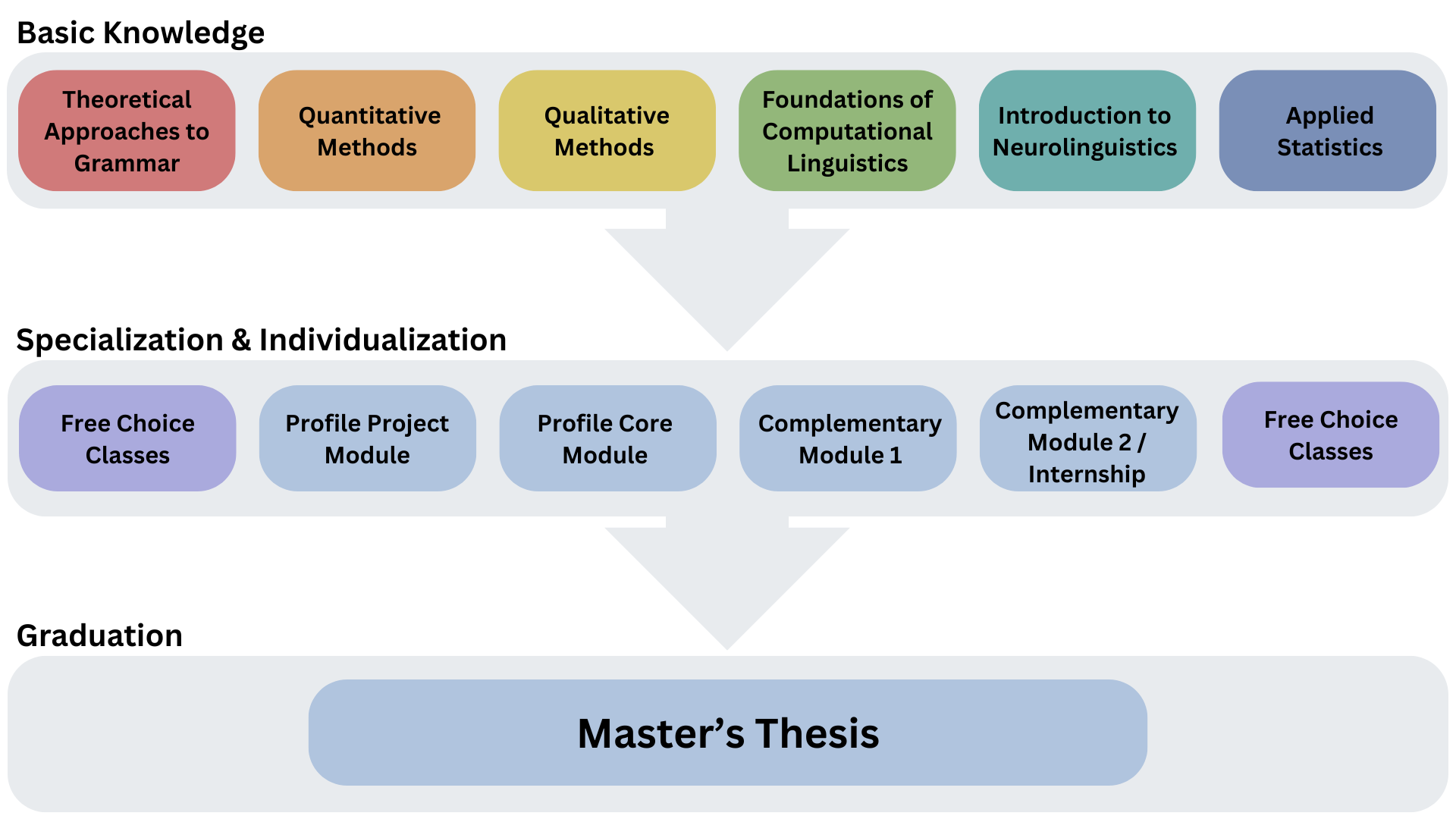
The program is modular and comprises 120 ECTS credits. The standard period of study is four semesters. As students typically choose to start in the winter semester, the programme is oriented towards an October start. However, starting in the summer semester is also possible.
The program consists of three phases:
- Foundation Phase:
Every student completes all foundational modules. These courses are typically taken in the first and second semesters. - Specialization & Individualization Phase:
Students choose one of the seven available profiles as their focus. In this phase, advanced knowledge is acquired within the chosen profile. Additionally, there are two types of supplementary courses:- One module from another profile within the MA Linguistics program
- Free choice courses: Courses from the entire course offerings of Bielefeld University (one complete module must be taken; the other courses can be individual lectures or seminars)
- Final Phase:
Students write their master's thesis in their chosen profile.
You can learn more about the structure and modules of the program here.
- Foundation Phase:
- Apply now!

Admission criteria
To be admitted to the master's program at Bielefeld University, applicants must meet certain criteria. A completed bachelor's degree is required, as is proof of B2 level English skills. For the application, please upload your official transcripts and module descriptions in English or German. We review the courses completed by applicants in detail, and the final decision on admission rests with the program coordinators.