Univsersity of Queensland

Gerhard Hoffstaedter is Associate Professor of Anthropology at the University of Queensland, specialising in forced migration, refugee studies, and Southeast Asian ethnography. As Chief Investigator of the Maritime Refugee Lab, he co-leads research documenting Rohingya maritime journeys and refugee experiences. His publications include Modern Muslim Identities (NIAS Press, 2011), Urban Refugees (Routledge, 2015), and 80+ peer-reviewed articles and chapters. He directs the World101x anthropology MOOC, teaching tens of thousands to think anthropologically globally, and was a 2024 Lee Kong Chian NUS-Stanford Fellow.
Bielefeld University
Antje Missbach is Professor at Bielefeld University, Germany, and a former Senior Research Fellow at the Arnold-Bergstraesser Institute, Freiburg. Her research focuses on Southeast Asia, and she has held visiting appointments at Stanford University, the National University of Singapore, and CSIS Jakarta. She is the author of Troubled Transit: Asylum Seekers Stuck in Indonesia (ISEAS Yusof, 2015) and The Criminalisation of People Smuggling in Indonesia and Australia (Routledge, 2022), and co-author of Indonesia: State and Society in Transition (Lynne Rienner, 2020).
Her latest co-edited, open-access volume is Refugee Protection in Southeast Asia (Berghahn, 2024). Besides her current work on the facilitation of maritime refugee movements in Southeast Asia; and beyond, her research interests include broader socio-legal dimensions of irregular(ised) and forced migration; diaspora politics and long-distance nationalism; underage migrants and the role of religion during different phases of migration.
Refugees risking their lives at sea is a key challenge of our times. Nonetheless, Refugee Studies remain primarily concerned with land-based movements. Refugee boats – and what happens aboard and at sea – need more in-depth theorisation for several reasons:
1) Maritime refugees, unlike those moving by land or air, often remain outside any state jurisdiction.
2) Maritime movements put to the test maritime rescue traditions and the humanitarian commitments of the international community towards refugees.
3) Maritime refugees are affected even more by the deterrence politics ofpotential destination countries and their assertion of sovereignty through more restrictive border controls. The longer refugees remain at sea the less likely their survival.
Against the terrestrial and other geo-political biases in Refugee Studies (“Global North-centricism”) that keep producing imbalanced theory-making on migration, this project will initiate a Maritime Turn to prompt the conceptualisation of sea-bound refugee movements. Thus, by making routes and spaces at sea the basis of theorising about human (im)mobilities and by initiating an interdisciplinary and transnational Maritime (Im)mobilites Laboratory of researchers, this project will produce new knowledge about truly global migration trends and how structural determinants, such as deterrence, non-disembarkation or non-rescue policies exacerbate prolonged refugee journeys and engineer helplessness.
More than 120 million people have been forcibly displaced worldwide because of war, persecution, violence or human rights violations. New and long-standing conflicts are responsible for the highest levels of displacement on record. Refugee journeys to potential places of safety are rarely straightforward; they are staggered and time-consuming, hazardous, have uncertain outcomes and often cause additional vulnerabilities. Multiple attempts, failures, detours, prolonged time in waiting, extortion and violence along the way seem to be the norm rather than the exception.
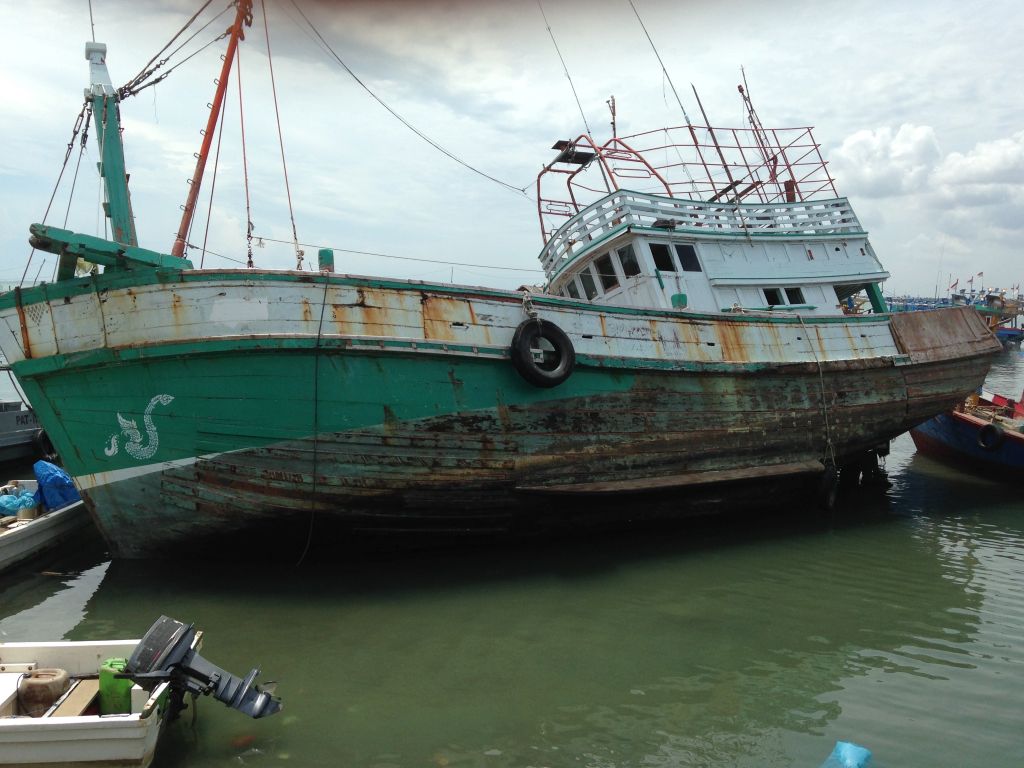
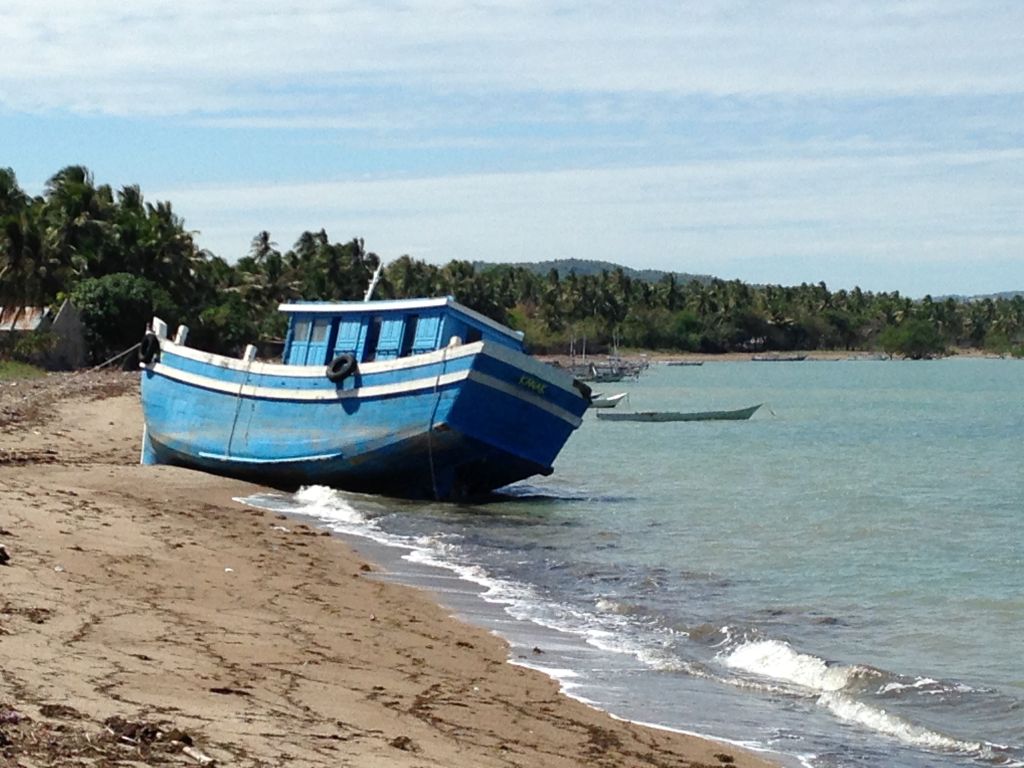
Whenever land routes are too dangerous or simply unavailable, refugees take to the sea. In the last decade, the numbers of maritime boat journeys have increased in most migration corridors around the globe. Whether on inflatable rafts, rubber dinghies, wooden fishing vessels or large freighters, refugees risk their lives in order to escape oppression and terror. The more governments engage in restrictive deterrent and immobilisations measures, including interceptions, turn/pushbacks and detention at sea, the more refugees opt for dangerous routes. We often know about the outcomes of maritime voyages are, even in the case of fatal accidents or disappearances, but little is known about what happens on board boats.
The discussions throughout this writeshop will offer a deeper understanding of refugees’ decision-making and coping strategies in times when the sea is increasingly weaponised against refugees. Making refugee boats the prime site of this writeshop, we seek to explore the social relations and interactions of the passengers aboard refugee boats. The interplay of internal and external factors throughout the journeys can cause cohesion and mutual help but can also cause tensions and breakdown of solidarities.
Based on existing case studies, we ask participants to illustrate how refugees experience maritime passages and how they react to unforeseen challenges, risks and obstacles (pushbacks, deterrence); showcase the evolving dynamics among passengers onboard and how they shape the socialites onboard, including pre-existing ties, gender, age, class, health and power; specific temporalities of the journey and materialities of the boats; and thereby also reflect on the methodological and ethical concerns encountered when studying maritime refugees and boat journeys.
Focusing on refugee boats allows us to trace their role for the passengers and this will also provide people with a voice who otherwise remain silenced and subdued by violence.
In this writeshop we want to challenge the conventional public ‘boat people’ narratives and the inherent norms they engender regarding the political dynamics between the so-called sending countries in the Global South and the destination countries in the Global North serves a new prism for a much wider, thought-provoking social criticism of the contemporary global border and asylum regimes.
We also want to draw attention to ethical questions and dilemmas of working on forced displacement and maritime migration. We want to complicate the relationship between prioritising the human dignity, rights, safety and well-being of research respondents and political agendas or politicised discourses within which our research is published, communicated and debated.
We are particularly looking for contemporary and historical empirical case studies of maritime refugees, boat journeys and what happens on refugee boats. We encourage junior scholars from the Asia-Pacific to apply.
Invitations for this workshop are closed.
Writeshop date: 26-29 January 2026
Venue: Asia School of Business in Kuala Lumpur, Malaysia
The envisioned outcome for this workshop is an academic journal special issue.
Contact: Antje Missbach (antje.missbach@uni-bielefeld.de) and Gerhard Hoffstaedter (g.hoffstaedter@uq.edu.au)
Migrants risking their lives at sea is one of the key challenges of our times. Journeys across the sea are often deemed more dangerous due to the very unpredictable nature of the open waters. Current portrayals focus on boats as deathscapes, but we want to highlight and emphasise the conditions and experiences of life on board. Maritime migrants, unlike those moving by land or air, are often outside any state jurisdiction. Such irregular maritime migration puts to the test existing relations among neighbours, long-established maritime traditions, and the humanitarian commitments of the international community, particularly towards forced migrants and refugees.
All people on board of a refugee boat face the same dangers at sea: drowning, dying of hunger or dehydration, which can create a sense of transitory community. Yet, to ignore intersectional power dynamics (age, race, gender, health and class) and to assume equality amongst them would be naïve. Not everybody onboard has the same capacities to fend for themselves. In contrast, based on the physical and psychological constitution of the passengers thrown together, hierarchies of power evolve amongst the seemingly anarchic situations onboard. The outcomes for passengers are often unpredictable, as they meander between tension, solidarity, intimacy, competition and transgression.
The fears in the Global North of irregular(ised) or mass immigration have resulted in more restrictive border and migration controls that require new research on a crucial, yet under-researched site of those fleeing: The boat. As vital vehicle in the wider migration infrastructure, boats, and what happens aboard them, need more in-depth theorisation. Boats journeys are influenced both by external regulatory factors (national and regional migration regimes) as well as internal dynamics of the passengers themselves. Journeys of escape can become dramatic odysseys of despair; not least as maritime mobility cannot be equated with freedom and liberty. The politics of rejection at sea creates a new quality of strandedness, not least as they help transform boats from vehicles of escape into floating prisons.
By making boats, routes and the spaces they transgress the basis of theorising about maritime (im)mobilities and by initiating an interdisciplinary and transnational Maritime (Im)mobilites Laboratory of researchers, this workshop will accumulate new knowledge about global migration trends and how structural determinants, such as deterrence, non-disembarkation or non-rescue policies exacerbate prolonged refugee journeys and engineer helplessness. This workshop will investigate the interplay of external and internal factors that impede refugee boat journeys by studying the recent maritime mass movements in Southeast Asia, the Mediterranean, the Caribbean and the Red Sea.
To build a long-lasting network, we are particularly interested in transdisciplinary discussions and theorisations of the sea and boats therein from a wide range of disciplinary backgrounds. Throughout the workshop and beyond we hope to engage with some the following questions:
What are the current trends among aspiring migrants and refugees when attempting to cross the Andaman Sea, the Mediterranean, the Caribbean and the Red Sea?
What are the social and psychological impacts of maritime migration on refugees?
What technical, political and legal countermeasures are used by governments or transregional bodies to deter unwanted migrations and disembarkations?
What roles do nonstate actors (NGOs, humanitarians, social movements, media) play in making passages safer?
How do the facilitators of unsanctioned passaged react towards the needs of migrants and refugees as well as to the counter measures by governments?
What can be learnt from historical case studies and insights to inform current debates on maritime refugees?
What are key methodological and ethical concerns when studying maritime refugees?
Invitations for this workshop are closed.
Workshop date: 6 - 8 May 2026
Venue: Bielefeld University, Germany
Contact: Antje Missbach (antje.missbach@uni-bielefeld.de) and Gerhard Hoffstaedter (g.hoffstaedter@uq.edu.au)
Abstract
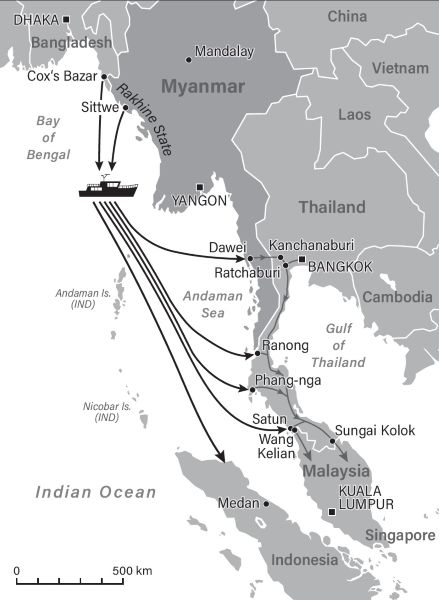
Refugee Studies have extensively documented agency and community formation in camps and in urban settings but lack empirical insights into social organisation during dangerous border crossings. This paper addresses this gap by examining social dynamics aboard Rohingya refugee boats crossing the Andaman Sea. Drawing on survivor interviews, we investigate how refugees develop survival strategies and form temporary social arrangements under extreme maritime constraints. We introduce the concept of contingent collectivities to highlight the social formations that emerge from survival imperatives rather than voluntary association, capable of rapid mobilisation yet prone to dissolution when individual survival overrides collective solidarity. The Andaman Sea’s vast distances, unpredictable state responses, and absence of rescue infrastructure create
unique conditions where boats avoid authorities, knowing interception often means pushback rather than rescue. Our findings contribute to Refugee Studies in a twofold way: empirically by paying attention to previously ignored survival strategies and theoretically by extending community formation concepts to maritime displacement contexts.
Citation: Missbach, A. & Hoffstaedter, G. (2025). Deadly sea passages: navigating risks and uncertainties aboard Rohingya refugee boats. In: Journal of Ethnic and Migration Studies, pp. 1–21. https://doi.org/10.1080/1369183X.2025.2578388
This article is available here.

Secretary
Phone: +49 521 106 - 4639
E-Mail: sekretariat.missbach@uni-bielefeld.de
Homepage