Master’s degree programmes

Molecular Biotechnology (M.Sc.)


Within the field of biotechnology, molecular aspects and bioinformatics are becoming increasingly prominent, yet these areas are not adequately addressed in traditional biotechnology education. Industry is also expected to place increasing demand on expertise, techniques, and methodologies in this field. To support students in the competitive job market and prepare them for a wide range of career paths, the master's course in Molecular Biotechnology places great emphasis not only on a broad education in biotechnology but also on the development of a personalised profile with an individual specialisation. Furthermore, the master course is characterised by a high proportion of work placements, ensuring that graduates of the course are familiar with and have learnt to apply the standard techniques and methods of biotechnology. This is also important for ensuring that graduates are eligible to pursue a PhD across a wide range of disciplines.
master course
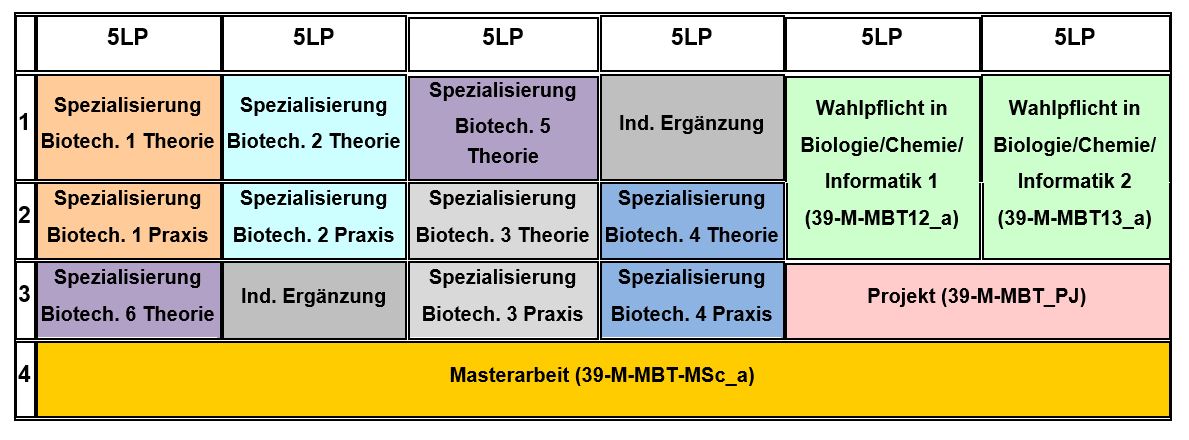
The master course (120 credit points) builds on the skills and knowledge acquired during the Bachelor’s degree and enables students to specialise in specific areas. The master course in Molecular Biotechnology leads to the degree of Master of Science (M.Sc.). The standard duration of study is four semesters.
International exchange and collaborations
Bielefeld University ranks among the leading universities in Germany and internationally in the field of biotechnology. Students benefit from insights into current research, and the faculty’s international collaborations facilitate study and research placements abroad. The Erasmus+ programme takes students to universities across Europe; in addition, Bielefeld University maintains international collaborations and partnerships with higher education institutions on every continent. The International Office provides advice on all matters relating to choosing a place to study, scholarships for studying abroad and the application process.
- Central study information pages: Approval requirements; Examination and study regulations; Subject-specific regulations; Application, admission and enrolment
On Bielefeld University’s central study information pages (Department of Education and Teaching), you will find details of the modules offered for this degree programme in the electronic course catalogue (ekvv), a link to an overview of introductory and orientation events, information on the course start, length and scope of studies, approval requirements, application, admission and enrolment, examination und study regulations, and the subject-specific regulations for the degree programme.
Further information on applications, admission and enrolment can be found on the Student Registry’s website.
- Study Programme Guide

For the specialisations, students must select four theory modules with corresponding practical modules and two further theory modules without practical components (a total of 6 theory + 4 practical). The selection is made from the biotechnology pool:
- Processing of biotechnological products/protein purification: theory and practice,
- Applied Molecular Genetics: Theory and Practice
- Fermentation Technology: Theory and Practice,
- Glycobiotechnology: Theory and Practice,
- Molecular Medicine: Theory and Practice,
- Process measurement technology and specialised measurement methods: theory and practice,
- Cellular Signalling Pathways and Biophysical Methods: Theory and Practice
- Cell Culture Techniques: Theory and Practice,
- Proteomics: Theory and Practice,
- Bioreactors and Plant Design: Theory and Practice,
- Validation of biotechnological processes: theory and practice,
- Fundamentals and Applications of Synthetic Biology: Theory and Practice,
- Formulation Technology: Theory and Practice,
- Microfluidics and Single-Cell Cultivation: Theory and Practice
- Fundamentals of Brewing: Theory (Practical sessions to follow)
- Current Topics in Biotechnology: Theory
- Synthetic Biology: Theory and Practice
- Course content
The master course in Molecular Biotechnology focuses on specialisations within biotechnology. Students choose from a range of theoretical and practical specialisms.
These currently include:
- Applied Molecular Genetics
- Processing of biotechnological products/protein purification
- Biocatalysis
- Bioreactors and plant design
- Fermentation technology
- Formulation technology
- Glycobiotechnology
- Fundamentals and Applications of Synthetic Biology
- Industrial Biotechnology
- Molecular Medicine
- Molecular and Cellular Genetics of Eukaryotic Cells
- Proteome analysis of animal cell lines
- Specialisation in Process Measurement Technology, Analytics and Specialised Measurement Methods
- Regulatory mechanisms of eukaryotic cells
- Validation of biotechnological processes
- Cell culture techniques
- Cellular signalling pathways and biophysical methods
- Microfluidics and single-cell culture in biotechnology
- Thesis topics
- Career prospects
There is a high demand for molecular biotechnologists with an interdisciplinary background, both in scientific research and in the related sectors of industry and services. Particularly in industry, and specifically in the field of active ingredient production, the demand for skilled professionals continues to rise, meaning that there are currently excellent career prospects. Potential career paths for graduates include the pharmaceutical industry, genetic engineering laboratories, areas of medical research and diagnostics, process engineering, science journalism, government agencies, or software development for molecular biotechnology companies. New career fields are currently emerging in those areas of so-called ‘white biotechnology’ which are linked to the production of biofuels or the manufacture of chemicals from renewable raw materials.
- PhD
A PhD is particularly relevant for students who wish to pursue an academic career after completing their Master’s degree. It serves to further innovative research and consists of an independent piece of academic research ((doctoral) thesis) and an oral examination (defence). To ensure the best possible support for doctoral studies, Bielefeld University is continuously expanding and strategically developing its extensive network of international and national Research Training Groups and structured doctoral programmes.
At the Faculty of Technology, students have the option of pursuing a doctoral degree independently or enrolling in the following doctoral programmes:
- Bioinformatics
- Intelligent Systems
In addition to the doctoral degree at the Faculty (Dr. rer. nat. or Dr.-Ing.), students on these doctoral programmes must complete an individual study programme. This includes both intensive academic supervision and a range of courses covering non-subject-specific skills such as presentation techniques, academic writing and career planning.