Promotion an der Technischen Fakultät

Überblick

Die ersten Schritte jeder Promotion bestehen darin, eine Betreuungsperson zu finden und ein Forschungsthema zu identifizieren sowie die Finanzierung zu sichern. Anschließend haben Sie zwei Möglichkeiten, Ihre Promotion durchzuführen:
- freie Promotion
- strukturierte Promotion / Promotionsstudiengang
Promotionsprogramme vernetzen Promovierende, die an unterschiedlichen Forschungsfragen arbeiten, jedoch durch gemeinsame wissenschaftliche Interessen miteinander verbunden sind. Eine zentrale Koordination bündelt wissenschaftliche Aktivitäten, die sowohl Ihr Dissertationsprojekt als auch darüber hinausgehende Angebote umfassen. Weitere Details finden Sie unten.
An der Technischen Fakultät besteht die Möglichkeit, den Doktorgrad in den Naturwissenschaften (Dr. rer. nat.) oder in den Ingenieurwissenschaften (Dr.-Ing.) zu erwerben. In Ausnahmefällen ist eine Fast-Track-Promotion möglich, gegebenenfalls mit ergänzenden Studienleistungen oder einem parallel abgeschlossenen Masterstudium.
In der Regel wird die Dissertation als Monografie verfasst; eine kumulative Form ist jedoch ebenfalls möglich.
Zum Abschluss des Promotionsverfahrens wird eine individuelle Prüfungskommission eingesetzt. Diese besteht aus internen und/oder externen Professorinnen und Professoren als Gutachtenden, einer promovierten wissenschaftlichen Mitarbeiterin bzw. einem promovierten wissenschaftlichen Mitarbeiter sowie einer weiteren Professorin bzw. einem weiteren Professor der Fakultät, die oder der den Vorsitz übernimmt. Nachdem die Dissertation von den Gutachtenden bewertet wurde, wird die Arbeit im Rahmen einer Disputation vorgestellt, diskutiert und abschließend von der Kommission benotet. Diese Disputation kann öffentlich oder nicht öffentlich stattfinden, je nach Wunsch der Kandidatin bzw. des Kandidaten oder abhängig von Aspekten wie etwa dem Patentschutz.
Nach der Veröffentlichung der Dissertation, die auch in elektronischer Form erfolgen kann, erhalten Sie Ihre Promotionsurkunde. Herzlichen Glückwunsch!
Weitere Details zum Ablauf finden Sie in unseren Richtlinien im Bereich "Downloads" in der rechten Seitenleiste.
Strukturierte Promotion | Promotionsstudiengänge
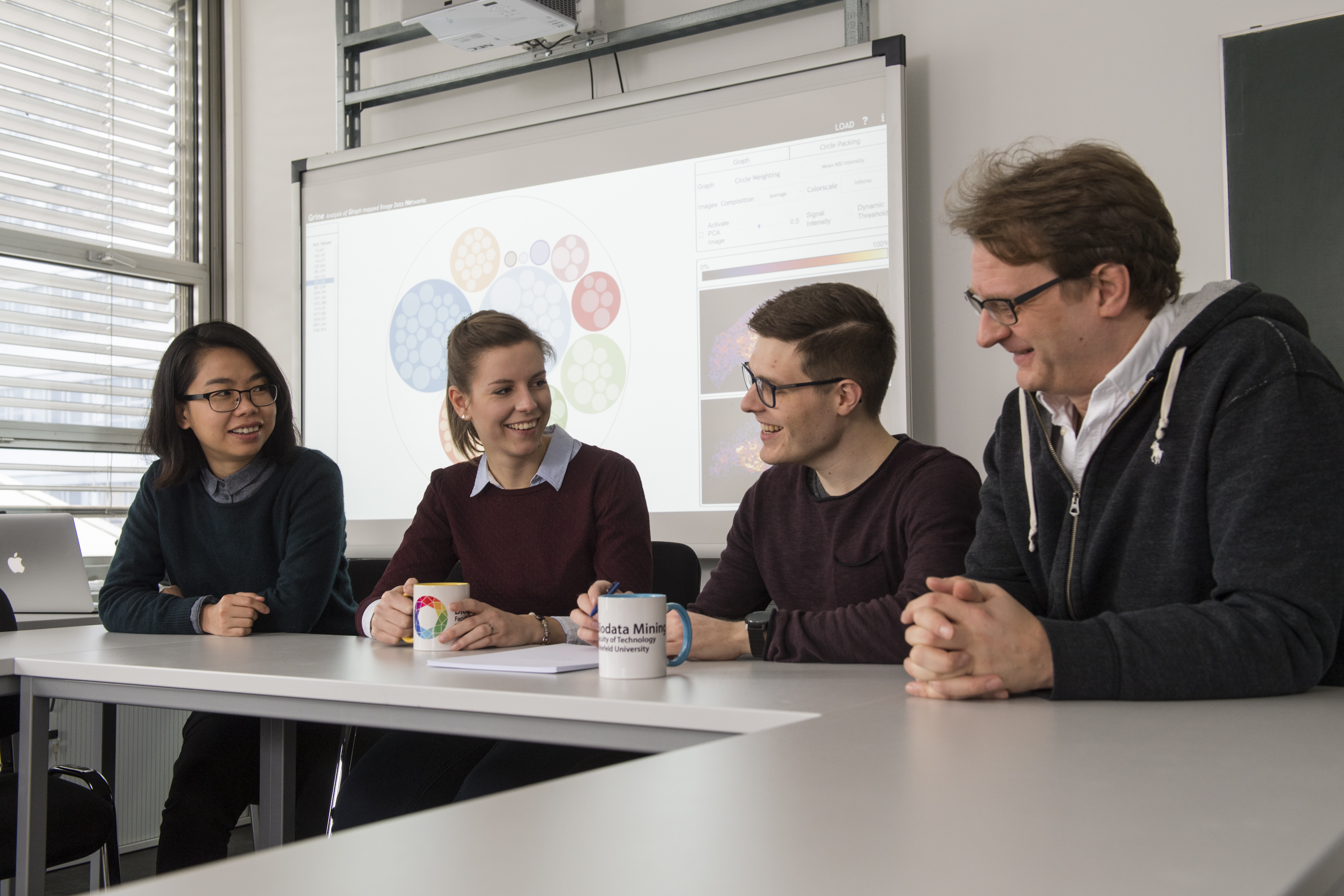
Unsere Promotionsstudiengänge werden von einem Lenkungsausschuss aus erfahrenen und engagierten Professorinnen und Professoren betreut und bieten eine zentrale Koordination, Qualitätssicherung sowie individuelle Unterstützung durch eine wissenschaftliche Koordinatorin bzw. einen wissenschaftlichen Koordinator.
Promovierende mit ähnlichem fachlichen Hintergrund und verwandten wissenschaftlichen Zielsetzungen haben die Möglichkeit, Teil eines Netzwerks zu werden und sich für gemeinsame akademische Vorhaben zusammenzuschließen.
Ein breites Kursangebot ermöglicht es den Promovierenden, ihre Kenntnisse und Kompetenzen in verschiedenen wissenschaftlichen Disziplinen zu erweitern. Neben der fachlichen und wissenschaftlichen Ausbildung im Rahmen des Programms können sie zudem ihre Team-, Kommunikations- und Präsentationsfähigkeiten ausbauen. Eine abschließende Bescheinigung bestätigt die Teilnahme am Promotionsstudienprogramm; alle im individuellen Studienplan erbrachten Leistungen werden in einem ausführlichen Transkript dokumentiert.
Wenn Sie sich noch nicht sicher sind, können Sie zunächst eine Individualpromotion beginnen und sich später für die Teilnahme an einem Promotionsstudienprogramm einschreiben.
- Qualifikationsprogramm
Promovierende in einem Promotionsstudienprogramm absolvieren neben ihrem Forschungsprojekt ein Qualifizierungsprogramm im Umfang von insgesamt 30 ECTS-Punkten. Dieses wird individuell in Abstimmung mit der wissenschaftlichen Koordinatorin bzw. dem wissenschaftlichen Koordinator sowie den Betreuenden entsprechend dem fachlichen Hintergrund und dem Dissertationsprojekt gestaltet.
Ein individueller Studienplan umfasst verschiedene akademische Bestandteile:
- Fachspezifische Lehrveranstaltungen: Geeignete Kurse können aus dem eKVV gewählt werden. Darüber hinaus können externe Veranstaltungen wie Vorlesungen an Partnerinstitutionen, Summer Schools oder Tutorials anerkannt werden.
- Gruppenseminare: In Gruppenseminaren werden eigene Forschungsergebnisse sowie wissenschaftliche Literatur präsentiert und diskutiert.
- Organisation von Workshops: Die Organisation oder Durchführung eines Workshops bietet die Möglichkeit, wissenschaftlich relevante Kompetenzen zu erwerben.
- Mitwirkung in der Lehre: Durch die Unterstützung in Lehrveranstaltungen erwerben Promovierende Fähigkeiten in der didaktischen Aufbereitung und prägnanten Darstellung von Inhalten, im freien Vortrag vor Gruppen sowie in der Moderation von Diskussionen.
- Publikationen: Durch die Veröffentlichung eigener Forschungsergebnisse lernen Promovierende, (Zwischen-)Ergebnisse unter strengen Seitenvorgaben klar darzustellen und in den aktuellen Forschungsstand einzuordnen. Zudem ermöglicht die Teilnahme an wissenschaftlichen Konferenzen den Austausch mit anderen Forschenden. Für Beiträge (als Autorin/Autor oder Koautorin/Koautor) auf einschlägigen internationalen Konferenzen, einschließlich Vorträgen oder Posterpräsentationen, sowie für Artikel in einschlägigen internationalen Fachzeitschriften können Leistungspunkte erworben werden. Auch die Mitwirkung im Peer-Review-Verfahren fördert Kompetenzen wie die kritische Beurteilung und sachliche Diskussion wissenschaftlicher Arbeiten.
- Betreuung von Master-, Bachelor- und Studienprojekten: Die Begleitung studentischer Arbeiten vermittelt wertvolle Erfahrungen in der Forschungsbetreuung, im Projektmanagement und in der Führung.
- Außerfachliche Zusatzqualifikationen: Leistungspunkte können auch für promotionsbezogene Qualifikationen außerhalb des eigenen Fachgebiets vergeben werden, beispielsweise in den Bereichen wissenschaftliches Schreiben, Patent- und Urheberrecht, Betriebswirtschaft oder Projektmanagement.
- Intelligente Systeme

© Universität Bielefeld Der interdisziplinäre Promotionsstudiengang Intelligente Systeme (ISY) hat das Ziel, Promovierenden eine fachübergreifende wissenschaftliche Qualifikation zu vermitteln, um die Interaktion mit zukünftiger Künstlicher Intelligenz und intelligenten Systemen zu konzipieren und realisieren. Es ist eng mit der zentralen wissenschaftlichen Einrichtung CITEC (research center on cognitive interaction technology) verbunden, welche die multidisziplinäre Expertise der Universität Bielefeld bündelt und vorantreibt. Untersucht werden dabei natürliche und künstliche intelligente Agenten, die mit unterschiedlichen Arten von Umgebungen interagieren und aus ihnen lernen. Über verkürzte Lernverfahren oder die bloße oberflächliche Nachahmung menschlichen Verhaltens hinaus zielen wir darauf ab, die kognitiven Fähigkeiten zu analysieren und zu modellieren, die erforderlich sind, um Interaktionstechnologien mit menschlichen Werten und Erwartungen in Einklang zu bringen. Im Mittelpunkt steht dabei die Frage, wie Bedeutung und Handlungen geteilt und Informationen angemessen vermittelt werden.
Das Promotionsstudienprogramm ISY wird gemeinsam von folgenden Fakultäten getragen:
- Fakultät für Biologie
- Fakultät für Linguistik und Literaturwissenschaft
- Fakultät für Psychologie und Sportwissenschaft
- Technische Fakultät
- Bioinformatik
© Universität Bielefeld Der technologische Fortschritt erlaubt es, dass in den Lebenswissenschaften experimentelle Daten schneller gewonnen werden, als sie interpretiert werden können. Aber durch den technologischen Fortschritt werden nicht nur mehr Daten gewonnen, sondern es können auch gänzlich neuartige Fragestellungen bearbeitet werden, wie beispielsweise Einzelzell-, Metagenomik-, oder Pangenomik-Studien.
Ziel des Promotionsstudiengangs Bioinformatik ist die Ausbildung von herausragenden Nachwuchswissenschaftler*innen mit einem Fokus auf die Entwicklung neuer bioinformatischer Methoden.
Um ein hohes Maß an Betreuung zu gewährleisten, umfasst dieses Programm direkte Betreuung durch mindestens eine(n) Zweitbetreuer*in und indirekte Betreuung durch den Lenkungsausschuss. Der Fortschritt wird in Form jährlichen Fortschrittsberichten und/oder Vorträgen dokumentiert. Individuell organisierte Forschungsaufenthalte an Partnerinstitutionen sind ebenfalls ein geschätzter Bestandteil des Studienplans.
Gemeinsame Aktivitäten wie ein regelmäßig stattfindendes Doktorand*innenseminar sowie Retreats fördern die Vernetzung und Zusammenarbeit der Promovierenden.


Zugang und Einschreibung
Jede Promotion an der Universität Bielefeld erfordert die Annahme als Doktorand*in an der jeweiligen Fakultät und die Einschreibung im Studierendensekretariat. Dies gilt auch für die freie Promotion. Externe Promovierende können eine Beurlaubung beantragen.
Wenn Sie Mitglied eines strukturierten Promotionsstudienprogramms werden möchten, wenden Sie sich bitte an die jeweilige Koordinatorin bzw. den jeweiligen Koordinator. Erteilt der Lenkungsausschuss des Programms den Zugang, wird dies im Rahmen des Annahmeverfahrens bestätigt und ermöglicht die Einschreibung gemäß der entsprechenden Promotionsstudienordnung.
Bitte beachten Sie, dass die Promotionsstudiengänge keine Stellen oder Stipendien vergeben. Fragen zur Finanzierung sowie die Suche nach einer Betreuungsperson und einem Promotionsthema sollten vor der Einschreibung geklärt werden.
- Allgemeines Verfahren: Details zum Annahmeverfahren finden Sie in unseren Richtlinien im Bereich "Downloads" in der rechten Seitenleiste (oben auf der Seite).
- Intelligente Systeme: Kontaktieren Sie die Koordinatorin bzw. den Koordinator, um den Zugang zum Promotionsstudiengang zu beantragen. Fügen Sie eine Zusammenfassung Ihres geplanten Dissertationsprojekts sowie einen Entwurf des Formulars zur Annahme als Doktorand*in (zur Einreichung beim Studierendensekretariat) bei.
- Bioinformatik: Kontaktieren Sie die Koordinatorin bzw. den Koordinator, um sich für den Zugang zum Promotionsstudiengang zu bewerben. Bitte fügen Sie ein kurzes Motivationsschreiben, eine Beschreibung des Promotionsprojekts, einen Lebenslauf sowie das Masterzeugnis bei. Das Aufnahmeverfahren umfasst zudem einen Bewerbungsvortrag und ein kurzes Auswahlgespräch.