Remote Heart Rate Estimation

Remote Heart Rate Estimation
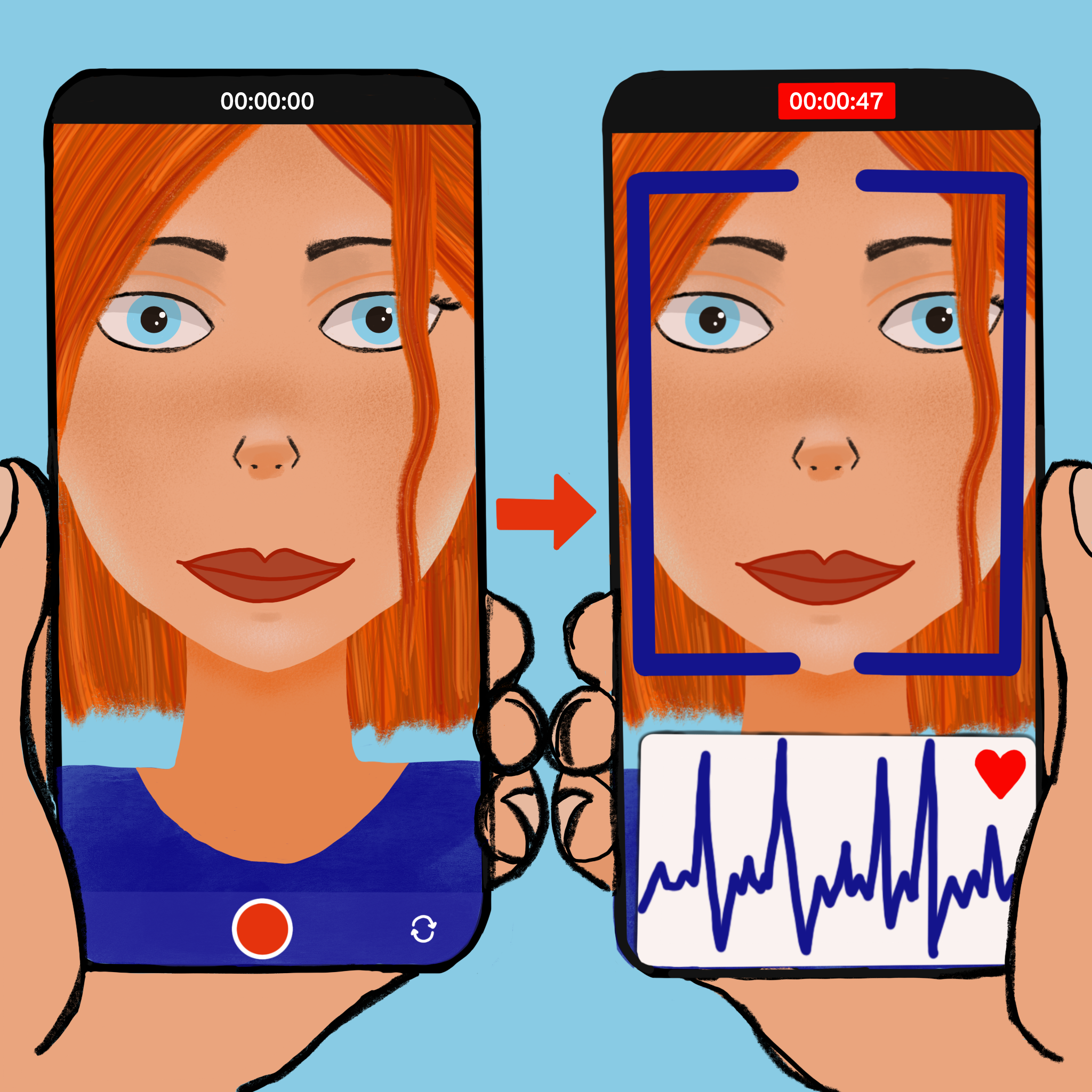
Heart rate serves as a crucial health indicator, aiding in the early detection of various disorders, especially stress-related issues. Traditionally, dedicated devices were necessary for heart rate monitoring, requiring physical contact with the individual. Recent advancements in artificial intelligence have enabled heart rate estimation from facial videos. However, these methods face challenges, such as movement artifacts, changes in illumination and high heart rates. Our research project aims to identify and address these limitations, working towards more robust methods for accurate heart rate estimation under diverse conditions.
This project is part of SAIL, which is funded by the Ministry of Culture and Science of the State of North Rhine-Westphalia under the grant number NW21-059A.
CHILL Dataset
The CHILL dataset is a novel benchmark for remote photoplethysmography (rPPG) research comprising video and PPG signals from 45 participants (ages 18-32) captured under challenging but clinically relevant conditions often missing from existing datasets. The dataset includes 180 one-minute recordings (1920×1080, 25fps) across four experimental scenarios combining two lighting conditions (bright and dark) with two heart rate states (resting and elevated), achieving heart rates ranging from 54-141 BPM through exercise-induced elevation. To get access to the dataset, please download and fill out the academic dataset license agreement.