Fokusbereiche

Activities
24th June 2026 | PINC@BI.research Conference 2026


Once again this year, the BI.research Conference provided the focus areas with an opportunity to network and identify common topics for discussion and research questions. Our focus area PINC had a successful presence in both its own session and one organized by the focus area REFLECT.
Session 1 – Creativity in Problem Solving
Building on brief five-minute presentations from the disciplines of linguistics, literary studies, psychology, and economics, lively discussions took place in a World-Café format on the importance of creativity in the search for solutions to problems. Especially in an era marked by numerous profound transformations, the ability to act creatively is becoming increasingly relevant for responding to the resulting crises and challenges. Our discussions also built on previous exchanges within our focus area and allowed us to experience the interdisciplinary range within PINC.
Session 2 – Understanding and Fostering Critical Thinking in the Age of AI (REFLECT together with PINC)
During the second session, PINC gained insights into the work being done within the focus area REFLECT. Following an engaging presentation of several projects aimed at equipping students with the skills to think and work critically in the age of artificial intelligence, Prof. Dr. Hendrik Buschmeier from our focus area gave a brief presentation on the risks and vulnerabilities of LLMs. This clearly highlighted both the growing need to empower students to become critical thinkers in our democratic society and the points of intersection between our focus areas. We look forward to continued dialogue and collaboration!
28th April 2026 | Uncertainty meets Creativity – "Creative Destruction" (Event)
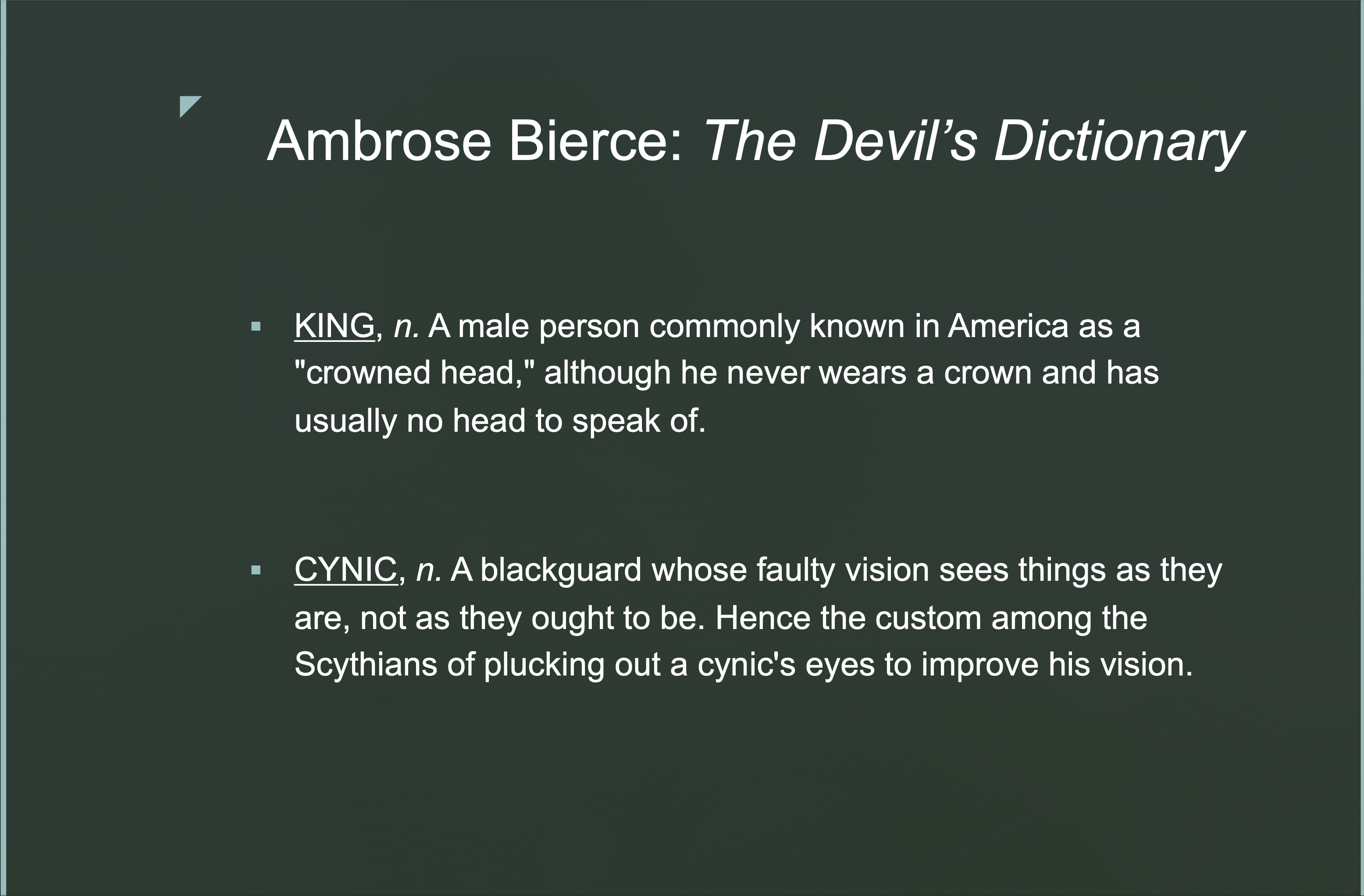
On April 28, 2026, the event Uncertainty meets Creativity – “Creative Destruction”, co-organized by PINC focus area and the Center for Uncertainty Studies (CeUS) took place. The kickoff for the joint event was the 2025 award ceremony for the Sveriges Riksbank Prize in economic sciences in memory of Alfred Nobel, which was awarded to Joel Mokyr, Philippe Aghion, and Peter Howitt for their theory of sustained growth through creative destruction. First, Herbert Dawid (Faculty of Economics; CeUS) gave a brief introductory talk on what the concept of “creative destruction” means in the field of economics. The concept describes a creative process of product innovation in which lower-quality intermediate goods are replaced by better ones, resulting in a firm losing its market position. This ongoing cycle of technological leadership has been exemplified by the case of how the iPhone replaced Nokia’s dominant position in the mobile phone market. Afterwards, Claudia Hillebrandt (Faculty of Linguistics and Literary Studies; PINC) then applied the presented concept to literary studies and presented satire as a genre of creative destruction. Satirical texts aim to challenge given norms and establish counter-norms. The event concluded with a panel discussion, moderated by Silke Schwandt (Faculty for History, Philoshophie, and Theology; CeUS) and joined by Ralf Vogel (Faculty of Linguistics and Literary Studies; PINC). Key points of discussion included, among others, the question of what is actually destroyed in the concept of creative destruction and the possible notion of self-destruction in this process.
Call for Papers | Collection WG1: Convention, Creativität & Innovation
The focus area Processes of Creativity and Innovation (PINC) at Bielefeld University invites interested researchers to submit contributions for a collection on the topic of “Convention, Creativity & Innovation”.
Creativity research distinguishes between various domains of creativity, ranging from artistic creation to inventions to problem-solving in everyday life. Creativity is understood here primarily as a salient deviation from the conventions of a certain domain, namely in a successful way in the broadest sense (originality and effectiveness as central criteria of creativity; cf. Runco & Jaeger 2012: 92). Simultaneously, conventions and their formation are also subject to a constant innovative dynamic (cf. Elias 2001; Lewis 1975).
Especially at a time of numerous profound changes and crises, the understanding of creativity and the creative handling with existing conventions is gaining in importance. Both changed circumstances and new ideas can lead to established conventions no longer serving as reference points, thereby necessitating change. Depending on the domain, differences in the interplay between convention and creativity as well as variations in creative and innovative processes can be expected.
We invite submissions that investigate the tension between convention, creativity, and innovation outlined above from the perspective of various disciplines, e.g. in concrete case studies, theoretical reflections, or interdisciplinary comparisons. The collection aims to provide a fundamental understanding of the triggers for creative and innovative processes within conventionalized circumstances, as well as the underlying processes and mechanisms. A key focus is on identifying similarities and differences in creative handling or the breach with existing conventions across various domains. Contributions should address the following questions, among others, but are not limited to them:
What does it mean to deal creatively with, break with, or renew an existing convention in a specific domain?
What triggers are needed to creatively deal with or break an existing convention and establish something new?
How easily or difficultly is breaking with conventions accepted on a social level? What determines the acceptance of an innovation?
When breaking with conventions, is the focus more on originality, effectiveness, or both?
What methodological approaches are suitable for exploring the interplay between convention, creativity, and innovation?
We invite contributions from all disciplines that address one of the questions listed above and explore the tension between convention, creativity, and innovation from a theoretical and/or empirical perspective.
Time management
For the planned collection, an abstract of no more than two A4 pages (excluding references) can be submitted as a PDF file to the email address pinc@uni-bielefeld.de by May 15, 2026. Further information will be provided to interested researchers by June 15, 2026, at the latest. Articles must be submitted by fall 2026, the publication of the collection is planned for spring 2027.
We are looking forward to your contributions!
References
Elias, Norbert. 2001. Society of Individuals. London: Continuum.
Lewis, David. 1975. Languages and Language. In Keith Gunderson (ed.), Minnesota studies in the philosophy of science, 3–35. Minnesota: Minnesota University Press.
Runco, Marl A. & Garret J. Jaeger. 2012. The Standard Definition of Creativity. Creativity research journal 24(1). 92–96.