
Core Facility Omics, Division Proteomics and Metabolomics
Contact


Dr. Marcus Persicke
Head Division Proteomics and Metabolomics
E-Mail:
cf.omics-prot-met@uni-bielefeld.de
Phone: +49 521 106-12252
The division Proteomics & Metabolomics is Bielefeld University's central service and research platform for the comprehensive analysis of proteins and metabolites. As a team, we support researchers from biology, chemistry, medicine and related disciplines in all aspects of their work, from project planning and analysis to bioinformatic data evaluation, developing tailor-made solutions for complex problems.
In proteomics, we offer high-resolution mass spectrometric analyses for the global detection of protein expression and post-translational modifications. Our workflows are established for various sample types – from cell cultures to clinical material – and ensure high sensitivity, reproducibility and quantitative accuracy.
Metabolomics complements these approaches, whereby high-resolution mass spectrometers and triple quadrupole instruments can be used to perform non-targeted, targeted and quantitative analyses of small molecules via GC-MS and LC-MS. We also offer specialised methods such as lipidomics and MALDI imaging, which provide detailed insights into metabolic processes and their spatial organisation.
Structured and transparent data analysis is an integral part of our work. Omics data sets are complex and require careful quality control. We provide support in bioinformatic processing and the application of multivariate analysis methods.
We see ourselves as a research core facility that supports scientific partners in their projects. We advise on study design and sample preparation, jointly develop experimental strategies, and provide support with grant applications and publications. In addition, we offer training courses and workshops to impart methodological knowledge and promote sustainable competence building.
Services
We offer an integrated, end-to-end solutions from project consultation, sample preparation, data acquisition, analysis, interpretation, and support for publications or grant applications. We support basic, preclinical, and clinical research as well as industry collaborations.
- Proteomics
Discovery Proteomics - hypothesis-free analytical approach used to identify and quantify as many proteins as possible within a biological sample (cell, tissue, fluid).
Post-Translational Modifications (PTMs) - PTMs are reversible editing events used and carried out in the overall process of post-translational regulation, e.g. phosphorylation, acetylation.
Gel-based and Purified Protein Identification
- Metabolomics
Targeted Metabolomics - Semi-quantitative or absolute measurement of selected metabolites for specific biological questions.
Absolute Quantifications:
- Amino acids
- Drugs and Drug Metabolites
- Saliva Cortisol
- Pyruvate / Lactate
- Steroid profiling (using MassChrom® kit for serum/plasma)
Semi-Quantifications:
- Free Fatty acids
- Central carbon metabolism & sugars: TCA cycle metabolites, Glycolysis intermediates, Pentose phosphate pathway (PPP) metabolites, Mono- and disaccharides, Small organic acids
Untargeted Metabolomics - Comprehensive analysis of all detectable metabolites in a biological sample without prior selection. Metabolites are identified via in-house and commercial libraries, and results reported as fold changes across different conditions/groups.
For specific analytes quantification please contact us.
- Lipidomics
Shotgun Lipidomics - High-throughput (direct infusion) global lipid profiling, which allows absolute quantification (molar concentrations) using internal standards. This method is suitable for large cohorts, comparative studies, and biomarker screening.
4D Lipidomics - Liquid chromatography coupled with trapped ion mobility and mass spectrometry allows separation of isobaric and isomeric lipid species, which enables structural lipid characterization and deeper insights into complex lipidomes.
3D Spatial Lipidomics - Matrix-assisted laser desorption/ionization mass spectrometry imaging enables label-free spatial (qualitative & quantitative) mapping of lipids and integrates molecular and histological information.
Targeted Lipidomics - high-sensitivity quantification assays for selected lipids, suitable for validation and clinical translation studies.
Instrumentation
- 1. High-Resolution LC-MS/MS (Untargeted Metabolomics / Lipidomics / Proteomics)
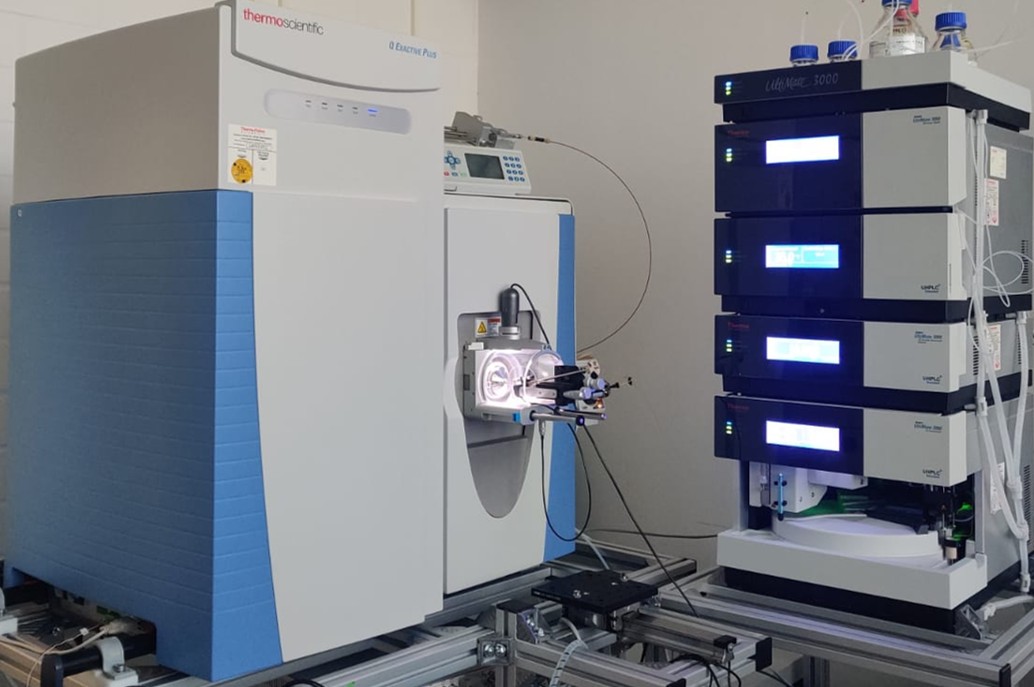
Q Exactive Plus Orbitrap coupled with UltiMate 3000 RSLCnano System (Thermo Fisher Scientific)

© Dr. Dipali Kale, Bielefeld University The Q Exactive Plus is a hybrid quadrupole-Orbitrap mass spectrometer coupled to an UltiMate 3000 nUHPLC. Through a combination of scan speed, high resolution, mass accuracy, spectral quality, and sensitivity it is ideally suited for shotgun/bottom-up proteomics, which means to routinely and confidently identify, quantify, and confirm in a single analysis thousands of proteins and their post-translational modifications (PTMs).
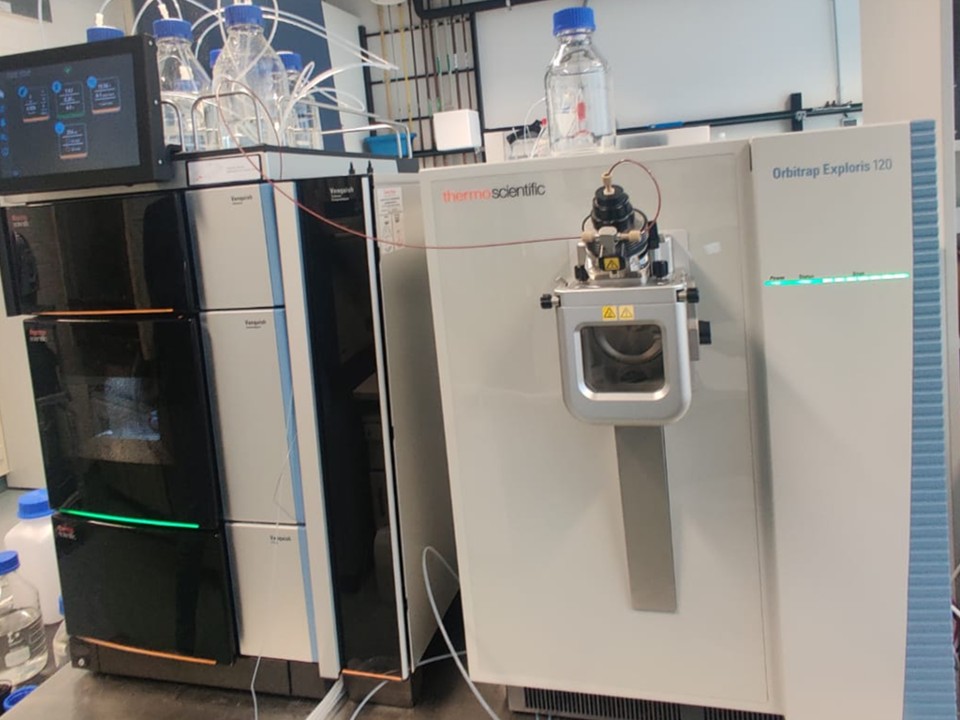
Orbitrap Exploris 120 (Thermo Fisher Scientific) coupled with Vanquish UHPLC (Thermo Fisher Scientific)
© Dr. Dipali Kale, Bielefeld University The LC-ESI-Orbitrap system consists of a high-resolution mass spectrometer. It is characterized by a mass range of 20 - 2,000 m/z. The special feature of the device is the high mass accuracy of <1 ppm with internal calibration, which together with the very high resolution of up to 120,000 facilitates unknown metabolite identification.
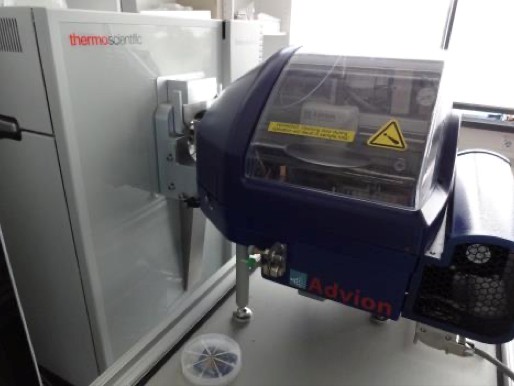
TriVersa NanoMate integrated ion source platform (Advion Interchim Scientific)
© Dr. Marcus Persicke, Bielefeld University This device is a chip-based nano-ESI source with an automatic sample application uni. The device operates by direct infusion and uses a separate emitter for each sample, eliminating sample contamination. It is characterized by the fact that 15 minutes of stable spray can be generated from 3µ of sample. The source can currently be operated on both Orbitrap devices, the QExactive Plus and the Exploris 120.
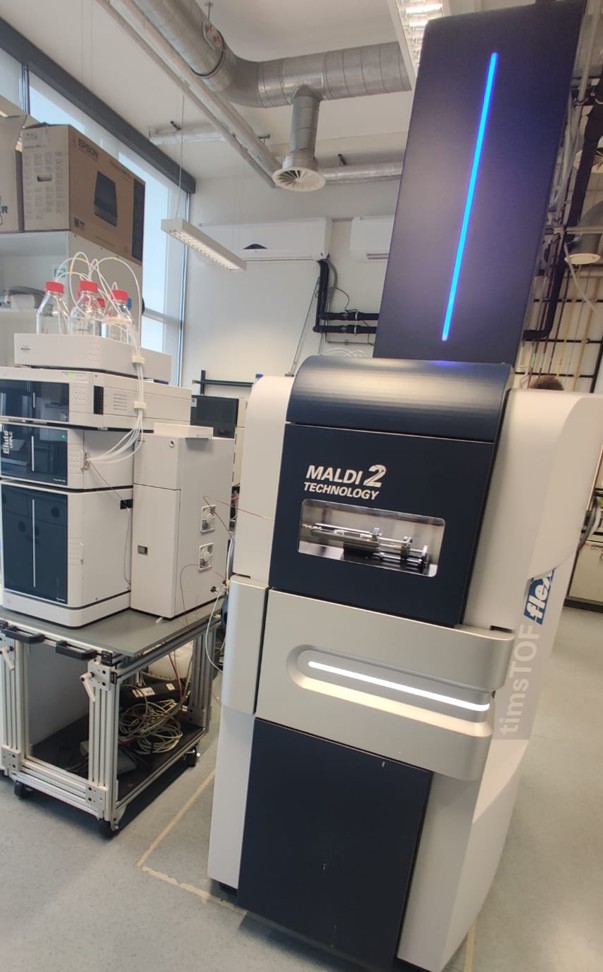
timsTOF fleX MALDI-2 coupled with Elute UHPLC (Bruker Daltonics)
© Dr. Dipali Kale, Bielefeld University The LC-ESI/MALDI-TOF system consist of a high-resolution mass spectrometer. It is characterized by a wide mass range (m/z 20 - 40,000) and a high resolution of up to 60,000. The special features of this device are the two application areas: cell-internal metabolomics and spatial metabolomics of thin sections. An additional feature is the trapped ion mobility spectroscopy (tims), which enables the measurement of ion mobility and generates clean MS/MS spectra at the same time. Another highlight is the double laser for imaging, which enables post-ionization leading to enhanced sensitivity.
- 2. Targeted LC-MS/MS (Metabolites / Lipids)
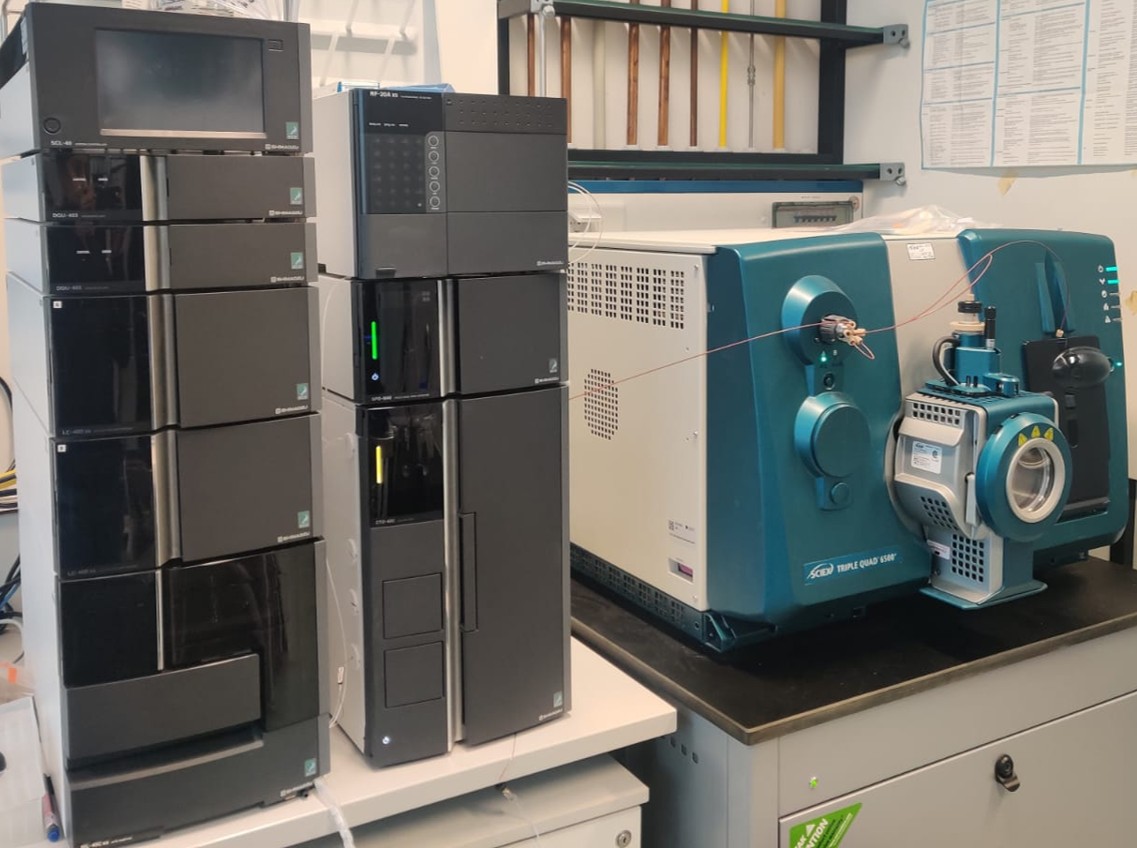
Triple Quad 6500+ (Sciex) coupled with Nexera LC-40D UHPLC (Shimadzu)
© Dr. Dipali Kale, Bielefeld University The LC-ESI/APCI-QQQ system consists of a highly sensitive triple quadrupole mass spectrometer of the latest generation. It is characterized by a mass range of 5 - 2,000 m/z and a high scan rate of up to 20,000 Da/s. The instrument has two ionization sources, electrospray ionization (ESI) and atmospheric pressure chemical ionization (APCI), which extends the range of applications to metabolites that are difficult to ionize. Due to the high linear dynamic range of up to 6 orders of magnitude, the device is perfectly suited for the quantification of low-concentration metabolites.
- 3. GC-MS/MS (Volatile and Semi-Volatile Compounds)
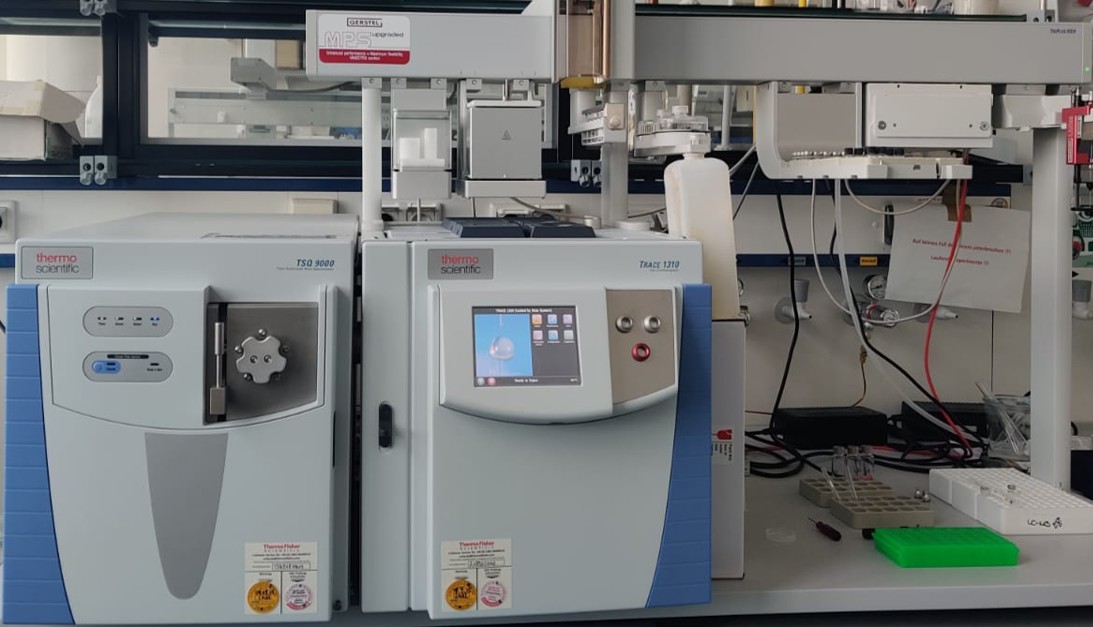
Triple Quad TSQ 9000 coupled with TRACE 1310 GC (Thermo Fisher Scientific)
© Dr. Dipali Kale, Bielefeld University The GC-MS/MS system from Thermo Scientific is a coupling of a gas chromatograph with a triple quadrupole mass spectrometer. Ionization takes place via EI (Electron Ionization) source and the system is equipped with a derivatization robot from Gerstel. The device is frequently used for the analysis of the central metabolism and fatty acids methyl esters (FAMEs).
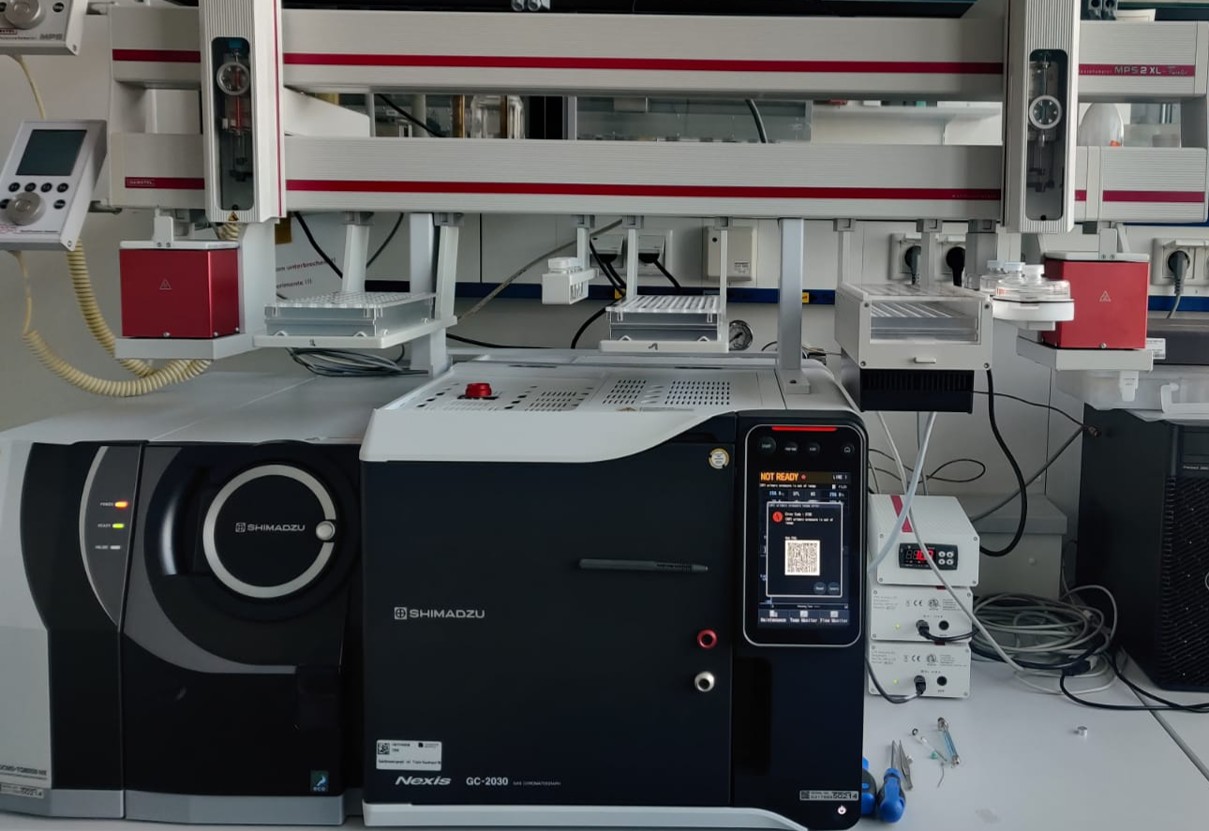
Triple Quad TQ8050 NX coupled with Nexis GC-2030 (Shimadzu)
© Dr. Dipali Kale, Bielefeld University The GC-MS/MS system from Shimadzu is a coupling of a gas chromatograph with a triple quadrupole mass spectrometer. Ionization takes place via EI (Electron Ionization) source and the system is equipped with a derivatization robot from Gerstel. The device is frequently used for the analysis of the central metabolism, FAMEs. Additionally, due to its high sensitivity it is suitable for trace analysis.
- 4. MALDI and Mass Spectrometry Imaging
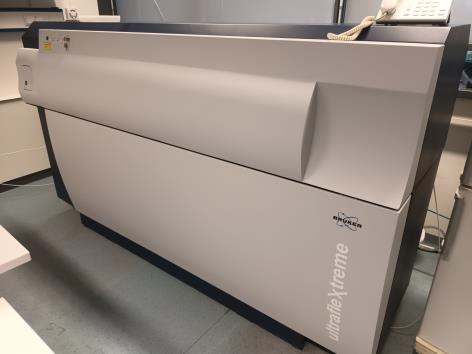
UltrafleXtreme MALDI-TOF/TOF (Bruker Daltonics)
© Dr. Marcus Persicke, Bielefeld University The ultrafleXtreme is a MALDI TOF/TOF system for the analysis of proteins, peptides, small molecules or even tissue samples (MALDI-Imaging). It is possible to analyze samples up to 500kDa in mass and a high resolution of up to 40,000 can be achieved over a wide mass range. Bruker´s LIFT technique is used to acquire MS/MS spectra from low fmol levels. Samples can be run in linear or reflectron mode to enhance mass resolution.
timsTOF fleX MALDI-2 (Bruker Daltonics)
© Dr. Dipali Kale, Bielefeld University The LC-ESI/MALDI-TOF system consist of a high-resolution mass spectrometer. It is characterized by a wide mass range (m/z 20 - 40,000) and a high resolution of up to 60,000. The special features of this device are the two application areas: cell-internal metabolomics and spatial metabolomics of thin sections. An additional feature is the trapped ion mobility spectroscopy (tims), which enables the measurement of ion mobility and generates clean MS/MS spectra at the same time. Another highlight is the double laser for imaging, which enables post-ionization leading to enhanced sensitivity.
- Further equipment
Further equipment for sample preparation is available. Sample extraction can be carried out using the Precellys or Precellys Evolution homogenizers, which can be used for refrigerated or non-refrigerated disruption. A lyophilizer is available for gentle drying of cell or plant material. A nitrogen evaporation unit can be used to dry extracts.
Getting started
Workflow for Service Requests
- Step 1 - First Contact
First Contact
Email: cf.omics-prot-met@uni-bielefeld.de
Please contact us as early as possible. These are some of the points we should discuss:- Scope of your project
- Nature of your samples as:
- Sample size
- Analytes
- Extraction methods
- Step 3 - Prepare for submission of samples
Prepare for submission of samples
- Acceptance of the project cost calculation must be signed and submitted.
- Samples must be delivered/sent in accordance with the specifications in the research plan.
- Sample acceptance Mon-Fri 10 a.m.-2 p.m.
- For sample shipment - arrival by Thursday at the latest.
Sample Submission & Contact
Sample Submission
Samples can be submitted Mon-Fri 10 a.m.-2 p.m.
For sample shipment - arrival by Thursday at the latest.
Outside these times please contact us.
Our Contact
Core Facility Omics, Division Proteomics and Metabolomics
Email: cf.omics-prot-met@uni-bielefeld.de
Center for Biotechnology (CeBiTec)
Bielefeld University
Universitätsstrasse 27
33615 Bielefeld
Germany
Office: UHG G2-139/141
Lab: UHG floor G1
Team
Dr. Marcus Persicke

Head of the Proteomics and Metabolomics Research Unit at the Core Facility Omics
marcus.persicke@uni-bielefeld.de
- Telefon
- +49 521 106-12252
- Büro
- UHG G2-141

Dr. Dipali Kale

Scientific Co-worker for Metabolit Analysis at the Core Facility Omics
- Telefon
- +49 521 106-82098
- Büro
- UHG G2-139
Dr. Vannuruswamy Garikapati

Scientific Co-worker for Lipid Analysis at the Core Facility Omics
vannuruswamy.garikapati@uni-bielefeld.de
- Telefon
- +49 521 106-82098
- Büro
- UHG G2-139


News & Events


Costs
Currently, the services of the Core Facility Omics, division Proteomics/Metabolomics, are generally provided free of charge. However, there are costs for consumables.
Before commissioning a project or placing an order, please always contact the head of the Core Facility Omics, division Proteomics/Metabolomics, to discuss the scope, feasibility, and potential costs on a case-by-case basis.