
Core Facility Omics – Division Next Generation Sequencing
Contact


Dr. Tobias Busche
Head Division Next-Generation Sequencing
E-Mail:
cf.omics-ngs@uni-bielefeld.de
Phone: +49 521 106-12253
The NGS Unit at Bielefeld University provides comprehensive sequencing services for life sciences, biomedical science, and related fields. Building on more than 20 years of experience in sequencing within our group, we provide high-quality sequencing services and methodological expertise for a broad range of research projects. Our work integrates both scientific research and infrastructure support.
We offer a wide spectrum of DNA and RNA sequencing approaches, including targeted and untargeted strategies as well as bulk, single-cell, and spatial applications. Using state-of-the-art platforms from Illumina and Oxford Nanopore Technologies, we support diverse experimental designs and research questions.
In addition to routine sequencing, we actively develop and implement new protocols and expand our portfolio of technologies and applications in response to the evolving needs of researchers.
We provide support at all stages of sequencing projects—from experimental design and method selection to data generation and bioinformatic analysis — and support researchers in developing sequencing strategies for grant proposals.
Services and Technologies
Research Applications
Research Applications
- Human & Medical Genomics
- Complex Eukaryotic Genomics
- Prokaryotic Genomics
- Microbial Communities & Metagenomics
- Transcriptomics including Spatial and Single-Cell Analysis
- NGS-based Proteomics
Services
We provide a broad portfolio of services and technologies to support sequencing-based research projects. Our infrastructure covers the complete workflow from sample preparation and quality control to high-throughput sequencing and downstream bioinformatic analysis.
In addition to established sequencing applications, we offer complementary technologies and continuously expand our portfolio to meet the evolving needs of researchers at Bielefeld University and our collaborators.
What we offer:
- High quality and cost-effective services
- Access to state-of-the-art technology
- Expertise in & advice on project strategy & analysis
- Individual solutions
- Consultations on Omics-related questions
- Support for the experimental design of Omics projects
Missing something? Feel free to talk to us!
- DNA Services
- DNA isolation
- Quality control and quantification for DNA & sequencing libraries
- Short-read sequencing on Illumina MiSeq & NextSeq 2000 sequencers
- Long-read sequencing on Oxford Nanopore MinION, GridION & PromethION platforms
- Whole genome sequencing (WGS)
- Whole exome sequencing (WES)
- Plasmid sequencing
- Metagenomics (Microbiome analysis)
- Targeted sequencing (panel, amplicon & microbiome analysis via amplicon seq16S, ITS)
- Epigenetics
- RNA Services
- RNA isolation
- Quality control & quantification for RNA & sequencing libraries
- Short-read sequencing on Illumina MiSeq & NextSeq 2000 sequencers
- Long-read sequencing on Oxford Nanopore MinION, GridION & PromethION platforms
- Whole transcriptome sequencing
- via rRNA depletion
- polyA enrichment
- mRNA sequencing
- 5’-mRNA sequencing
- 3'-mRNA sequencing
- miRNA sequencing
- small RNA sequencing
- Oxford Nanopore Technologies full-length mRNA sequencing
- direct RNA sequecning (Epi-transcriptomics)
- direct cDNA sequencing
- Differential gene expression analysis via Bruker nCounter
- qPCR analysis
- Absolut quantification via ddPCR
- Single-Cell Services
- Spatial Transcriptomic Services
- Proteomics NGS based Services
- Bioinformatics & Data Analysis
What we offer:
- Guidance on experimental design & data analysis planning
- Primary data analysis (e.g., basecalling, demultiplexing, quality control)
- Processing of sequencing data using standardized pipelines
- Data handling, formatting & organization
- Statistical analysis & data interpretation
- Custom analysis strategies tailored to specific research questions
- Data visualizations
- Support for downstream analyses
Something missing? Custom analyses are available upon request, depending on time and capacity.
Bioinformatic support is available as a standalone service.
A detailed overview of all of our bioinformatics analysis portfolio for the respective applications is provided in the charts below. We additionally offer analyses for variant calling as well as single-cell and spatial applications


Instrumentation
We are committed to offer our researchers the best suitable equipment to meet their sequencing needs. Currently, we apply different platforms covering a broad range of throughput, read length, flexibility and scalability options:
- Sequencing Platforms
Modern sequencing technologies allow researchers to determine the nucleotide sequence of DNA or RNA molecules and thereby investigate genomes, gene expression patterns, microbial communities, and molecular variation at high resolution. In our facility, two complementary sequencing approaches are available: Illumina short-read sequencing based on sequencing-by-synthesis (SBS) and Oxford Nanopore long-read sequencing based on nanopore sensing. Together, these technologies provide a flexible framework for addressing a wide spectrum of biological and medical questions across different project sizes and experimental designs.
- Illumina Platforms
Illumina short-read sequencing uses sequencing-by-synthesis chemistry in which fluorescently labeled nucleotides are incorporated stepwise during DNA synthesis and detected optically with very high precision. This enables accurate parallel sequencing of millions to billions of DNA fragments in a single experiment. The approach is particularly suitable for genome resequencing, RNA sequencing, targeted panels, and microbiome profiling. Adjustable read lengths and scalable throughput allow sequencing depth to be matched efficiently to project requirements.
Illumina NextSeq 2000

Illumina_NextSeq_und_MiSeq © Bernd Nörig / Forschungszentrum Jülich The NextSeq 2000 is a versatile mid- to high-throughput sequencing platform designed to support a wide range of genomics and transcriptomics applications on the benchtop scale. Multiple flow-cell configurations and read lengths ranging from short single-end runs to paired-end sequencing of up to 2 × 300 base pairs allow the system to be adapted to different project sizes and experimental requirements. The platform supports targeted sequencing, microbial genome analysis, and metagenomic marker studies such as 16S, 18S, and ITS profiling. Depending on the selected configuration, the instrument can generate up to approximately 540 gigabases of sequencing data per run. This flexibility enables efficient processing of both pilot experiments and larger multi-sample sequencing studies within a single platform.
Illumina_MiSeq
Illumina_MiSeq © Omics CF NGS The Illumina MiSeq is a benchtop sequencing platform designed for flexible small- to medium-scale sequencing projects with rapid turnaround times. It supports read lengths of up to 2 × 300 base pairs, making it particularly well suited for applications that benefit from longer sequencing reads, such as marker-gene profiling, like targeted sequencing, microbial genome analysis, and metagenomic marker studies such as 16S, 18S, and ITS profiling. Using current reagent chemistry, the system can generate up to approximately 25 gigabases of data per run, corresponding to tens of millions of sequencing reads.
- Oxford Nanopore Technologies (ONT) platforms
Oxford Nanopore sequencing determines nucleotide sequences by measuring electrical signal changes as individual DNA or RNA molecules pass through nanoscale protein pores, called nanopores. This allows sequencing of very long fragments in real time and enables detection of structural variations, repetitive genome regions, transcript isoforms, and certain base modifications. Because sequencing data are available immediately during the run, workflows can be adapted dynamically as experiments progress.
MinION
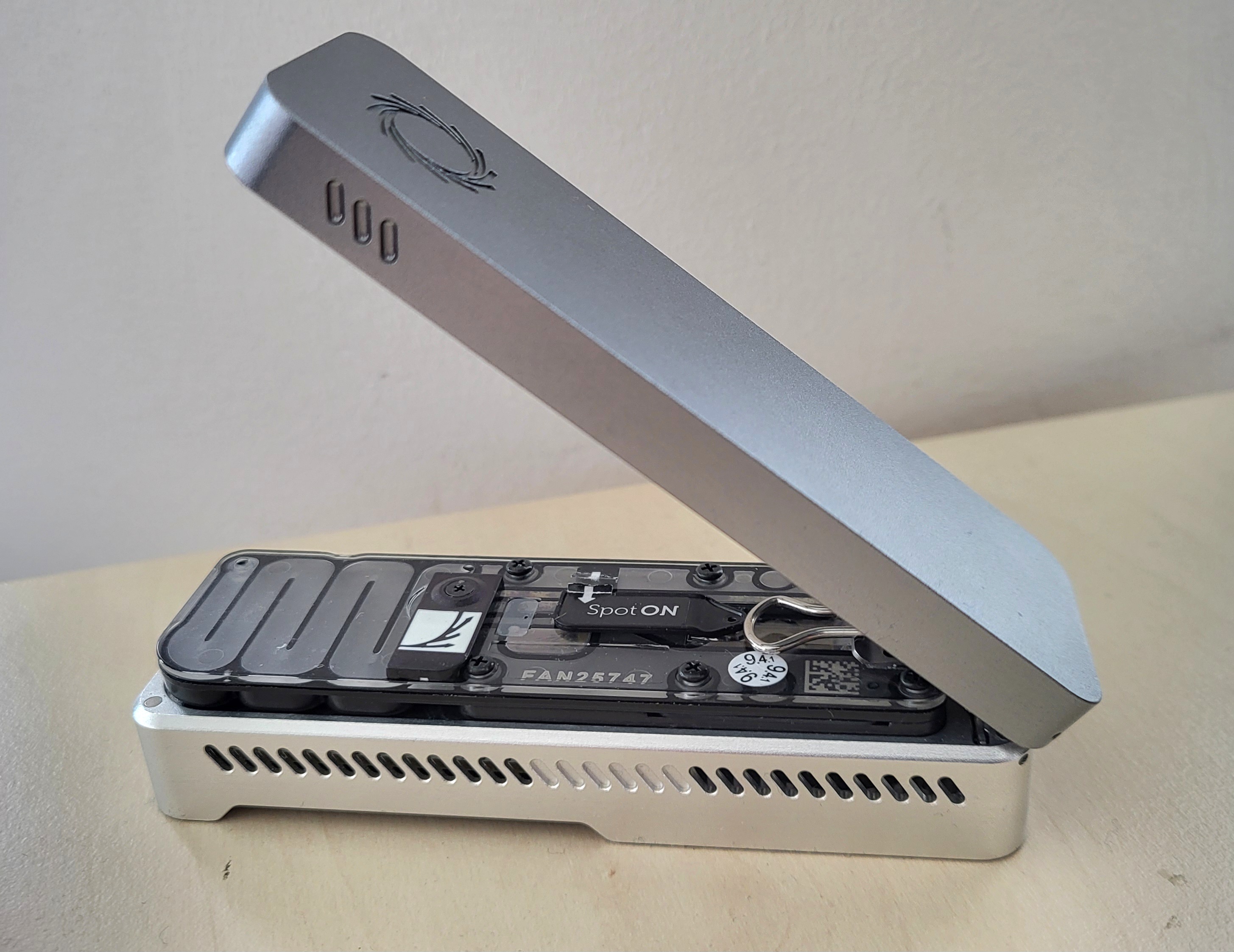
ONT MinION © Omics CF NGS The MinION is a compact long-read sequencing device that enables direct sequencing of DNA or RNA molecules in real time. Long reads allow improved detection of structural variations and complex genomic regions that are difficult to resolve with short-read technologies. The system supports rapid microbial genome assembly and targeted sequencing applications. Real-time data generation provides immediate experimental feedback during sequencing runs. Its flexible format makes it well suited for exploratory studies and method development workflows.
GridION
ONT GridON © Omics CF NGS The GridION enables parallel sequencing on multiple nanopore flow cells, increasing throughput compared to smaller devices while maintaining flexibility. It supports genome assembly, transcript isoform analysis, and detection of structural genomic variations. The system enables direct RNA sequencing without conversion into cDNA, preserving native transcript information. It is well suited for medium-scale long-read sequencing projects and serves as the computational processing environment for PromethION 2 Solo workflows within the facility.
PromethION 2 integrated
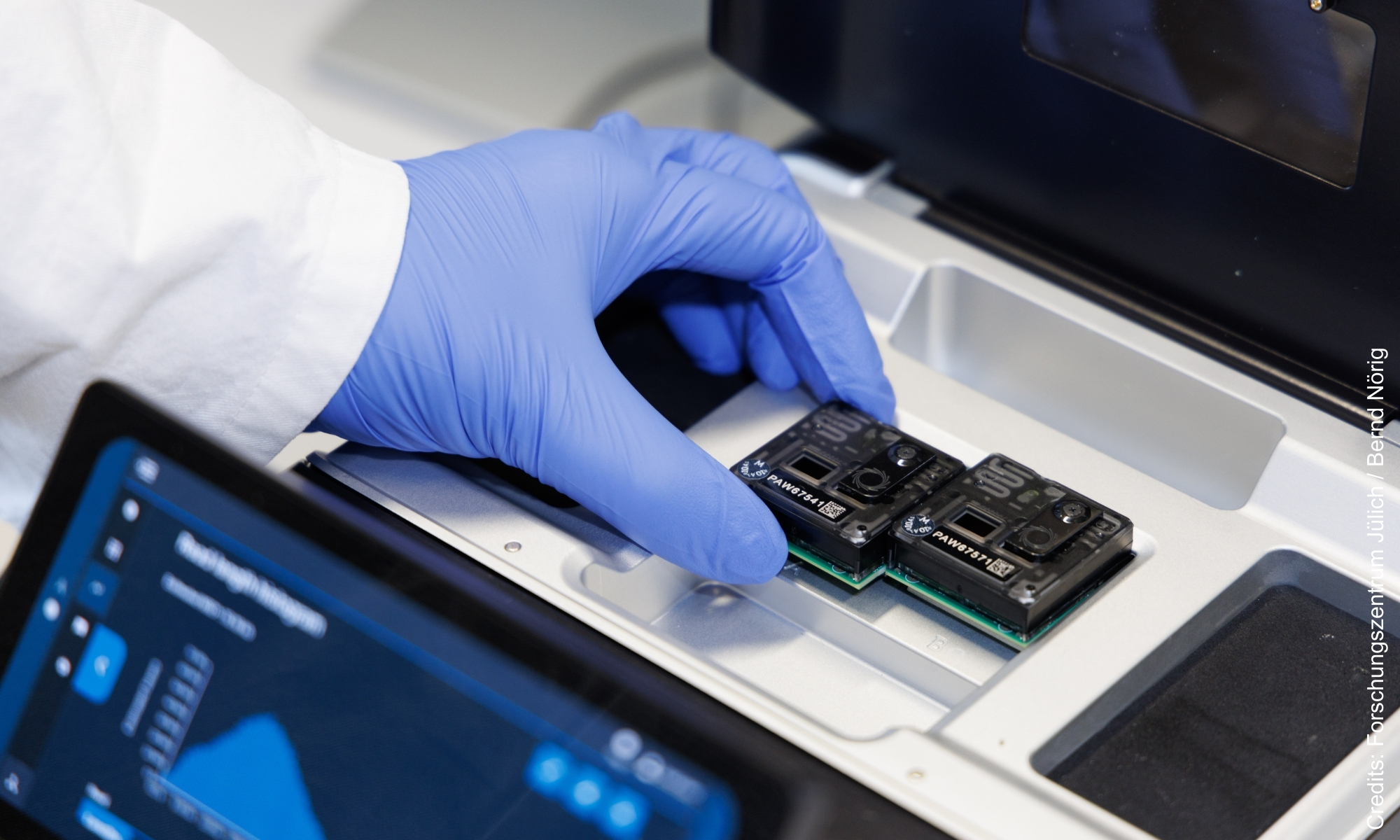
PromethION 2integrated © Bernd Nörig / Forschungszentrum Jülich The PromethION 2 Integrated is a compact high-performance long-read sequencing platform designed for real-time DNA and RNA sequencing directly at the laboratory bench. The system combines sequencing hardware with dedicated onboard computing infrastructure in a single device, enabling data acquisition and basecalling to be performed locally without the need for external high-performance computing resources. Two independently addressable PromethION flow cells can be operated simultaneously or separately, providing flexible scheduling for parallel experiments or rapid high-depth sequencing runs.
With current sequencing chemistries, each flow cell can generate several hundred gigabases of sequencing data, enabling comprehensive analysis of genome structure, transcript isoforms, and complex microbial communities. Integrated GPU acceleration supports real-time signal processing and basecalling during sequencing, reducing turnaround time from experiment to analysis-ready data. Built-in high-capacity storage further simplifies handling of large datasets within the system environment. Despite its high output capability, the compact desktop format allows straightforward integration into routine laboratory workflows.
ONT_PromethION_FCs
PromethION 2 integrated Flow Cells © Bernd Nörig / Forschungszentrum Jülich PromethION 2 solo
PromethION Solo classic © Omics CF NGS The PromethION 2 Solo provides the same sequencing performance as the PromethION 2 Integrated but without integrated onboard computing for real-time basecalling and signal processing. In this configuration, sequencing data processing relies on external computational infrastructure. Within the facility environment, the PromethION 2 Solo is therefore operated in combination with the GridION platform, which provides the required processing capabilities for efficient workflow integration.
Like the PromethION 2 Integrated system, the instrument supports two PromethION flow cells and enables high-output long-read sequencing for genome assembly, structural variant detection, and transcript characterization. It complements the PromethION 2 Integrated platform as an extension of the long-read sequencing infrastructure.
ONT_P2solo_splash_PXL
PromethION 2 Solo splash © Omics CF NGS - Sample quality control and quantification equipment
Reliable sequencing results depend on accurate measurement of nucleic acid concentration, purity, and fragment size distribution prior to library preparation. This is our QC and quantification equipment:
Xpose – Contamination-aware absorbance quantification with spectral decomposition
Xpose © Omics CF NGS Qubit – Selective fluorescence-based DNA and RNA quantification
Qubit © Omics CF NGS Agilent Bioanalyzer
© Omics CF NGS High-sensitivity automated electrophoresis system for fragment analysis for DNA and RNA and sequencing libraries. It provides fast analysis of fragment size, quantity, and integrity.
Agilent TapeStation
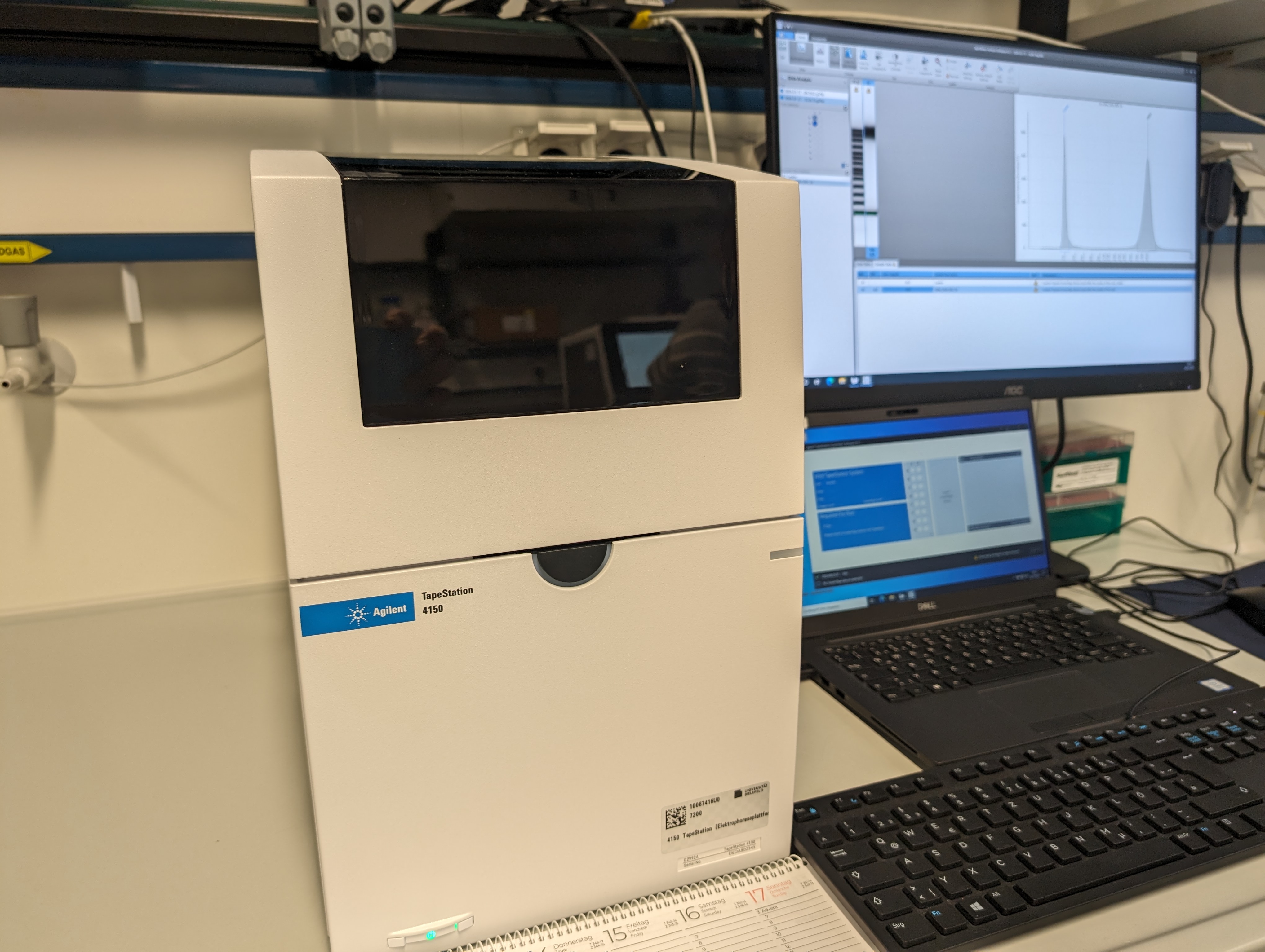
Agilent TapeStation © Omics CF NGS Medium-throughput automated fragment quality assessment.
Agilent Fragment Analyzer
Agilent Fragment Analyzer © Omics CF NGS High-throughput fragment size analysis for larger sequencing projects.
- Single-cell and spatial transcriptomics equipment
10X Genomics Chromium iX
10X Genomics Chromium © Omics CF NGS The 10x Genomics Chromium iX enables high-resolution analysis of gene regulation at the level of individual cells using advanced microfluidic partitioning technology. Large numbers of cells can be captured and processed simultaneously within a single experiment, with the option to analyze multiple samples in parallel on one microfluidic chip. Depending on the experimental configuration, up to approximately 160,000 cells from several samples can be prepared in a single run.
The platform supports assays for gene expression profiling, chromatin accessibility analysis, and combined multi-omics workflows. It is compatible with cell suspensions, nuclei preparations, fresh or frozen tissue, chemically fixed samples, flow-sorted populations, and organoid systems.
10x Genomics Visium HD
The 10x Genomics Visium HD platform enables high-resolution spatial transcriptome analysis across entire tissue sections at near-cellular resolution. Dense arrays of barcoded capture probes allow comprehensive measurement of gene expression across the full transcriptome while preserving spatial organization within the sample. The technology supports analysis of both fresh frozen and FFPE tissue material and enables flexible evaluation of spatial gene expression patterns at different resolution levels depending on experimental requirements.
Continuous probe coverage across the capture surface enables gap-free mapping of transcriptional activity, allowing detailed investigation of tissue architecture and cellular microenvironments. Standardized analysis pipelines support efficient processing and visualization of spatial gene expression data.
Bruker GeoMx Digital Spatial Profiler
Bruker GeoMX Digital Spatial Profiler © Omics CF NGS The GeoMx Digital Spatial Profiler enables spatially resolved measurement of RNA and protein expression directly within intact tissue sections while preserving histological context. Using microscope-guided selection of defined regions of interest, molecular information can be collected from specific anatomical structures, cellular niches, or disease-relevant microenvironments without physically disrupting the sample. This allows researchers to investigate how gene and protein expression patterns vary across different tissue compartments within the same specimen.
The platform supports targeted high-plex analysis of hundreds to thousands of RNA transcripts or proteins in parallel, depending on assay configuration. It is compatible with fresh frozen and FFPE tissue material, making it particularly suitable for translational research and clinical sample collections. Integration with immunofluorescence staining further enables precise alignment of molecular profiles with morphological features identified by microscopy.
- Targeted expression analysis and validation technologies
Bruker nCounter Digital Profiler
Bruker nCounter Digital Profiler © Omics CF NGS The nCounter system enables direct digital measurement of gene expression without amplification. It supports analysis of predefined gene panels with high robustness and reproducibility. The platform performs well with partially degraded RNA samples such as FFPE tissue. It is particularly suitable for pathway-focused expression studies and biomarker profiling. Targeted measurements complement sequencing-based gene expression analyses.
Roche LightCycler Pro
Roche LightCycler Pro © Omics CF NGS The LightCycler Pro is a real-time PCR system designed for sensitive detection and quantification of DNA and RNA targets. It supports both research and regulated workflows depending on the operating mode. The instrument enables rapid validation of sequencing results and targeted gene expression measurements. It is widely used for mutation detection and pathogen screening assays. Flexible assay design supports a broad range of molecular biology applications.
Bio-Rad QX600 Droplet Digital PCR system
Bio-Rad QX600 Droplet Digital PCR sysstem © Omics CF NGS The QX600 Droplet Digital PCR system enables highly precise quantification of nucleic acids by partitioning samples into thousands of droplets prior to amplification. This allows absolute measurement of gene copy numbers without calibration curves. The system is particularly suitable for detecting rare variants and low-abundance targets. It is frequently used for validation of sequencing findings and quantitative biomarker analysis. High sensitivity supports reliable detection even in challenging sample types.
- Automation platforms
Hamilton NGS STAR
Hamilton NGS STAR © Omics CF NGS The Hamilton NGS STAR workstation automates complex laboratory workflows such as nucleic acid extraction and sequencing library preparation. Automation improves reproducibility and reduces hands-on time for researchers. The system supports processing of larger sample cohorts in coordinated sequencing projects. Standardized workflows improve consistency across experiments. This enables efficient preparation of sequencing libraries for a wide range of applications.
Thermo Fisher KingFisher Apex
Thermo Fischer KingFischer Apex © Omics CF NGS The KingFisher Apex automates purification of DNA, RNA, proteins, and cells using magnetic bead technology. It enables reproducible processing of up to 96 samples in parallel with minimal manual handling. The system supports standardized preparation of sequencing input material from a wide range of sample types including blood, tissue, and microbial samples. Automated purification improves consistency and data quality across experiments.








Getting startet
Workflow for Service Requests
- Step 1 - First Contact & Project Inquiry
First Contact
Email: cf.omics-ngs@uni-bielefeld.de
Please contact us as early as possible by email with a brief overview of your research goals. Include relevant details such as:
- Scope of your project
- Nature of your samples as:
- number and type of samples
- source of sample
- type of sequencing or analysis you are considering
If you are unsure about the best approach, just describe your scientific question — our team can advise on the most suitable strategies and protocols.
Early discussion also helps us plan timelines and resources efficiently. We recommend contacting us as early as possible, since our standard processing time after sample receipt is approximately six weeks, including laboratory work and primary data analysis.
- Step 2 - Filling the Project Form
- Step 3 - Project Setup & Terms
- Step 4 - Sample Submission
After your project acceptance, you will receive confirmation for sample submission and a sample information form (SIF). Please complete the SIF and send it to us in advance by email. First page your job - second page our job.
Samples can be submitted Monday to Friday between 10 a.m. - 3 p.m. at our offices (see Contact Address). We kindly ask you to announce your sample delivery in advance or arrange an appointment. Deliveries outside these hours are possible by prior arrangement.
Ensure that all samples follow the “Sample Requirement” recommendations. If you cannot get there, please contact us so that we might assist and find a solution.
- Step 5 - Laboratory Processing: Quality Control & Sequending
- Step 6 - Project Completion
After sequencing is completed, raw data are made available via secure transfer. A summary of the incurred costs will be provided and invoiced according to our agreement. We kindly ask for confirmation of data delivery and project completion via e-mail.
For projects involving human sequencing data, additional regulatory and data protection requirements may apply and should be clarified in advance.
- Step 7 (optional) - Bioinformatic Analyses
If bioinformatic analyses have been agreed upon, we will start by processing the sequencing data using automated primary analysis pipelines and provide the results in standard formats (e.g., FASTQ) via secure transfer. We are happy to support bioinformatic analyses, from basic data processing to guidance on downstream workflows. All procedures follow established best practices and are continuously refined to ensure reliable, high-quality results.
Sample Submission & Contact
Sample Submission
Samples can be submitted Monday to Friday between 10 a.m. - 3 p.m. at our offices (see Contact Address). We kindly ask you to announce your sample submission in advance or arrange an appointment. Submissions outside these hours are possible by prior arrangement.
Ensure that all samples follow the “Sample Requirement” recommendations. If you cannot get there, please contact us so that we might assist and find a solution.
Our Contact
Core Facility Omics, Division Next Generation Sequencing
Email: cf.omics-ngs@uni-bielefeld.de
Center for Biotechnology (CeBiTec)
Bielefeld University
Universitätsstrasse 27
33615 Bielefeld
Germany
Office: G2-135 / G2-145 / G2-147
Team
Dr. Tobias Busche

Head of the Omics Core Facility - Next-Generation Sequencing (NGS)
tobias.busche@uni-bielefeld.de
- Telefon
- +49 521 106-12253
- Büro
- UHG G2-135
Dr. Christian Rückert-Reed

Postdoctoral Researcher in the Bioinformatics Section of the Omics Core Facility - NGS
christian.rueckert@uni-bielefeld.de
- Telefon
- +49 521 106-86308
- Büro
- UHG G2-147
Dr. Bianca Laker

Postdoctoral Researcher in the Bioinformatics Section of the Biobank and Omics Core Facility - NGS
- Telefon
- +49 521 106-82087
- Büro
- UHG G2-147
Dr. Julia Hassa

Postdoctoral Researcher in the Microbiome Section of the Biobank and Omics Core Facility - NGS
jhassa@cebitec.uni-bielefeld.de
- Telefon
- +49 521 106-8763
- Büro
- UHG G2-145
Anika Winkler

Engineer / Technical Staff Member at the Omics Core Facility - NGS
anika.winkler@uni-bielefeld.de
- Telefon
- +49 521 106-12261
- Büro
- UHG G2-139
News & Events
- General
© Bielefeld University New on the blog! Find out more here
- Core Facility Specifics
Technology day NGS: The New Era of Proteomics - Introducing Olink Reveal
© Omics CF NGS, Bielefeld University Wir möchten Euch herzlich zum nächsten NGS Technology Day der Omics Core Facility NGS und des CeBiTecs in Kooperation mit Olink einladen.
Thema: The New Era of Proteomics – Introducing Olink Reveal
Datum: 01.07.2026
Uhrzeit: 12:00 Uhr -15:00 Uhr
Veranstaltungsort: Campus Nord, CeBiTec-Gebäude, Raum G2-104, 33615 Bielefeld
Im Fokus steht die Olink Reveal Plattform, die neue Maßstäbe in der hochmultiplexen Proteomik setzt und klassische massenspektrometrische Ansätze komplementiert. Die Technologie kommt unter anderem im UK Biobank Projekt – der weltweit größten Proteogenomik-Studie mit 600.000 Proben – zum Einsatz.
Es referieren:
• Vertreter:innen von Olink – Einführung in die Olink-Technologie und Überblick über das Reveal Panel sowie Anwendungsbeispiele
• Konferenzbeitrag von Prof. Dr. Chris Mason (Video-Beitrag)
• iGEM Team Bielefeld-CeBiTec – „α-Synu-Clear“: Protein Degrader System targeting alpha-synuclein for the treatment of Parkinson
Daneben steht das Team der Omics Core Facility NGS sowie Olink für Fragen und Diskussionen zur Verfügung. Zudem geben wir einen Ausblick auf die geplante Implementierung der Olink Reveal Technologie an der Universität Bielefeld/CeBiTec.
Um eine Registrierung für die Veranstaltungsplanung wird unter dem QR-Code auf dem Flyer gebeten.Wir freuen uns auf Eure Teilnahme!
Dr. Tobias Busche
Leitung Omics Core Facility Next-Generation Sequenzierung
Medizinische Fakultät OWL & Centrum für Biotechnologie (CeBiTec)
Universität Bielefeld
Sequenz 1
33615 Bielefeld
Tel.: +49-(0)521-106-12253
Fax: +49-(0)521-106-89041
Gebäude/Raum: G2-135
Email: tobias.busche@uni-bielefeld.de
Funktions-Email: cf.omics-ngs@uni-bielefeld.de



Costs
Currently, the services of the Core Facility Omics, division Next Generation Sequencing, are generally provided free of charge. However, there are costs for consumables.
Before commissioning a project or placing an order, please always contact the head of the Core Facility Omics, division Next Generation Sequencing,, to discuss the scope, feasibility, and potential costs on a case-by-case basis.