Abteilung Psychologie

Ehemalige Mitarbeiter*innen
- Niklas Dietze
Niklas Dietze
Wissenschaftliche Mitarbeiter
Postanschrift
Universität Bielefeld
Fakultät für Psychologie und Sportwissenschaft
Abteilung für Psychologie
Postfach 10 01 31
D-33501 BielefeldSprechstunde
Nach Vereinbarung

Niklas Dietze
- Abteilung
- AE01 / Neuro-Cognitive Psychology
- Raum
- T4-230
- Telefon
- ++49 (0)521 106 - 4503
- Fax
- ++49 (0)521 106 - 156934
- niklas.dietze@uni-bielefeld.de
Publications
- Dietze, N., & Poth, C. H. (2023). Vision rivals audition in alerting humans for fast action. Acta Psychologica. LINK
- Dietze, N., Recker, L., & Poth, C. H. (2023). Warning signals only support the first action in a sequence. Cognitive Research: Principles and Implications. LINK
- Dietze, N., & Poth, C. H. (2022). Phasic alertness is unaffected by the attentional set for orienting. Journal of Cognition. LINK
- Buonocore, A., Dietze, N., & McIntosh, R. D. (2021). Time-dependent inhibition of covert shifts of attention. Experimental Brain Research. LINK
CV
- Since 2020: Scientific associate at the DFG-funded project "Attentional intensity: Phasic alertness in visual perception"
- Since 2020: PhD student at the Department of Psychology, Bielefeld University
- SS 2020: Lecturer for Psychological Methods, Fresenius University of Applied Sciences
- SS 2020: Research assistant, Rhein-Waal University of Applied Sciences
- 2018-2019: M.Sc. Psychological Research, University of Edinburgh
- 2014-2018: B.Sc. Psychology (Work- & Organizational), Rhein-Waal University of Applied Sciences
- Birte Gestefeld (PhD)
Postdoc Researcher
Postal Address
Universität Bielefeld
Fakultät für Psychologie und Sportwissenschaft
Abteilung für Psychologie
Postfach 10 01 31
D-33501 BielefeldOffice-Hour
By Agreement

- Unit
- AE01 / Neuro-Cognitive Psychology
- Room
- CITEC-2.411
- Phone
- ++49 (0)521 106-4516
- Phone Secretary
- ++49 (0)521 106-6934
- Fax
- ++49 (0)521 106 - 156934
- birte.gestefeld@uni-bielefeld.de
Research
- What can eye movements tell us about visual attention, oculomotor and cognitive functions?
- Can we detect deficits in these functions in patients with neurological disorders based on eye movement patterns?
Publications
Gestefeld, B., Marsman, J. B., & Cornelissen, F. W. (2021). How Free-Viewing Eye Movements Can Be Used to Detect the Presence of Visual Field Defects in Glaucoma Patients. Frontiers in medicine, 8, 689910. doi:10.3389/fmed.2021.689910
Gestefeld, B., Grillini, A., Marsman, J.-B. C., & Cornelissen, F. W. (2020). Using natural viewing behavior to screen for and reconstruct visual field defects. Journal of Vision, 20(9), 11–11.
Gestefeld, B., Koopman, J., Vrijling, A., & Frans, W. (2020). Eye tracking and virtual reality in the rehabilitation of mobility of hemianopia patients: A user experience study. Vision Rehabilitation International, 12(1), 7–20. doi:10.1167/jov.20.9.11
- Dr. Iris Wiegand
Stand-in Professor
Postal Address
Universität Bielefeld
Fakultät für Psychologie und Sportwissenschaft
Abteilung für Psychologie
Postfach 10 01 31
D-33501 BielefeldOffice-Hour
By Arrangement
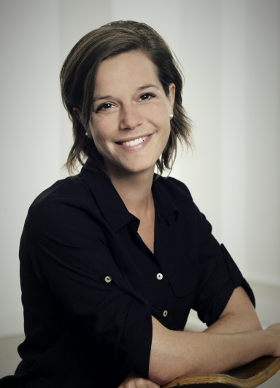
Dr. Iris Wiegand
- Unit
- AE01 / Neuro-Cognitive Psychology
- Room
- CITEC 2.409
- Phone
- ++49 (0)521 106 - 4516
- Fax
- ++49 (0)521 106 - 156934
- wiegand@mpib-berlin.mpg.de
Research
Main Research Topics
- Cognitive Aging
- Visual Attention and Memory
- Arousal and Cognitive Performance
Methods
- Psychophysics
- Cognitive Modeling
- Electroencephalography
Grants
- 2014 - 2016: "Determinants of mental capacity", MOBILEX Mobility Grant, Danish Council for Independent Research (Det Frie Forskningsråd) & FP7 EU Marie Skłodowska-Curie Actions COFUND (2.4 mio DKK; ca. 323.000 €).
- 2017 - 2021: "Attention and Memory Components in Everyday Cognitive Problems in Aging" (702483), Individual Global Fellowship, Horizon 2020 EU Marie Skłodowska-Curie Actions (239.861€)
Publications
Selected Publications
- Wiegand, I., Seidel, C., & Wolfe, J. (2019). Hybrid foraging search in younger and older age. Psychology and Aging, 34(6), 805-820.
- Wiegand, I., & Wolfe, J.M. (2019). Age doesn't matter much: Hybrid visual and memory search is preserved in older age. Aging, Neuropsychology, and Cognition.
- Wiegand, I., & Sander, M.C. (2019). Cue-related processing accounts for age differences in phasic alerting. Neurobiology of Aging, 79, 93-100.
- Wiegand, I., Lauritzen, M.J., Osler, M., Mortensen, E.L., Rostrup, E., Rask, L., Richard, N., Horwitz, A., Benedek, K. Vangkilde, S., & Petersen, A. (2018). EEG correlates of visual shortterm memory in older age vary with adult lifespan cognitive development. Neurobiology of Aging, 62, 210-220.
- Wiegand, I., Napiorkowski, N., Töllner, T., Petersen, A., Habekost, T., Müller, H.J., & Finke, K. (2018). Event-related electroencephalographic lateralizations mark individual differences in spatial and nonspatial visual selection. Journal of Cognitive Neuroscience, 30, 482-497.
- Brosnan, M., Demaria, G., Petersen, A., Dockree, P., Robertson, I.H., & Wiegand, I. (2017). Plasticity of the right-lateralised cognitive reserve network in ageing. Cerebral Cortex, 28, 1749-1759.
- Wiegand, I., Petersen, A., Finke, K., Lansner, J., Bundesen, C., & Habekost, T. (2017). Behavior and brain measures of phasic alerting effects on visual attention. Frontiers in Human Neuroscience, 11, 176.
- Wiegand, I., Töllner, T., Habekost, T., Dyrholm, M., Müller, H.J., & Finke, K. (2014). Distinct neural markers of TVA-based visual processing speed and short-term storage capacity parameters. Cerebral Cortex, 24, 1967-1978.
CV
- 2010 - 2013: PhD Candidate, LMU Munich
- 2013 - 2016: Postdoctoral Researcher, University of Copenhagen
- since 2016: Research Fellow, Max Planck UCL Centre for Computational Psychiatry and Ageing Research
- 2016 - 2018: Marie Skłodowska-Curie Research Fellow, Brigham & Women's Hospital, Harvard University
- 2018 - 2019: Parental leave
- 2019 - 2020: Stand-in Professor, Bielefeld University
- Rebecca Förster
Former Staff Member
Postal Address
Universität Bielefeld
Fakultät für Psychologie und Sportwissenschaft
Abteilung für Psychologie
Postfach 10 01 31
D-33501 BielefeldFind Me Elsewehere

Rebecca Förster
- Unit
- AE01 / Neuro-Cognitive Psychology
- Room
- ZiF 231A und CITEC-2.410
- Phone ZiF
- ++49 (0)521 106 - 12834
- Phone CITEC
- ++49 (0)521 106 - 4503
- Fax
- ++49 (0)521 106 - 156934
- rebecca.foerster@uni-bielefeld.de
Software Links
- FuncSim: A functionally sequenced scanpath similarity method for comparing and evaluating scanpath similarity based on a task's inherent sequence of functional (action) units
- Virtual Reality Toolboxes: Toolboxes for using virtual reality devices for neuropsychological assessments of visual performance
- MovVis: A movement visualization toolbox
Research
Research Topics
- Visual attention and action
- Sequential sensorimotor tasks
- Learning, and automatization
- Memory-guided attention
- Scanpaths and scanpath similarity methods
- see the scanpath similarity method FuncSim
- see the movement visualization toolbox MovVis
- Assessment of visual processing capabilities using Virtual Reality devices
- see the VR toolboxes
Peer-Reviewing Activities
Acta Psychologica; Advances in Cognitive Psychology; Annals of the New York Academy of Sciences; Attention, Perception, and Psychophysics; Behavior Research Methods; Cognition; European Conference on Eye Movements (2013, 2015, 2017, 2019); Experimental Brain Research; Journal of Experimental Psychology: Learning, Memory, and Cogntion; Journal of Neurophysiology; Journal of Opthalmology; Journal of Vision; Memory and Cognition; Multimodal Technologies and Interaction; Philosophical Transactions of the Royal Society B: Biological Sciences; Psychological Research; Visual Cognition; Vision; Vision Research
Curriculum Vitae
Career
- Since January 2019: Coordinator of the research group "Cognitive behavior of humans, animals, and machines: Situation model perspectives" at the ZiF (Center for Interdisciplinary Research), Bielefeld University
- 2013-2018: Project "Learning to attend in sensorimotor tasks" at the DFG-funded Center of Excellence 277 "Center of Excellence - Cognitive Interaction Technology" (CITEC) , Bielefeld University
- 2013: Associative member of the research group "Competition and Priority Control in Mind and Brain: New Perspectives from Task-Driven Vision" of the ZiF (Center for Interdisciplinary Research), Bielefeld University
- 2008-2013: Project "ALIAS: Analyzing Learning, Interaction, and Attention in Speed stacking" at the CITEC
Education
- 2012: Dr. rer. nat., Department of Psychology at Bielefeld University;
- Doctoral thesis on eye movements, attention, and memory processes during sensorimotor learning and automatization.
- 2008-2011: PhD student at the Graduate School of the 'Center of Excellence - Cognitive Interaction Technology' (CITEC), Bielefeld University, Germany. Supervisors: Dr. Elena Carbone (Neuro-Cognitive Psychology), Dr. Thomas Hermann (Ambient Intelligence), Dr. Bettina Bläsing (Biomechanics), Dr. Hendrik Kösling (Neuroinformatics) und Prof. Dr. Werner Schneider (Neuro-Cognitive Psychology).
- 2004-2008: Diploma study program 'Psychology', Bielefeld University, Germany; Thesis on the tone-mimic congruence effect
Memberships and Committees
- 2016-2019: Member of the Scientific Board ("Vorstand") of the Excellence Cluster 'Cognitive Interaction Technology' (funded by the German Excellence Initiative), Bielefeld University
- Since 2014: Member of the Extended Board ("Erweiterter Vorstand") of the Excellence Cluster 'Cognitive Interaction Technology' (funded by the German Excellence Initiative), Bielefeld University
- 2010-2016: Member of the Vision Science Society (VSS)
Award
- third place in the biennial thesis competition 2013 awarded by the Experimental Psychology section (Fachgruppe Allgemeine Psychologie) of The German Psychological Society (Deutschen Gesellschaft für Psychologie DGPs)
- PD Dr. Arvid Herwig
Former Staff Member
Postal Address
Universität Bielefeld
Fakultät für Psychologie und Sportwissenschaft
Abteilung für Psychologie
Postfach 10 01 31
D-33501 BielefeldFind Me Elsewhere

PD Dr. Arvid Herwig
- Unit
- AE01 / Neuro-Cognitive Psychology
- Room
- CITEC-2.408
- Phone
- ++49 (0)521 106 - 4516
- Fax
- ++49 (0)521 106 - 156934
- arvid.herwig@uni-bielefeld.de
Research
Research Topics
Overall topic
- Attention, action and perception
Central issues
- Transsaccadic prediction and learning
- Intention- and stimulus-based action control
- Eye movements
Methods
- Experimental studies with healthy adults and patient groups
- Eyetracking
- Eyetracking in Virtual Reality
Grants
- 2016: DFG-Project "Transsakkadische Prädiktion visueller Merkmale: Gewichtung, Geltungsbereich und Generalisierung " (Az. He 6388/1-2; 36 Months)
- 2011: DFG-Project "Transsakkadische Prädiktion bei visueller Suche und Objekterkennung" (together with W. Schneider, Az. He 6388/1-1; 36 Months)
Peer-Reviewing Activities
- Manuscripts: Acta Psychologica, Annals of the New York Academy of Sciences, Attention, Perception, & Psychophysics, Biological Psychology, Brain Research, Brain Topography, Cognition, Consciousness and Cognition, Experimental Brain Research, Experimental Psychology, Frontiers in Cognition, Frontiers in Systems Neuroscience, Journal of Cross-Cultural Psychology, Journal of Experimental Psychology: General, Journal of Experimental Psychology: Human Perception & Performance, Journal of Experimental Psychology: Learning, Memory, & Cognition, Journal of Motor Behavior, Journal of Vision, Memory & Cognition, Neuroimage, Philosophical Transactions of the Royal Society B: Biological Sciences, PLOS ONE, Psychological Research, Psychological Review, Psychonomic Bulletin & Review, The Quarterly Journal of Experimental Psychology, Vision Research, Visual Cognition
- Grants: Deutsche Forschungsgemeinschaft (DFG), Schweizerischer Nationalfonds (SNF), The French National Research Agency (ANR), The German Israeli Foundation for Scientific Research and Development (GIF)
Curriculum Vitae
Career
Since October 2008: Research Scientist, Neuro-Cognitive Psychology (Allg. Psych. I), Department of Psychology, Bielefeld University, Germany
Education
- 2015 PD, Department of Psychology, Bielefeld University, Germany; Habilitation thesis: Linking perception and action: from targets in the world to goals in the mind
- 2009 Dr. rer. nat. (scl), Department of Psychology at Leipzig University; Doctoral thesis on intention and reactivity in ideomotor learning
- 2005-2008 PhD student, Max Planck Institute for Human Cognitive and Brain Sciences, Munich/Leipzig, Germany, Supervision: Prof. Dr. Wolfgang Prinz, Dr. Florian Waszak
- 1999-2005 Diploma study program 'Psychology', Friedrich Wilhelm University Bonn, Germany
Awards & Honors
- Otto Hahn Medal of the Max Planck Society (2009)
- Fellowship of Studienstiftung des deutschen Volkes (2001-2004)
Activities
- Associate Member of the ZiF research group "Competition and Priority Control in Mind and Brain: New Perspectives from Task-Driven Vision?"
- Organizer of international meeting on "Perception and Action" at ZiF, Bielefeld (with W. Prinz, H. Heuer, P. Wolff, and M. Beisert)
- Dr. Katharina Weiß
Former Staff Member
Postal Address
Universität Bielefeld
Fakultät für Psychologie und Sportwissenschaft
Abteilung für Psychologie
Postfach 10 01 31
D-33501 Bielefeld
Dr. Katharina Weiß
- Unit
- AE01 / Neuro-Cognitive Psychology
- Room
- CITEC-2.409
- Phone
- ++49 (0)521 106 - 4504
- Fax
- ++49 (0)521 106 - 156934
- katharina.weiss@uni-bielefeld.de
Research
Research Topics
- visual attention
- time perception
- psychophysics
Reviews
Advances in Cognitive Psychology, Annals of the New York Academy of Sciences, Consciousness and Cognition, Experimental Brain Research, Journal of Experimental Psychology: Human Perception and Performance, PLoS ONE, Psychological Research, Quarterly Journal of Experimental Psychology
Curriculum Vitae
- Since August 2013: Research Scientist, DFG-Project "Transsakkadische Prädiktion bei visueller Suche und Objekterkennung", Neuro-Cognitive Psychology (Allg. Psych. I), Department Psychology, Bielefeld University, Germany
- 2012-2013 Research Scientist, Department of Psychology, Leuphana University Lüneburg, Germany
- 2012 Dr. phil., University of Paderborn, Germany
- 2007-2012 Research Scientist, Cognitive Psychology, University of Paderborn, Germany
- 2002-2007 Diploma Studies Psychology , Bielefeld University, Germany
- Emeritus Prof. Dr. Odmar Neumann
*13. Juli 1942 †25. Februar 2013
Mit tiefer Bestürzung und großem Bedauern müssen wir mitteilen, dass Prof. Dr. Odmar Neumann, der diese Arbeitseinheit "Allgemeine Psychologie I" (Neurokognitive Psychologie) viele Jahre leitete, am 25. Februar in Bielefeld verstarb. Sein wissenschaftliches Wirken hat nicht nur einen entscheidenden und bleibenden Beitrag zur internationalen Aufmerksamkeitsforschung hinterlassen, sondern es liefert auch für uns, die aktuelle Arbeitseinheit, den Ansporn dieses Erbe, den Bielefelder "attention-for-action approach", in seinem Geist weiter zu entwickeln.
Im Namen der Allgemeinen Psychologie I,
Prof. Dr. Werner Schneider
With great sorrow and regret we have to announce that Prof. Dr. Odmar Neumann, who for many years was head of this unit "Allgemeine Psychologie I" (Neurokognitive Psychologie), died on February 25, 2013, in Bielefeld. His scientific work not only left an important and lasting contribution to international attention research, but motivates us as the current members of the unit to further develop this heritage, the Bielefeld "attention-for-action approach", according to his spirit.On behalf of the members of "Allgemeine Psychologie I"
Prof. Dr. Werner Schneider- PD Dr. Kathrin Finke
- Cassandra Philine Köller
Former Staff Member
Postal Address
Universität Bielefeld
Fakultät für Psychologie und Sportwissenschaft
Abteilung für Psychologie
Postfach 10 01 31
D-33501 Bielefeld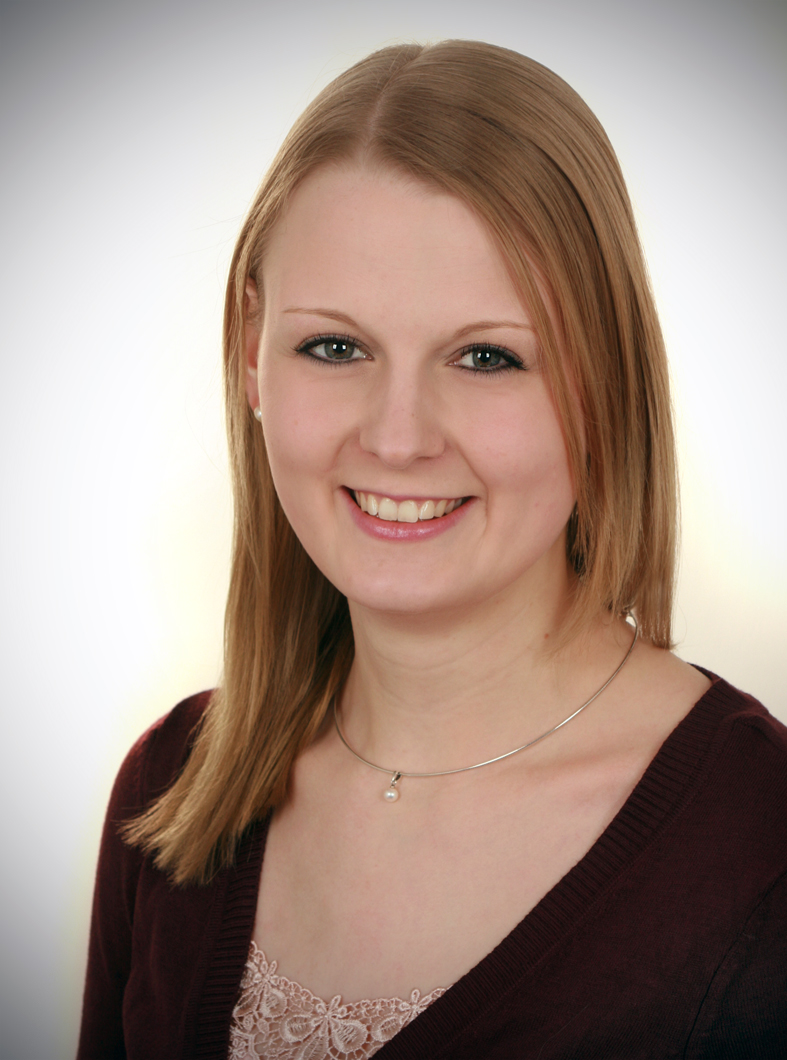
Cassandra Philine Köller
- Unit
- AE01 / Neuro-Cognitive Psychology
- Room
- CITEC-1.042
- Phone
- ++49 (0)521 106 - 12239
- Fax
- ++49 (0)521 106 - 156934
- c.koeller@uni-bielefeld.de
Curriculum Vitae
- Since 2016: Scientific associate at the DFG-funded project "Transsakkadische Prädiktion visueller Merkmale: Gewichtung, Geltungsbereich und Generalisierung"
- Since 2016: PhD student at the Department of Psychology, Bielefeld University, and Cluster of Excellence "Cognitive Interaction Technology" (CITEC)
- 2014-2016: M.Sc. Psychology, Bielefeld University
- 2012-2016: Student/scientific research assistant at the unit for Neurocognitive Psychology, Bielefeld University
- 2011-2014: B.Sc. Psychology, Bielefeld University
- Dr. Anna Belardinelli
- Dr. Elena Carbone
- Dr. Lothar Kehrer
Former Staff Member
Postal Address
Universität Bielefeld
Fakultät für Psychologie und Sportwissenschaft
Abteilung für Psychologie
Postfach 10 01 31
D-33501 Bielefeld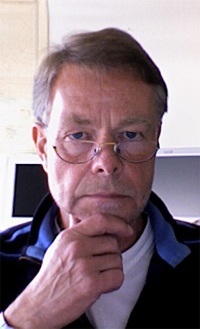
Dr. Lothar Kehrer
- Unit
- AE01 / Neuro-Cognitive Psychology
- Room
- CITEC-2.412
- Phone
- ++49 (0)521 106 - 4517
- Fax
- ++49 (0)521 106 - 156934
- lothar.kehrer@uni-bielefeld.de
Curriculum Vitae
- Oktober 1973 Abschlussprüfung zum Ing.(grad.) an der Fachhochschule Bielefeld; Fachrichtung: Elektronik.
- Juli 1979 Abschluss des Diplomstudiums Psychologie an der Universität Bielefeld; Titel der Diplomarbeit: Foveale und periphere Entdeckung von Targets beim visuellen Suchen (gemeinsam mit C. Meinecke).
- Oktober 1979 Einstellung als wissenschaftlicher Angestellter an der Abteilung Psychologie der Universität Bielefeld.
- Februar 1986 Promotion zum Dr. phil. an der Universität Bielefeld. Titel der Dissertation: über Klassifikationsleistungen beim visuellen Suchen. Untersuchungen zur Funktionsgrundlage des Kategorieneffekts.
Publications
- Meinecke, C. and L. Kehrer (2007). A central performance drop with luminance stimuli requiring spatial integration. Perception & Psychophysics 69(6): 923-9.
- Kehrer, L. & Meinecke, C. (2006). A 'first stage' central performance drop in a Gabor luminance-modulation detection task. Spatial Vision, 19, 427-437.
- Kehrer, L. & Meinecke, C. (2003). A space-variant filter model of texture segmentation: Parameter adjustment guided by psychophysical data. Biological Cybernetics 88,183-200.
- Kehrer, L. & Meinecke, C. (2002). Benutzerfreundliche Konzeption und Gestaltung von Parkleitsystemen. Internationales Verkehrswesen, 54, 93-96.
- Kehrer, L. (1997). The central performance drop in texture segmentation: A simulation based on a spatial filter model. Biological Cybernetics, 77, 297-305.
- Kehrer, L. & Meinecke, C. (1996). Perceptual Organization of Visual Patterns: The Segmentation of Textures. In B. Bridgeman & W. Prinz (Eds.): Handbook of Perception and Action: Vol. 1: Perception, Chapter 2. London: Academic Press.
- Kehrer, L. & Meinecke, C. (1994). Perzeptive Organisation visueller Muster: Die Segmentierung von Texturen. In W. Prinz & B. Bridgeman (Hrsg.): Enzyklopädie der Psychologie, C/II/1, "Wahrnehmung", Kap. 2. Göttingen: Hogrefe.
- Meinecke, C. and L. Kehrer (1994). Peripheral and foveal segmentation of angle textures. Perception & Psychophysics 56(3): 326-334.
- Kehrer, L. & Meinecke, C. (1993). Orientation differences in texture segmentation: Psychophysical data and a spatial filter model. Perception, 22, 71-72.
- Kehrer, L. (1990). Perzeptive Gliederung bei der visuellen Informationsverarbeitung. Bielefelder Beiträge zur Kognitionspsychologie. C. Meinecke and L. Kehrer. Göttingen, Toronto, Zürich, Hogrefe: 109-138.
- Kehrer, L. (1989). Central performance drop on perceptual segregation tasks. Spatial Vision 4: 45-62.
- Kehrer, L. (1987). Perceptual segregation and retinal position. Spatial Vision 2: 247-261.
- Meinecke, C., Kehrer, L., & Prinz, W. (1985). Steuerung visueller Suchprozesse durch Target und Kontextmerkmale. Psychologische Beiträge, 27, 28-47.
- Kehrer, L. (1983). A simple system for displaying alphanumeric characters on an oscilloscope using an AIM-65 microcomputer. Behavior Research Methods and Instrumentation 15: 107-108.
- Prinz, W. and L. Kehrer (1982). Recording detection distances in continuous visual search. Eye movements in perception and cognition. R. Groner and P. Fraisse. Amsterdam, North-Holland.
- Dr. Werner Klotz
Former Staff Member
Postal Address
Universität Bielefeld
Fakultät für Psychologie und Sportwissenschaft
Abteilung für Psychologie
Postfach 10 01 31
D-33501 BielefeldDr. Werner Klotz
- Unit
- AE01 / Neuro-Cognitive Psychology
- Room
- CITEC 2.411
- Phone
- ++49 (0)521 106 - 4518
- Fax
- ++49 (0)521 106 - 156934
- werner.klotz@uni-bielefeld.de
Curriculum Vitae
Education and employment history
- 1978 - 1984 Diploma study program 'Psychology' at Osnabrück University, Germany
- 1985 - 1987 Scientific employee, Unit of Literary Studies at Osnabrück University, Germany
- 1988 - 1990 Creation of the "Initiative for stress reduction and integration" (ISI), Osnabrück, Germany
- since 1990 Scientific employee, Dept. of Psychology, Bielefeld University, Germany
- 1995 Dr. phil., Dept. of Psychology, Bielefeld University, Germany
Reviewer for international Journals
- Advances in Cognitive Psychology
- Consciousness and Cognition
- Journal of Experimental Psychology: Human Perception and Performance
- Perception & Psychophysics
- Psychological Research / Psychologische Forschung
- Psychological Science
- Psychophysiology
Selceted Publications
- Klotz, W., Heumann, M., Ansorge, U., & Neumann, O. (2007): Electrophysiological activation by masked primes. Advances in Cognitive Psychology, 3, 449-465. (PDF)
- Klotz, W. & Ansorge, U. (2007): Preceding stimulus awareness augments offset-evoked potentials: Evidence from motion-induced blindness. Psychological Research, 71, 694-702. (PDF)
- Fellows, S., Tabaza, R., Heumann, M., Klotz, W., Neumann, O., Schwarz, M., Noth, J., & Töpper, R. (2002). Modification of a functional motor task by non-consciously perceived sensory stimuli. Neuroreport, 13, 637-640.
- Ansorge, U., Scharlau, I., Heumann, M., & Klotz, W. (2001). Visual conscious perception is grounded in a nonconscious sensorimotor domain. Behavioral and Brain Sciences, 24, 974-975.
- Klotz, W., & Neumann, O. (1999). Motor activation without conscious discrimination in metacontrast masking. Journal of Experimental Psychology: Human Perception and Performance, 25, 976-992. (PDF)
- Neumann, O., Ansorge, U., & Klotz, W. (1998). Funktionsdifferenzierung im visuellen Kortex: Grundlage für motorische Aktivierung durch nicht bewußt wahrgenommene Reize?. Psychologische Rundschau, 49, 185-196.
- Ansorge, U., Klotz, W., & Neumann, O. (1998). Manual and verbal responses to completely masked (unreportable) stimuli: Exploring some conditions for the metaconstrast dissociation. Perception, 27, 1177-1189.
- Klotz, W., & Wolff, P. (1995). The effect of a masked stimulus on the response to the masking stimulus. Psychological Research / Psychologische Forschung, 58, 92-101. (PDF)
- Neumann, O., & Klotz, W. (1994). Motor responses to non-reportable, masked stimuli: Where is the limit of direct parameter specification?. In C. Umiltà & M. Moskovitch: Attention and Performance XV: Conscious and nonconscious information processing. Cambridge, Mass: MIT Press. (Link)
- Dipl.-Psych. Anja Steffen
- Gordian Griffiths
Former Staff Member
Postal Address
Universität Bielefeld
Fakultät für Psychologie und Sportwissenschaft
Abteilung für Psychologie
Postfach 10 01 31
D-33501 Bielefeld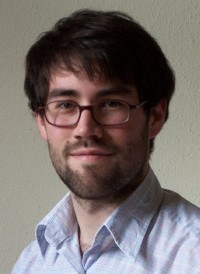
Gordian Griffiths
- Unit
- AE01 / Neuro-Cognitive Psychology
- Room
- T5-121
- Phone
- ++49 (0)521 106 - 4347
- Fax
- ++49 (0)521 106 - 156934
- gordian.griffiths 'at' uni-bielefeld.de
Research
- attentional control of eye-movements across time
- visual attention and short-term memory
- The Attentional Blink
Curriculum Vitae
- Since October 2009: CITEC project "task-based control of visual attention" and PhD student at the Graduate School of the 'Center of Excellence - Cognitive Interaction Technology' (CITEC), Bielefeld University, Germany. Supervisor: Prof. Dr. Werner Schneider (Neuro-Cognitive Psychology).
- 2006-2009: Student Assistant in the Experimental Psychology Unit (AE01), Bielefeld University
- 2004-2009: Diploma study program 'Psychology', Bielefeld University, Germany; Thesis on the Attentional Blink
- Dr. Marco Wischnewski