AI*IM







News und Veranstaltungen
Die Medizinische Fakultät OWL und die Universitätsklinik für inklusive Medizin beim IASSIDD-Kongress


Die Medizinische Fakultät OWL der Universität Bielefeld und das Universitätsklinikum für Inklusive Medizin (UKIM) waren beim diesjährigen IASSIDD-Kongress Ende Juli mit einem breit gefächerten Programm vertreten, das zentrale Themen des Fokusbereichs AI*IM sichtbar gemacht hat.
Gemeinsam mit internationalen Partner*innen gestalteten Bielefelder Forschende einen Workshop zur Emotionalen Entwicklung, Präsentationen zur „Emotional Development based Treatment and Support“ sowie ein Symposium zu ADHS und Intelligenzminderung inklusive technologiegestützter emotionaler Entwicklungsdiagnostik mit sozialen Robotern. Im Bereich Kommunikation wurden mit OptiKomm ein inklusives Trainingsprogramm zur Verbesserung der Arzt-Patienten-Kommunikation und Konzepte zur Integration erfahrungsbasierten Wissens von Menschen mit Behinderung in die Lehre vorgestellt. Darüber hinaus wurden auch Ansätze zu assistierter Autonomie in Aufklärungsgesprächen vorgestellt, wodurch der partizipative und co-produktive Anspruch von AI*IM im internationalen Diskurs verankert wurde.
Ergänzend adressierte ein Teaching-Symposium die Praxis und Evaluation inklusiver Hochschulehre mit qualifizierten Menschen mit Behinderungen als Co-Lehrende sowie neue Curricula für eine Medizin für Menschen mit Behinderungen und unterstrich damit die Rolle von UKIM und der Universität Bielefeld als Impulsgeber für eine KI-gestützte, inklusive und diversitätssensible Medizin über den gesamten Lebensverlauf.
DigiDi 2.0 startet im Oktober 2026!


Wir freuen uns sehr über die Verlängerung eines Projektes mit hoher Relevanz für unseren Fokusbereich. Das Projekt “DigiDi” hat eine Förderung für drei weitere Jahre zugesprochen bekommen und wird so ab Oktober als “DigiDi 2.0” in die nächste Phase starten.
DigiDi beschäftigt sich mit der Entwicklung eines innovativen Diagnostikverfahrens für Menschen die in Folge einer Hirnschädigung an kognitiven Kommunikationsstörungen leiden. Dabei sollen sowohl standardisierte Instrumente zur Selbsteinschätzung als auch funktionsorientierte Verfahren in Virtueller Realität genutzt werden. In der neuen Phase des Projektes soll dieses Diagnostikverfahren nun zunächst finalisiert und klinisch erprobt werden.
Es handelt sich um eine Kooperation zwischen der Universität Bielefeld sowie der Universität zu Köln. In Bielefeld sind Carola de Beer von der Fakultät für Linguistik und Literaturwissenschaft sowie Stefan Kopp von der Technischen Fakultät hauptverantwortlich.
Workshop der AI*IM-Consent Arbeitsgruppe im ZiF


Die Arbeitsgruppe AI*IM Consent des Fokusbereichs kam im Frühjahr 2026 zum Thema „Die Ambivalenz der Autonomie und ihre Auflösung durch Assistierte Autonomie (A*5)“ im ZiF zusammen!
Ziel war das Zusammenkommen internationaler Forscher:innen aus Philosophie, Medizinethik, Informatik, Soziologie, Psychologie und Gesundheitswissenschaften sowie Expertinnen aus eigener Erfahrung, um die ethischen Spannungen zwischen Selbstbestimmung und Unterstützungsbedarf bei medizinischen Entscheidungen sowie neue Wege der Assistierten Autonomie zu diskutieren.
In drei Workshops entstehen dabei Leitlinien, Forschungsimpulse und partizipative Formate, die die inklusive Nutzung von KI-Assistenzsystemen fördern und die interdisziplinäre Profilbildung sowie Vernetzung des Fokusbereichs AI*IM stärken sollen.
Hier finden Sie eine kompakte Zusammenfassung der geplanten Focus Group A*5!
Und hier finden Sie eine Zusammenfassung der geplanten Focus Group in einfacher Sprache!
2. Bielefelder Teilhabekongress unter Mitwirkung von AI*IM


Der 2. Bielefelder Teilhabekongress „Von der Diagnose zur Teilhabe – Neuropsychiatrische Langzeitverläufe“, organisiert von der Medizinischen Fakultät OWL der Universität Bielefeld gemeinsam mit den v. Bodelschwinghschen Stiftungen Bethel, brachte am 2. und 3. Juli rund 150 Teilnehmende aus Wissenschaft und Praxis zusammen.
Im Mittelpunkt des Kongresses stand die Frage, wie medizinische Versorgung und gesellschaftliche Teilhabe besser zusammengeführt werden können. In ihrer Eröffnungs-Keynote betonten Claudia Hornberg und Rebecca Lätzsch: „Gut versorgt heißt auch sozial eingebunden.“ Medizinische Stabilität sei eine wichtige Grundlage, für ein gutes Leben jedoch ebenso entscheidend seien soziale Teilhabe, berufliche Perspektiven und Selbstbestimmung. Angesichts des demografischen Wandels müsse inklusive Versorgung über die gesamte Lebensspanne hinweg gedacht werden.
Im Rahmen des Kongresses gestaltete Tanja Sappok eine eigene Session zum Schwerpunkt Inklusive Medizin. Die Beiträge beleuchteten das Thema aus unterschiedlichen Perspektiven: Meike Wehmeyer gab zunächst einen thematischen Input, Antonia von Reden brachte ihre eigenen Erfahrungen ein, Kristina Bresch-Zinselmeier erläuterte die Perspektive der Eingliederungshilfe und Claudia Hornberg ordnete die Diskussionen in den wissenschaftlichen und gesellschaftspolitischen Kontext ein.
Die Session machte deutlich, dass Inklusive Medizin nur durch das Zusammenspiel von Forschung, Versorgung, Selbstvertretung und Sozialleistungssystemen gelingen kann. Zugleich unterstrich sie die Bedeutung langfristiger Forschung, interdisziplinärer Zusammenarbeit sowie der Umsetzung der UN-Behindertenrechtskonvention und des Bundesteilhabegesetzes für eine inklusive Gesundheitsversorgung.
Die Diskussionen und Vorträge lieferten zudem wertvolle Impulse für die weitere Arbeit im AI*IM-Fokusbereich und stärkten den Austausch zwischen Wissenschaft, Gesundheitsversorgung und Praxis.
Prof.in Dr.in Tanja Sappok bei Antenne Bethel


AI*IM-Sprecherin Prof. Dr. Tanja Sappok hatte am 3. Dezember die Möglichkeit beim lokalen Radiosender Antenne Bethel über ihre Tätigkeit beim Krankenhaus Mara und die allgemeine Arbeit mit Menschen mit Behinderung im medizinischen Sektor zu sprechen, ein Kernthema von AI*IM.
In dem Gespräch betonte Prof. Sappok, dass der Schwerpunkt ihrer ärztlichen Tätigkeit nicht in der Behandlung der vorliegende Behinderung, sondern in der Krankheit der betroffenen Person liege. Das Ziel sei „aus kranken Menschen mit Behinderungen gesunde Menschen mit Behinderungen“ werden zu lassen. Denn: Laut Prof. Sappok leidet etwa jede dritte Person mit kognitiven Einschränkungen im Laufe ihres Lebens auch an einer psychischen Krankheit und „99%“ sind mit durchschnittlich 10 körperlichen Krankheiten belastet. Daher arbeitet das Krankenhaus Mara durch ein gut ausgebildetes Netz an verschiedenen Berufsgruppen und Fachpersonen für eine möglichst effektive Behandlung betroffener Personen. Hier werden spezielle Ansätze wie ein höherer Grad an Involvierung von Lebensumfeld und Bezugspersonen umgesetzt.
Jedoch ist für Prof. Sappok klar: Eigentlich soll hierbei keine „Sonderbehandlung“ stattfinden. Schließlich haben Menschen mit Behinderungen meist dieselben Bedürfnisse und Behandlungsprinzipien wie Menschen ohne Einschränkungen und aufgrund der Tatsache, dass die Anzahl von Menschen mit Behinderungen in unserer Gesellschaft so hoch ist, sollten diese die Möglichkeit bekommen eine Regelbehandlung zu erfahren, die auf ihre Bedürfnisse und Anforderungen eingeht. Daher ist das Ziel vom Krankenhaus Mara und AI*IM neben Fortschritten in der medizinischen Behandlung langfristig auch soziale und gesellschaftliche Barrieren zu überwinden.
Wer das Gespräch von Prof. Sappok mit Antenne Bethel komplett verfolgen möchte, kann dies hier tun!
Inklusive Showroom Führung


Im Rahmen der GENIALE und des Campus-Tages der Universität Bielefeld wurde durch die Organisation von AI*IM der Showroom Interaktive Assistenztechnologie geöffnet und mit der Wissenswerkstadt Bielefeld zu gemeinsamen Einblicken in aktuelle Forschungsprojekte eingeladen.
Die inklusiven Lehrassistent*innen Silke Bleckert und Dominik Urbanczyk vom Klinikum Bethel präsentierten zusammen mit unserem Team verschiedene Assistenzsysteme aus den Bereichen Alltagsassistenz, Therapie und Reha. Darunter war etwa der zum Sport animierende Roboter Nao, die Roboterrobbe Paro und eine VR-Brille, mit der Patient*innen Alltagshandlungen (wieder-)erlernen können.
Viele große und kleine Gäste nutzten die Gelegenheit, selbst auszuprobieren, wie Technik in Medizin und Pflege unterstützen kann. Wir freuen uns über das große Interesse und die vielen neugierigen Fragen!
AI*IM bei der GENIALE 2025


Vom September bis November 2025 lädt die Wissenswerkstadt Bielefeld zur GENIALE unter dem Motto „KI und wir“ ein – mit interaktiven Workshops, Ausstellungen, Shows und spannenden Programmpunkten für alle Altersgruppen.
Auch AI*IM war bei der GENIALE an zwei Terminen beteiligt!
Am 27. September fand im Rahmen des Campus-Tags eine Führung durch unseren Showroom zum Thema "Interaktive Assistenztechnologie - Wie können Maschinen helfen?" Gemeinsam mit und von den inklusiven Lehrassistent:innen konnte mehr über die verschiedenen Systeme aus den Bereichen Alltagsassistenz, Diagnose, Therapie und Reha erfahren und über spannende Fragen ins Gespräch gekommen werden.
Darüber hinaus fand am 19. November eine Podiumsdiskussion mit Mitgliedern von AIIM statt! Dabei diskutieren Betroffene sowie Fachleuten aus Medizin, Technik und Philosophie zum dem Thema "Zwischen Hilfe und Bevormundung - Wie kann KI unterstützen und Selbstbestimmung wahren?"
Wir danken Ihnen für die Teilnahme und die spannenden Veranstaltungen!
Symposium auf dem EAMHID-Kongress 2025
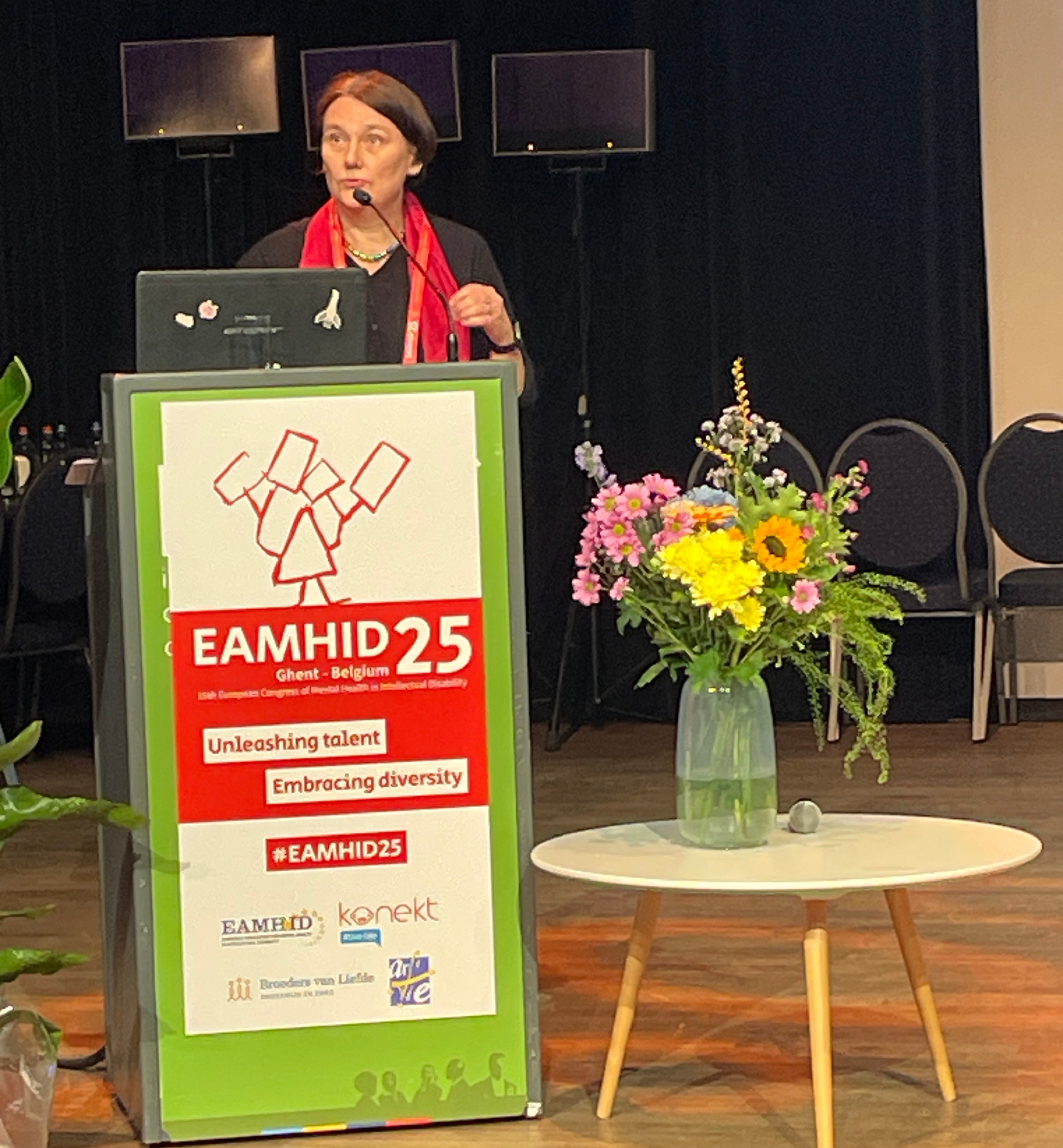
Vom 18. bis 20. September 2025 fand in Gent, Belgien, der 15. Kongress der European Association for Mental Health in Intellectual Disability (EAMHID) statt.
Wir waren mit einem eigenen solicited Symposium vertreten - eine tolle Gelegenheit, unsere Forschung im Bereich inklusiver KI auf internationaler Bühne zu präsentieren! Antonia von Reden, Mareike Müller-Cleve, Britta Wrede, Rebecca Lätzsch, Peer Keller, Sarah Krieg und Tanja Sappok waren vor Ort und konnten die Arbeeit von AI*IM in vier Vorträgen präsentieren.
Unter dem Titel „Artificial Intelligence for Inclusive Medicine (AI*IM): Innovations in Assistive Technology for People with Intellectual Disabilities“ ging es darum, wie KI und digitale Assistenzsysteme – etwa Eye-Tracking, Augmented Reality oder partizipativ entwickelte Apps – dazu beitragen können, Menschen mit geistiger Behinderung in Alltag, Bildung und Gesundheitsversorgung zu unterstützen und zu stärken.
Der EAMHID-Kongress brachte internationale Fachleute aus Wissenschaft, Praxis und Politik zusammen, um aktuelle Entwicklungen rund um geistige Gesundheit und Behinderung zu diskutieren. Im Fokus stand dabei, Impulse für inklusive technologische Entwicklungen zu setzen und Brücken zwischen Forschung, Anwendung und Lebenswelt zu schlagen.
Mehr zur Veranstaltung finden Sie unter: https://eamhid2025.eu/
Session bei der BI.research Conference
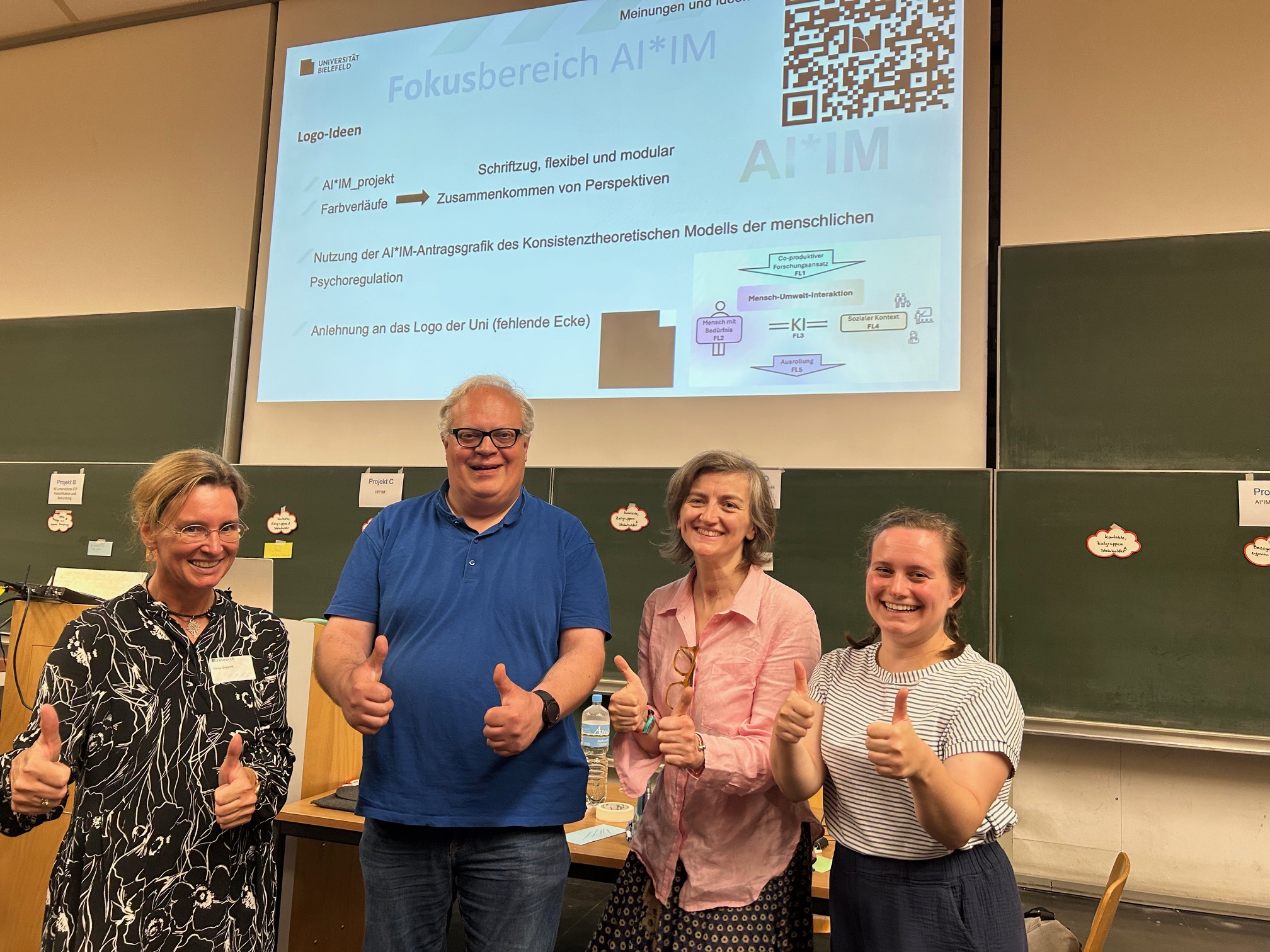
Bei der BI.Research Conference konnten wir einige der vielfältigen Projekte des Fokusbereichs in einer Session präsentieren und gemeinsam in einen Austausch treten.
Vorgestellt wurden die Themen und Projekte SEED Diagnostik, KI unterstütze ICF Klassifikation und Befundung, VR*IM, KI unterstütze Diagnostik für Menschen mit Autismus Spektrumsstörungen und AI*IM Consent - danke an alle Beteiligten, die die Projekte vorgestellt, kommentiert oder die Veranstaltung durch Ihre Anwesenheit bereichert haben!
Besonders inspirierend und motivierend waren die vielfältigen Ideen und Kommentare, die wir live gesammelt haben – sie nehmen wir mit in die nächste Phase. Gemeinsam überlegen wir beispielsweise wie ein Logo für den Fokusbereich aussehen könnte und freuen uns diesbezüglich über weitere Ideen. Außerdem sind wir gespannt uns auf unser nächsten kollegialen Austausch im Rahmen unseres Plenums am 09. Oktober!
Kick-off Veranstaltung
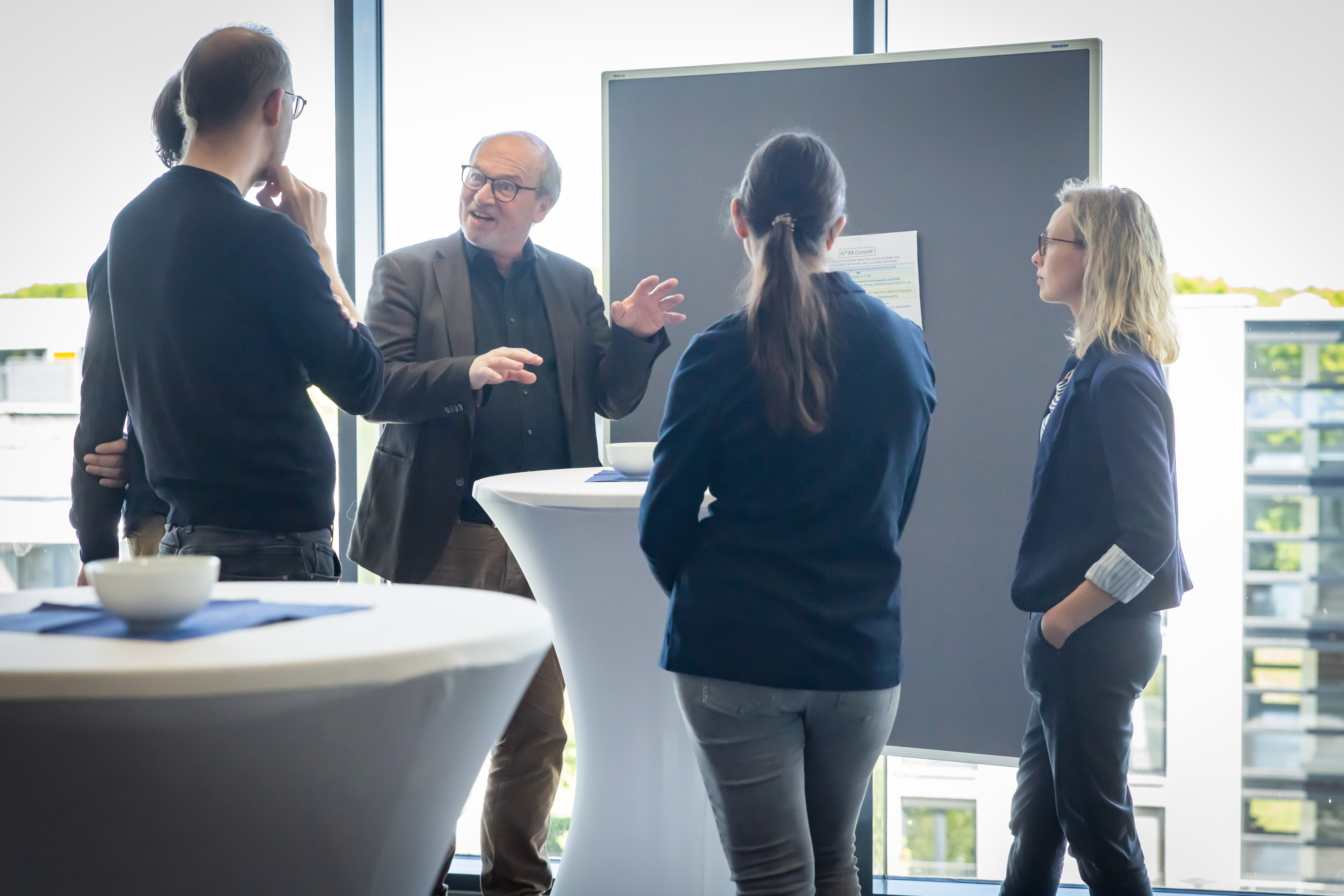
Am 9. Mai 2025 fand die Auftaktveranstaltung des neuen Fokusbereichs AI*IM an der Universität Bielefeld statt!
Beim Kickoff kamen Forschende aus zahlreichen Disziplinen zusammen, um ihre Projekte vorzustellen und erste interdisziplinäre Kooperationen anzustoßen. In Diskussionen wurde dabei deutlich, wie wichtig es ist, KI-Anwendungen gemeinsam mit Betroffenen und Fachpersonal zu entwickeln – partizipativ, inklusiv und alltagsnah.
Die Veranstaltung markiert den Startpunkt für die weitere Zusammenarbeit im Fokusbereich, der durch eine enge Verbindung von Forschung und Praxis neue Maßstäbe in der Entwicklung menschzentrierter KI setzen möchte!