Nachhaltigkeit

Nachhaltigkeit an der Universität Bielefeld
Das Thema Nachhaltigkeit ist an der Universität Bielefeld fest im Rektorat verankert. Seit dem Sommersemester 2025 übt Prof. Dr. Dominik Schwarz das Amt als Rektoratsbeauftragter für Nachhaltigkeit aus. Darüber hinaus tragen der Kanzler und die Prorektor*innen des Rektorats sowie viele weitere Unterstützungsbereiche weiterhin zur Entwicklung und Durchführung der Nachhaltigkeitsstrategie bei.
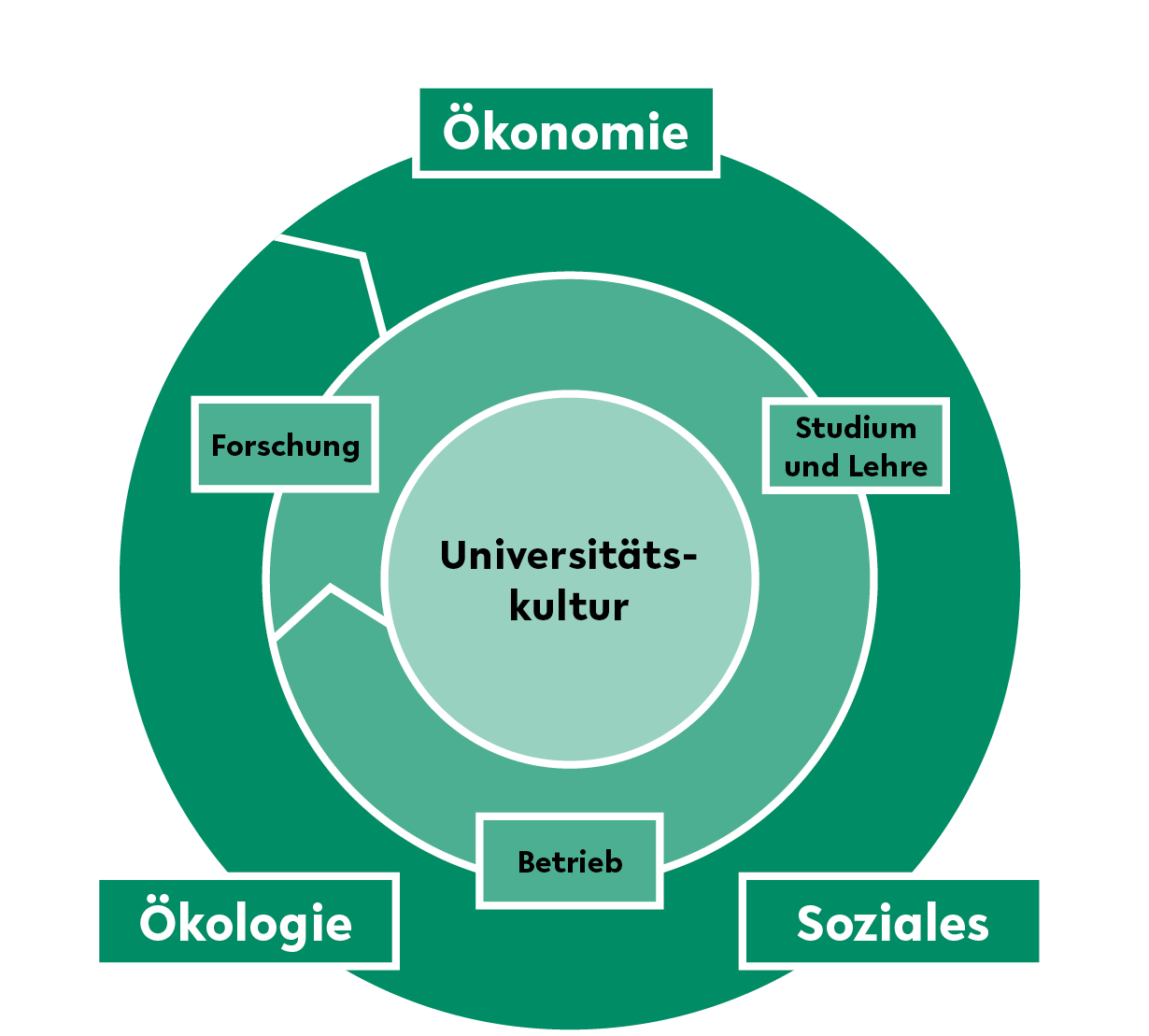
Die Nachhaltigkeitsstrategie der Universität Bielefeld basiert auf dem Nachhaltigkeitsleitbild aus dem Jahr 2022. Dabei wird ein Ansatz verfolgt, der die unterschiedlichen Dimensionen von Nachhaltigkeit - Ökologie, Ökonomie & Soziales - in den verschiedenen Bereichen der Universität - Forschung, Studium & Lehre sowie Betrieb - implementiert.
In diesem Themenportal finden Sie Informationen zu aktuellen Projekten und Maßnahmen zum Thema Nachhaltigkeit an der Universität Bielefeld, zum vergangenen partizipativen Prozess zur Entwicklung des vorläufigen Nachhaltigkeitsleitbilds, zu Fördermöglichkeiten von Projekten mit Nachhaltigkeitsbezug sowie zu Ansprechpersonen und Möglichkeiten, Anregungen einzubringen.
Verlängerung der Bewerbungsphase für den Nachhaltigkeitspreis 2026


Der Nachhaltigkeitspreis zeichnet herausragende Abschlussarbeiten (Bachelor- oder Masterarbeiten) aus, deren Forschungsgegenstand sich theoretisch oder praktisch mit der Erforschung nachhaltiger Entwicklung und/oder Klimafolgen(-anpassung) befasst. Die Ausschreibung umfasst ausdrücklich auch Abschlussarbeiten, die sich nicht nur mit ökologischen sondern auch ökonomischen wie sozialen Aspekten nachhaltiger Entwicklung sowie klimatischer Veränderungen befassen.
Die Ausschreibung richtet sich ausdrücklich an Studierende aller Fachbereiche. Der Preis wird im Rahmen der Fakultätsfeier am Tag für Absolvierende vergeben.
Der Preis ist dotiert mit 400€.
Die Bewerbungsphase endet jetzt am 15.10.2026.
Weitere Informationen gibt es hier.
Meldungen
-
08.09.2026 - Der ADFC-Fahrradklima-Test - Jetzt mitmachen!
-
15.07.2026 - Start der Bewerbungsphase für den Nachhaltigkeitspreis 2026
-
14.07.2026 - Die Bielefelder Bürgermeise – Bielefelder Meisen zwischen Beton, Hitze und Verkehrslärm
-
14.07.2026 - Tauschbörsen: Medien-, Kleider- und Pflanzentauschbörse
-
14.07.2026 - Campustour AG Bienen
-
14.07.2026 - Infostände und Aktionen am Tag der Nachhaltigkeit am 15.07.2026
Lehrveranstaltungen im WiSe 2026/2027
Anleitung für Veranstaltungssuche mit Nachhaltigkeitsbezug
Im ekVV gibt es die Möglichkeit, gezielt nach Veranstaltungen mit Nachhaltigkeitsbezug für den Individuellen Ergänzungsbereich zu suchen. Dazu gibt es zwei Optionen. Es gibt die sogenannte Kombisuche, die es ermöglicht, nach bestimmten Stichworten wie Nachhaltigkeit, Sustainability oder Umwelt zu suchen. Dazu gibt es auch die Möglichkeit, Veranstaltungen anhand der Kategorien des Leitbilds der Universität Bielefeld zu filtern und zu suchen. Dies findet sich unter: Individueller Ergänzungsbereich – Themenbereiche / Individueller Ergänzungsbereich im Bachelor - eKVV - Universität Bielefeld
Nebenstehend finden sich exemplarisch einzelne Veranstaltungen mit Nachhaltigkeitsbezug für das Wintersemester 2026/2027.


Newsletter Nachhaltigkeit


Mit dem Newsletter Nachhaltigkeit informiert das Nachhaltigkeitsbüro in unregelmäßigen Abständen über aktuelle Entwicklungen im Bereich Nachhaltigkeit an der Universität Bielefeld. Zudem erhalten Sie Informationen zu internen und externen Veranstaltungen, Förderungen (z. B. Lehr- und Forschungsförderung) sowie zu spannenden Projekten aus der Hochschul-Community rund um das Thema Nachhaltigkeit.
Tragen Sie sich in die Mailingliste Nachhaltigkeit ein, um den Newsletter zu erhalten.
Wussten Sie ...


...dass in den meisten Kopierräumen der Uni Toner-Sammelboxen des Herstellers Ricoh und Sammelboxen der Aktion Sammeldrache für nicht-Ricoh Toner zu finden sind? Die gesammelten Kartuschen werden in beiden Fällen nach einer Prüfung aufgearbeitet und wiederverwendet und nur für den Fall, dass sie sich nicht aufbereiten lassen, entsorgt. Für die Anschaffung der Ricoh Boxen sind die jeweiligen Bereiche / Sekretariate eigenständig verantwortlich.
Die Sammelbox der Aktion Sammeldrache kann mit einer Mail an abfallwirtschaft@uni-bielefeld.de angefragt werden.



Kontakt
- Nachhaltigkeitsbüro
Seit Mai 2022 unterstützt das Nachhaltigkeitsbüro die verschiedenen Aktivitäten rund um Nachhaltigkeit an der Universität.
Büro: A4-104
Telefon: +49 521 106-87965
E-Mail: nachhaltigkeitsbuero@uni-bielefeld.de
- Ideen & Anregungen
Wenn Sie Fragen klären oder Ideen und Anregungen einbringen möchten, melden Sie sich gern beim Nachhaltigkeitsbüro (nachhaltigkeitsbuero@uni-bielefeld.de). Wir vereinbaren dann gern einen (Online-)Termin im Rahmen der Nachhaltigkeitssprechstunde.
Weitere Informationen finden Sie auf der Seite der Nachhaltigkeitssprechstunde.
- Newsletter Nachhaltigkeit
Mit dem Newsletter Nachhaltigkeit informiert das Nachhaltigkeitsbüro in unregelmäßigen Abständen über aktuelle Entwicklungen im Bereich Nachhaltigkeit an der Universität Bielefeld. Zudem erhalten Sie Informationen zu internen und externen Veranstaltungen, Förderungen (z. B. Lehr- und Forschungsförderung) sowie zu spannenden Projekten aus der Hochschul-Community rund um das Thema Nachhaltigkeit.
Tragen Sie sich in die Mailingliste Nachhaltigkeit ein, um den Newsletter zu erhalten.
- Klimaschutzmanagement
Seit September 2022 koordiniert das Klimaschutzmanagement, angesiedelt im Dezernat Facility Management (FM), die Klimaschutzaktivitäten der Universität und unterstützt dabei, politische Vereinbarungen zum Klimaschutz auf lokaler Ebene umzusetzen. Neben der Erstellung und Aktualisierung der Treibhausgasbilanz der Universität werden Maßnahmen zur Reduktion von Treibhausgasemissionen durch das Klimaschutzmanagement initiiert, begleitet und evaluiert.
Kontakt: Roman Immoor, Klimaschutzmanager (roman.immoor@uni-bielefeld.de)


