Nachhaltigkeit

Tag der Nachhaltigkeit am 15.07.2026
.png)
Auch 2026 wird es, wie im vergangenen Jahr, wieder einen „Tag der Nachhaltigkeit“ geben. Der Tag lockt mit vielen spannenden und tollen (Mitmach-)Aktionen. Ziel des Tages ist die Universitätsmitglieder für das Thema Nachhaltigkeit zu sensibilisieren und das Thema wieder stärker in den Fokus zu rücken. Die Aktiven aus dem Bereich Nachhaltigkeit haben ein vielfältiges Programm für den Tag auf die Beine gestellt, unter der federführenden Organisation des Nachhaltigkeitsbüros.
Aktionen und Infostände
In der Zeit zwischen 9-15 Uhr werden vor dem Audimax im UHG viele spannende und interessante Aktionen und Informationsstände angeboten. Mit dabei sind beispielsweise die Scientists for Future mit ihrem Klimazeitstrahl (s. unten) und dem PV-SteckersolarModul. Neben Informationsständen des Referats für Ökologie des AStA, dem Gesundheitsmanagement, den Students for Future sowie dem Nachhaltigkeitsbüro wird es auch eine Posterausstellung u.a. mit zentralen Inhalten des aktuellsten Nachhaltigkeitsberichts (2025) geben.
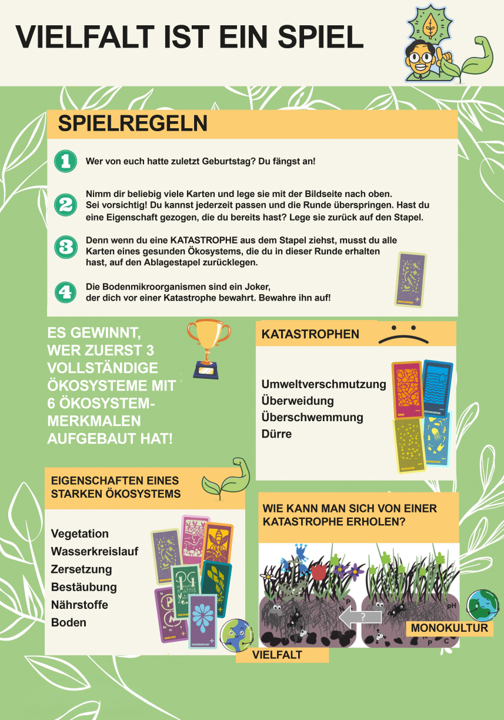
Aber es werden in diesem Jahr auch viele tolle (Mitmach-)Aktionen angeboten: Die Biodiversitäts- und Ökosystemrenaturierungsgruppe (BERG) der Fakultät für Biologie veranschaulicht die Wichtigkeit von Ökosystem-Multifunktionalität anhand eines Kartenspiels (s. unten) und beim Citizen Science Projekt "Verborgene Vielfalt - Sichtbare Wirkung?" kann die Geruchs- und Geschmacksvielfalt von Pflanzen mit (fast) allen Sinnen erlebt werden.
Kommt vorbei und macht mit!
(Mitmach-)Aktionen
- Citizen Science Projekt
Citizen Science Projekt „Verborgene Vielfalt – Sichtbare Wirkung?"

© Ruth Jakobs Pflanzen derselben Art können sich in ihren Geruchs- und Geschmacksstoffen unterscheiden. Diese sogenannte chemische Vielfalt beeinflusst, wie attraktiv jede einzelne Pflanze für Bestäuber und andere Insekten ist. Die Auswirkungen von chemischer Vielfalt von Pflanzen auf Insekten erforscht ein Team aus Citizen Scientists und Wissenschaftler*innen, in 65 in ganz Deutschland verteilten Gärten im Rahmen unseren Citizen Science Projekts. Diese Forschung ist wichtig, weil chemische Vielfalt ein Teil der biologischen Vielfalt ist und durch ein besseres Verständnis effektiver geschützt werden kann.
Kommt vorbei, lernt die Geschmacks- und Geruchsvielfalt von Pflanzen mit (fast) allen Sinnen kennen und erfahrt mehr zu dem Projekt.
- Klimazeitstrahl von Scientists for Future
Klimazeitstrahl
beim Stand der Scientists for Future
© Benjamin Strenge Die Scientists for Future der Regionalgruppe Bielefeld/OWL präsentieren einen gut 30 m langen Zeitstrahl, der die Entwicklung der globalen sowie lokalen Temperaturen seit Beginn der Industrialisierung illustriert und in Beziehung zu den jeweiligen CO2-Konzentrationen setzt. Der Klimazeitstrahl wurde von Teachers for Future entworfen und in der gezeigten Version gemeinsam mit dem Deutschen Wetterdienst weiterentwickelt. Die Klimastreifen (Warmings Stripes) des britischen Klimawissenschaftlers Ed Hawkins veranschaulichen die fortschreitende Erderhitzung mittels einer Farbskala. Anhand des Verlaufs von blauen zu roten Streifen wird unmittelbar erkennbar, wie rasant die durchschnittliche globale Temperatur von 1850 bis heute – besonders in den letzten drei Jahrzehnten – angestiegen ist. Als auffälliger Eye-Catcher gibt der Klimazeitstrahl Anlass für Gespräche rund um den Klimawandel, stellt die markantesten Ereignisse dar und lädt mit vielen QR-Codes dazu ein, interaktiv weitere Infos und Medien-Elemente zu entdecken.
In Ergänzung macht ein Photovoltaik-Steckersolarmodul in Aktion eine von vielen konkreten Möglichkeiten für mehr Klimaschutz anschaulich und greifbar.
Alle, die das Thema interessiert, die sich für Wissenschaftskommunikation oder Bildung für nachhaltige Entwicklung interessieren oder einfach nur mal kurz vorbeischauen möchten, sind herzlich eingeladen.
- Ökosystemstabilitätsspiel
Ökosystemstabilitätsspiel
© AG BERG Die Biodiversitäts- und Ökosystemrenaturierungsgruppe (BERG) der Fakultät für Biologie veranschaulicht die Wichtigkeit von Ökosystem-Multifunktionalität anhand eines Kartenspiels. Wer kann am schnellsten ein Ökosystem mit allen Funktionen vervollständigen? Es ist jedoch Vorsicht und Eile geboten, nur ein komplettes Ökosystem mit allen sechs Funktionen kann Katastrophen, wie zum Beispiel Überflutung, Dürre, Verschmutzung oder Überweidung widerstehen. Kommt vorbei und probiert es aus!


Veranstaltungen am Nachmittag
- Campustour AG Bienen
Campustour AG Bienen
© Nils Hasenbein Wann: 15.07.2026, 15-16:30 Uhr, Anmeldung unter: nachhaltigkeitsbuero@uni-bielefeld.de
Haben Sie es schon einmal auf dem Uni-Gelände summen gehört? Wenn nicht, wird es höchste Zeit. Um die zehn Bienenvölker sind aktuell auf den Außenanlagen der Biologie beheimatet. Nils Hasenbein, Beauftragter für Studienangelegenheiten der Fakultät Biologie, gibt bei dieser Campus Tour Einblicke in das Leben der Uni-Bienen sowie deren Einsatz für Lehre und Forschung. Dabei geht nicht nur um Imkerei und Honig: Vor allem die Orientierungsleistungen, die Sammel- und Bestäubungstätigkeit sowie das Sozial- und Fortpflanzungsverhalten der Bienen bieten viel Material für spannende Diskussionen.
Hinweise:
Bei starkem Regen oder Unwettern muss die Tour leider ausfallen.
Die Anzahl der Teilnehmenden ist beschränkt, melden Sie sich also zeitnah an.
Um einen Eindruck von Ihrem Kenntnisstand zu erhalten, wäre es für uns hilfreich, wenn Sie sich bei der Anmeldung einer Statusgruppe (Studierende, Beschäftigte, Wissenschaftliches Personal) zuordnen könnten. Vielen Dank!
- Austausch mit Labor-Mitarbeitenden zur Lab-Zertifizierung
Austausch mit Labor-Mitarbeitenden zur Lab-Zertifizierung
Der Rektoratsbeauftragte Dominik Schwarz initiiert einen Austausch für Labor-Mitarbeitende in S1-213 zwischen 15-16 Uhr am Tag der Nachhaltigkeit. Im Fokus wird der Prozess der Labor-Zertifizierung stehen. Jan Oldengott berichtet von seinen ersten Erfahrungen im Prozess zu mehr Nachhaltigkeit im Laborbetrieb.
- Tauschbörsen: Medien-, Kleider- und Pflanzentauschbörse
Kleider-, und Pflanzen- und Medientauschbörse
© Students for Future Bielefeld Am 15.07.2026 wird es im Rahmen des Tages der Nachhaltigkeit auch wieder eine Vielzahl von Tauschbörsen geben, wo alle Mitglieder der Uni herzlich eingeladen sind, allerlei Medien, Kleidung und sogar Pflanzen mitzunehmen und weiterzugeben.
Die Tauschbörsen finden von 15-18 Uhr in der zentralen Unihalle statt. Bringt auch gerne eigene Dinge mit und tauscht sie bei den Börsen.
Kleidertauschbörse
In Kooperation veranstalten die Hochschulgruppe Students for Future und die Fachschaft Bio eine Kleidertauschparty.
Du suchst nach Kleidungsstücken, denen du ein liebevolles Zuhause geben willst? Dein Kleiderschrank geht nicht mehr zu? Dann komm zu unserer Kleidertauschparty! Bitte bring frisch gewaschene Kleidung mindestens mit dem Zustand „okay“ und keine Unterwäsche mit.
Maximal 10 Kleidungsstücke können mitgebracht werden. Denk beim Mitnehmen an die Anderen! Übrige Kleidung wird anschließend gespendet.
Pflanzentauschbörse
Ebenfalls als Kooperation zwischen der Hochschulgruppe Students for Future und der Fachschaft Bio wird erstmals auch eine Pflanzentauschbörse angeboten.
Du möchtest neue Pflanzen und hast noch ein paar Ableger oder andere Pflanzen Zuhause übrig? Dann bring sie gerne auch mit: Pflanzen werden auch getauscht.
Medientauschbörse
Die Fachschaft Medienwissenschaft veranstaltet nach dem Motto „Alles ist ein Medium“ eine Medientauschbörse. Bringt gerne Bücher, Filme, CDs oder vielleicht sogar Kassetten, LPs oder Zeitschriften mit! Bitte bringt nicht mehr als 5 Medien mit. Alles, was überbleibt, wird gespendet.


Die Bielefelder Bürgermeise – Bielefelder Meisen zwischen Beton, Hitze und Verkehrslärm
Ein Vortrag von Prof.in Dr. Barbara Caspers in X-E0-002 zwischen 16-18 Uhr c.t.


Im Fokus des Vortrages stehen folgende Fragen: Wie wirkt sich das Stadtleben auf die Familienplanung und das Verhalten von Tieren aus? Und was genau macht eine Stadt aus. Gibt es Faktoren, die sich positiv auswirken? Im Projekt „Bielefelder Bürgermeise“ wird untersucht, wie unterschiedlich urbane Lebensräume das Reproduktionsverhalten beeinflussen – und warum Stadt nicht gleich Stadt ist. Ein spannender Einblick in die verborgene Vielfalt direkt vor unserer Haustür.
Einblicke in das Bielefelder Projekt gibt Prof.in Dr. Barbara Caspers (Uni Bielefeld).
Der Vortrag findet im X-Gebäude in Raum X-E0-002 in der Zeit zwischen 16-18 Uhr c.t. statt.